

Have you ever struggled to find the perfect parking spot, only to realize your vehicle won’t fit? The frustration is real, especially for RV and travel trailer drivers, and you surely aren’t the only one to experience it.
If you currently own a parking lot, familiarizing yourself with standard parking space dimensions is even more critical (especially if you’re restriping your lot). If your parking stalls are too narrow or too wide, your parking lot may not be in adherence with local laws.
Luckily, you have made it to the right place. Let’s take a look through everything there is to know about parking space dimensions.
Factors that Determine Parking Space Dimensions
So, what determines the dimensions of a parking space? Factors such as:
- Local regulations
- The angle relative to the curb
- Parking lot traffic
- Overall accessibility

What is the Average Parking Space Width in the U.S.?
The average American parking space width is about 8 feet wide. Of course, this will vary depending on the parking configuration and the parking space style.
When visualizing the dimensions of a parking spot, you may wonder: What is the width difference between a standard parking space and a standard-sized car?
The width of a standard parking space is usually 1.5 feet wider than a car, which allows for easy maneuvering in and out of the space.
What is the Average Parking Space Length in the U.S.?
The average parking space length is around 16 feet or twice the width of the parked car. This size is based on the average car length and width. The size dimensions depend on the type of parking space—be it an accessible parking space, angled parking space, or electric vehicle charging space.
Dimensions of Standard-Sized Parking Spaces in the U.S. vs. Other Countries
In the United States, standard parking spaces typically measure 9 feet in width and 18-20 feet in length. Note: These measurements apply to parallel parking spots, as well.
However, dimensions can vary in other countries. For example, in the United Kingdom, standard parking spaces are 8 feet wide and 16 feet long, while in Australia, they measure 8 feet wide and 17 feet long.
Parking Space Dimensions: By Space Type
Let’s explore the different types of parking spaces and their dimensions. Common types of parking spaces include the following:
- Accessible parking spaces
- Parallel parking spaces
- Perpendicular parking spaces
- Angled parking spaces
- Women’s parking spaces
- Electric vehicle charging spaces

Type #1: Accessible Parking Space
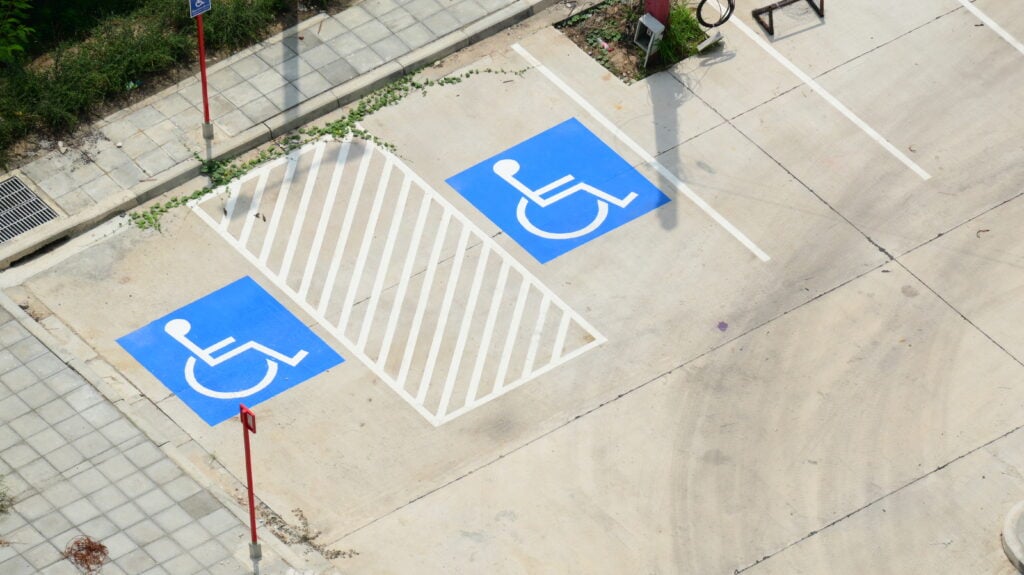
Accessible parking spaces are designed to accommodate the needs of individuals with disabilities. In the US, the standard dimensions for accessible parking spaces are 8 feet wide and 11 feet wide for vans. These dimensions are larger than average parking spaces to provide easy access for people with disabilities.
To comply with guidelines set by uniform traffic control devices and other regulatory bodies, each handicapped parking spot must have a five-foot-wide access aisle. For a parking lot with 401-500 spots, a minimum of 9 accessible parking spaces are required.
You can find out more about the national government’s accessible parking regulations by following this link here.
Type #2: Parallel Parking Space
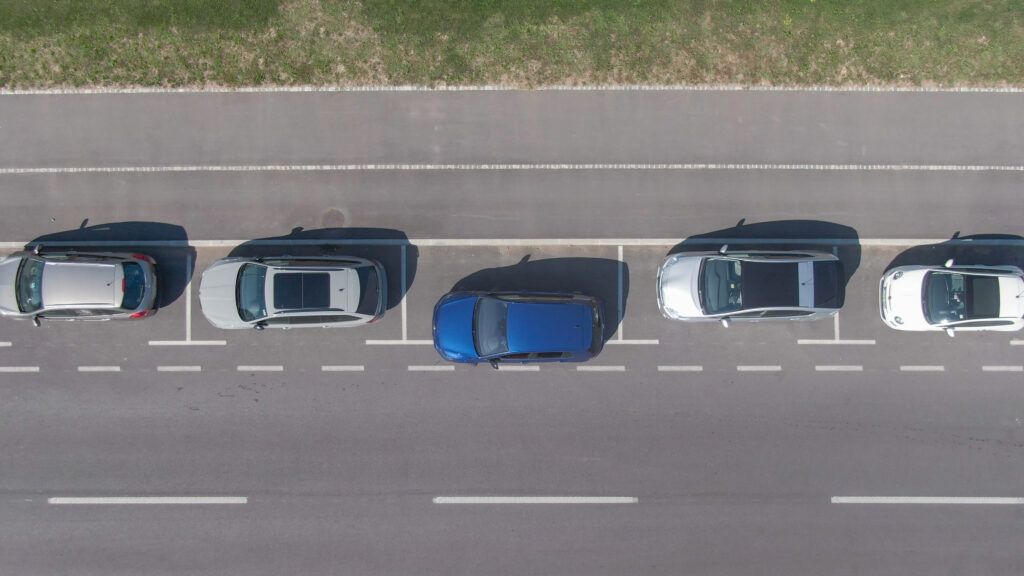
Parallel parking requires vehicles to be arranged in a parallel orientation with the sidewalk or wall. Parallel parking spaces are commonly found on streets and in narrow parking garages
The dimensions of parallel parking spaces can vary depending on local regulations and the available space, with a typical size of 20 to 24 feet deep and 7.5 to 9 feet wide.
While parallel parking spaces can be a tight squeeze, especially for larger vehicles, they are often the best option for maximizing the number of parking spaces on streets or in confined garages. By understanding the dimensions of parallel parking spaces and practicing parallel parking techniques, drivers can confidently park in these spaces and avoid potential accidents.
Type #3: Perpendicular Parking Space

Perpendicular parking spaces are the most prevalent type of parking space, with their dimensions typically measuring 9 feet in width and 18-20 feet in length. These parking spaces are oriented at a 90-degree angle to the curb, making them easy to access and navigate for most vehicles. In fact, most parking spaces you’ll encounter are designed this way.
Perpendicular parking spaces are often the most efficient parking pattern for square or rectangular parking lots, allowing for the highest number of spots in a lot. However, in some conditions, perpendicular parking might not be feasible due to space constraints or other factors.
Type #4: Angled Parking Space
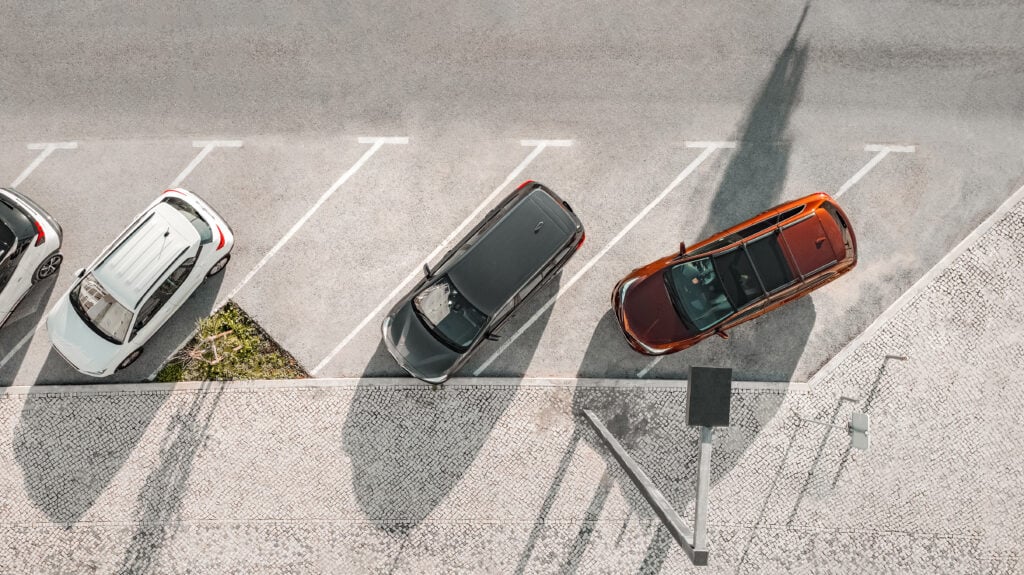
Angled parking spaces are designed with angles typically ranging from 30 to 75 degrees, requiring different clearances for safe turning. The length range for angled parking spaces is 10 to 18 feet.
The angle of an angled parking space can impact the efficiency and ease of parking. For example, a 30-degree angled parking space requires less aisle space than a 75-degree angled parking space, making it suitable for tight spaces such as parking garages or small lots.
Understanding the dimensions and angles of angled parking spaces can help drivers navigate these spaces more easily and safely while also allowing parking lot designers to optimize space utilization.
Type #5: Parking Spaces for New/Expecting Mothers
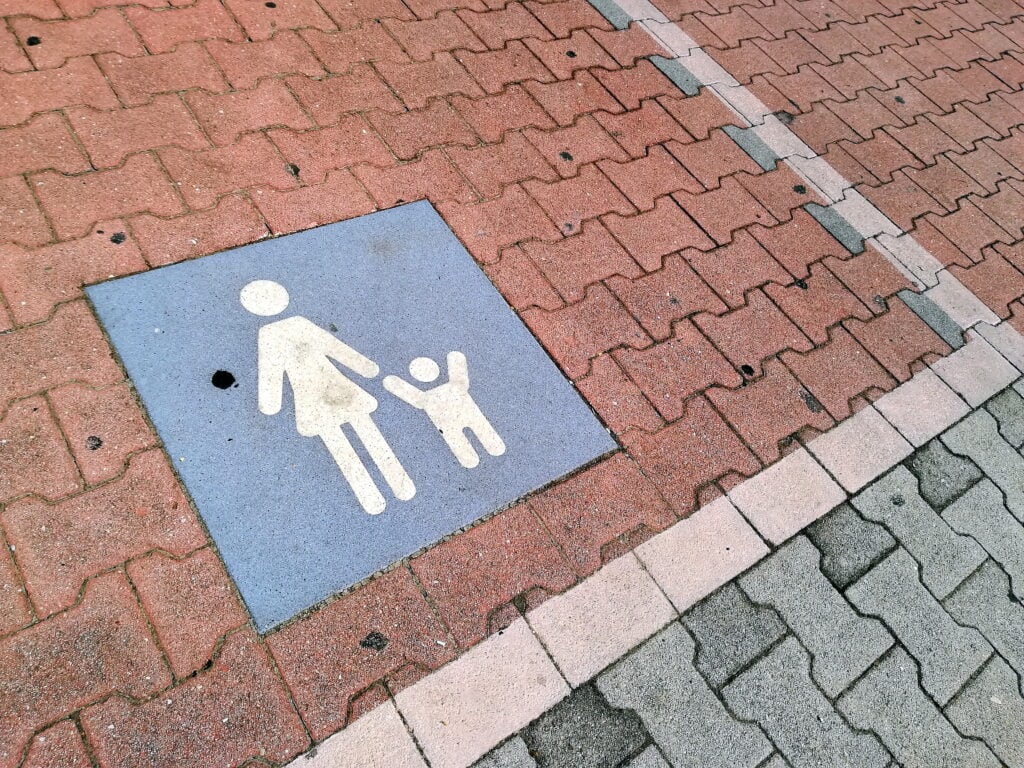
New/expecting mother parking spaces are designated areas specifically for pregnant women or women with newborns. These parking spots are typically located close to entrances and exits for added convenience. In some cases, expecting mothers’ parking spaces might be 50 percent wider than standard parking spaces (to account for the room strollers take up), although there is no universally defined size for women’s parking spaces.
Type #6: Electric Vehicle Charging Space
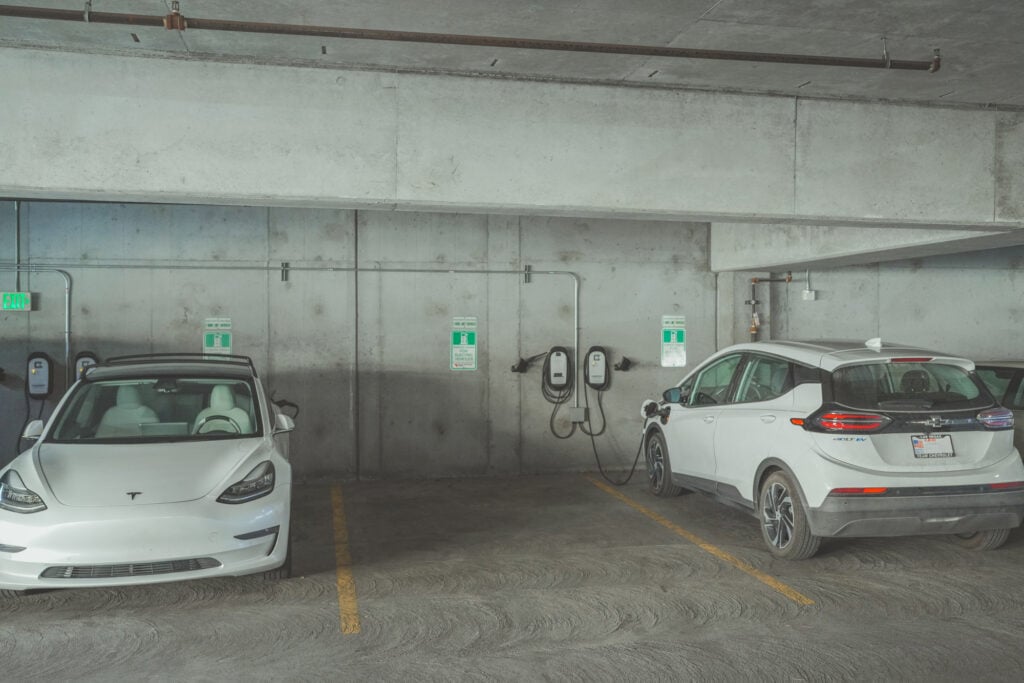
Electric vehicle charging spaces are specially designed to accommodate charging stations and provide convenient access for electric vehicles. They typically have a minimum length of 18 feet and a minimum width of 9 feet.
Of course, the dimensions of electric vehicle charging spaces can vary depending on the type of charging station and vehicle size.
Summary
As we have seen throughout this article, there exists a variety of types and sizes of parking spaces, and becoming informed about which can fit your boat, RV, or travel trailer is important moving forward.
Standard parking lots aren’t the only option for RV or other large vehicle storage. You can also explore other long-term RV or travel trailer storage options, like indoor RV storage options or designated RV carports for rent.
Frequently Asked Questions
What Are the Dimensions of a Compact Parking Space?
A compact parking space is eight feet wide and sixteen feet long.
What Are the Dimensions of Accessible Parking Spaces in the US?
Accessible parking spaces in the US are typically 8 feet wide and 11 feet wide for vans.