

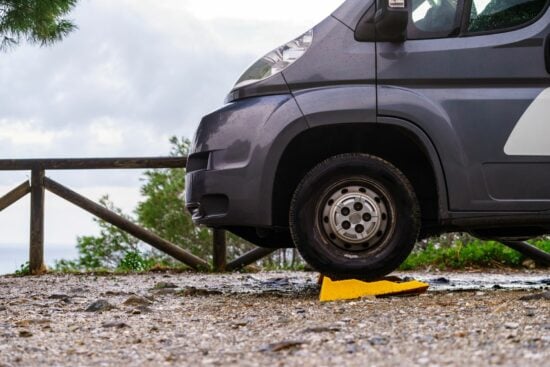
If you’re new to the RVing world, you probably thought that towing your rig was the hardest thing you’d have to learn how to do. While towing a travel trailer can be daunting, learning how to level your vehicle–once you reach your destination—can be a far more challenging step.
Unfortunately, it’s not a step you can skip. Leveling is an essential part of RV setup. It’s more than just logistics and disaster prevention; it’s also key to an enjoyable camping experience.
As with driving or towing an RV, learning how to level like a pro takes practice and patience. You will also need several tools and materials to ensure you get it perfectly level, even if you have hydraulic leveling jacks.
The Importance of Leveling Your RV
Because of the time and effort it takes to level an RV, it’s tempting to consider scrapping the idea altogether. However, leveling your RV is essential for several reasons, including the following:
- If you want to dump your black or grey water tanks, your RV has to be level. Otherwise, your drain pipes won’t slope the right way.
- Your shower won’t drain properly if the floor isn’t level.
- Certain appliances, such as your oven, stovetop, and refrigerator, won’t work properly if they aren’t leveled.
- Living and sleeping in an unlevel camper with sloped floors and crooked beds might drive you crazy!
Essential Tools for Leveling a Camper
If you want to learn to manually level your camper with consistency and speed, there are a few important tools you’ll need.
Bubble Levels
Although they’re the smallest leveling tool you’ll need, bubble levels are the most important. You should mount one bubble level on the front of your RV and one on the passenger side. You’ll know that your RV is level when the bubble is perfectly in the middle.

Product available through eTrailer (Product pictured above: Hopkins Never Fade Trailer Bubble Level Set)
Leveling Blocks
Coming in at a close second in terms of importance, you have leveling blocks. RV leveling blocks will help to stabilize your hydraulic jacks if you’re parking on soft ground or a steep slope. They will also help you level your rig from side to side if you don’t have hydraulic jacks or an auto-leveling system.

Product available through Walmart (Model pictured above: Fultyme RV 2129 Orange Leveling Blocks)
Wheel Chocks

You’ll also need wheel chocks to stabilize your trailer tires after you’re parked. While wheel chocks don’t help with the actual leveling process, they ensure that you’ll remain level once the process is completed. Wheel chocks go behind and in front of each wheel to keep you from rolling.
Stabilizing Jacks

Finally, it’s essential to have high-quality stabilizing jacks, aka RV jacks. While all travel trailers are equipped with stabilizing jacks of some sort, they serve different purposes depending on the type of RV you have and who manufactured it.
On some rigs, you can adjust the stabilizer jacks to move the trailer up and down until it’s level. On others, however, they merely stabilize the rig once it’s in place but aren’t strong enough to actually move it up or down.
Regardless of what type of stabilizer jacks you have, you’ll still need leveling blocks, wheel chocks, and bubble levels.
Choosing the Ideal Parking Spot
Once you have all the tools you need, it’s time to choose where you will position your rig. Whether you’re easing into a camping spot or putting your rig into storage, choosing the perfect position and spot are essential for leveling purposes.
Assessing Ground Slope
The best way to get your RV level is to choose the spot with the least amount of slope, both from side-to-side and front-to-back. Note: While a spot with less of a slope will reduce how many blocks you need, you’ll still need to level yourself out somewhat. The fewer leveling blocks you need, the easier it is to level your rig.
Proximity to Amenities
If you’re parking at a campground, it’s easy to get so caught up in the leveling process that you forget about your proximity to amenities. You need to be close enough to your water, sewer, and electrical hookups to connect to them while not putting yourself in an impossibly unlevel position.
Step-by-Step Guide to Leveling Campers Without Automated Leveling Systems
Once you’re parked in the perfect position, leveling a travel trailer is a three-step process.
Side-to-Side Leveling
For side-to-side leveling without an auto-leveling system or hydraulic jacks, it’s important to keep your RV hooked up to your tow vehicle. The only way to achieve perfect leveling on uneven ground is to drive onto leveling or wood blocks. By parking your RV in a way where the wheels on one side of your rig are placed on blocks, the entire side of the camper will be lifted.
On either side of the camper, you may need to play around with stacking blocks in different amounts. For instance, one side might need to be parked on two blocks, whereas the other side might need one or none.
Front-to-Back Leveling
Front-to-back leveling is much easier than side-to-side leveling. When front-to-back leveling, all you’ll need to do is lower the trailer tongue jack until the front of the camper is raised enough to be perfectly level. This applies when you level a travel trailer or fifth wheel, but note that a motorhome doesn’t have a front jack.
Stabilizing the Camper
To stabilize your camper, lower the electric tongue jacks so that the base of the jacks is resting on leveling blocks or jack pads. With simple electric stabilizer jacks, the jacks will lower until they come in contact with the ground or block pads. Once contact is made, the jacks will stop.
Pro tip: For extra stability, you may also want to place wheel chocks in front of or behind each wheel for extra stability.
Leveling a Camper That Has an Auto Leveling System
If you have an automatic leveling system, as is common with most newer RVs, your camper will do the hard work for you. With automated leveling systems, all you need to do is turn the system on, and the travel trailer will literally level itself out. It will automatically raise and lower your stabilizing jacks where needed until your rig is perfect.
The only thing you’ll need to do when utilizing an auto-leveling system is place a leveling block under each stabilizer jack. That way, the jack won’t dig into soft ground and sink too low. You should also place a wheel chock in front of or behind each of your front and rear wheels.
Every system is different, so consult your owner’s manual for instructions on how to operate your automatic leveling system.
Final Thoughts
While there’s a lot that goes into leveling an RV, it gets easier and faster the more often you do it. You will also learn new techniques and tricks to the trade that make life easier with every new camping trip. If you’re worried about the leveling process, you can also choose to invest in an RV that has an automated leveling system.
Regardless of whether you own an RV with an automated level system or not, you’ll need a safe and secure place to store it while it’s not in use. Consider using Neighbor, a peer-to-peer storage marketplace, to find safe and affordable RV storage near you.
When it’s time to put your RV in storage, be sure to use the leveling practices you learned in this article. For more information on why it’s best practice to keep an RV level when not in use, check out this article.
Frequently Asked Questions
Does a Camper Have to Be Perfectly Level?
Whether you’re camping or putting your rig into storage, you should strive to make it as level as possible.
Where Do You Put the Level on a Camper?
The best places to place your bubble levels are a) on the entry side of your camper and b) at the front of your camper. That way, your rig will be level from side to side and from front to back.
Why Is It Important to Level a Camper Before Storing It?
Leveling a camper before storing it will ensure that the weight is distributed evenly throughout the rig. It will also make it so that your RV doesn’t roll or move while it’s in storage.