


Discovering mold in your car can be a startling experience. That musty smell when you open the door or the sight of black, green, or white patches on the interior isn’t just a blow to your car’s aesthetics – it can be harmful to your health. Whether you’re storing a classic car, living in a humid climate, or prepping your vehicle for sale, the threat of mold is real and pressing.
Below, we’ll give you some tips on how to identify a mold problem, remediate it, and prevent its return so you can keep your car’s interior in top shape.
Step 1: Identify Mold in Your Car
If you’ve had it in storage for a while, are experiencing respiratory symptoms associated with mold, or can see or smell it, it’s time to take action.
Visual Signs of Mold Spores
If you see irregular patches of discoloration or dampness on your car’s interior, you may have mold.
- Black mold is the most common and easiest to spot. Look for dark, irregular spots or streaks, often found on upholstery, floor mats, or ceiling fabric. These spots might cluster together, forming larger patches. To thrive, black mold needs both moisture and warmth.
- Green mold is less common and usually appears in cars that have been idle for extended periods. It can look fuzzy and is often found in corners or on surfaces that are less exposed to sunlight.
- White mold resembles a thin layer of dust. It’s more subtle than black or green mold and may require a closer inspection.
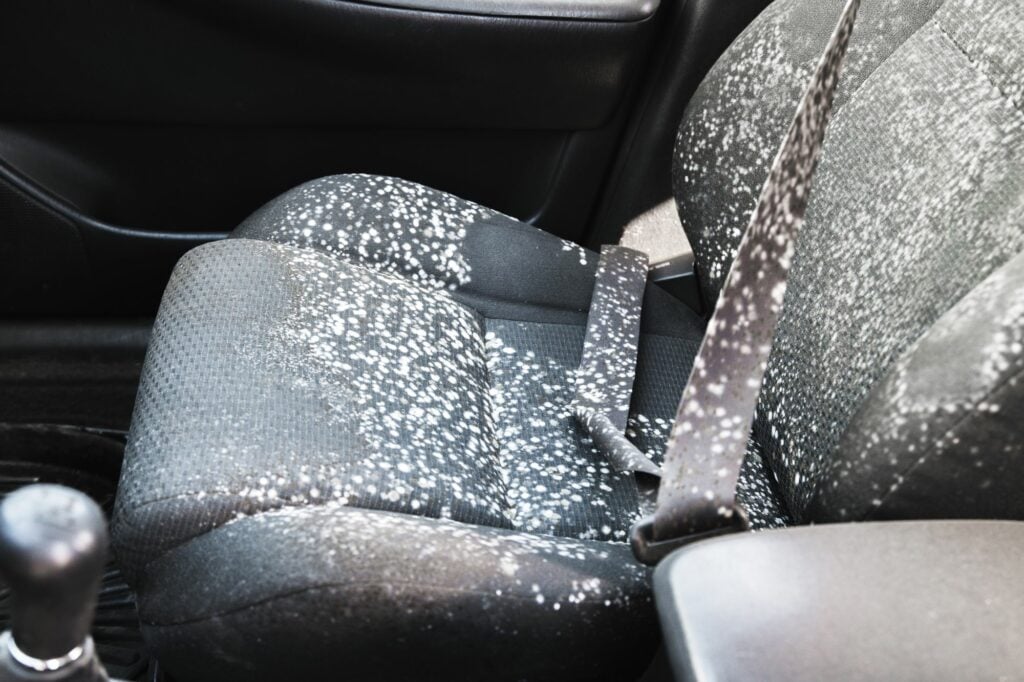
What Does Car Mold Smell Like?
Mold typically gives off a musty, damp, or earthy odor. This smell will be particularly noticeable when you first open the car door after it’s been closed for a while.
Some people compare the smell of mold to old books or a musty basement. It’s most pronounced in areas such as under carpets, in upholstery, or around air conditioning vents.
Others think mold smells like vinegar, especially when it breeds in air vents.
Allergic Reactions as Warning Signs
Physical reactions can also signal mold presence. If you or your passengers experience increased sneezing, coughing, or skin irritation, specifically when in the car, this could indicate mold spores in the interior. These reactions are often more pronounced because a car is such a confined space.
Step 2: Checking for Mold
Mold thrives in poorly ventilated areas of your car. Regularly inspect under the seats, in the trunk, around window seals, and inside door panels. These spots can harbor mold, especially in vehicles with past water leaks or high interior humidity levels.
How to Remove Car Interior Mold
Excess moisture is the reason mold grows in your car. At some point, we all get a few mold spores in our vehicles – the stuff is everywhere on our shoes, floating through the air, etc. But mold will only settle in and start growing when the conditions are right.
Step 3: Gather your materials
Once you’ve identified mold in your car, the next step is to remove it. If you choose to do it yourself, you’ll need the following materials:
- Protective gear
- Gloves
- A mask
- Goggles
- A vacuum cleaner (preferably with a HEPA filter)
- Cleaning solutions, which may include:
- Distilled white vinegar
- Baking soda
- Clove oil
- Commercial mold remover
- Spray bottle or bowl
- Toothbrush
- Clean cloths or sponges and water to rinse them
- A fan
Step 4: Vacuuming
Vacuuming is essential for extracting mold spores that have settled into the fabric of your car’s seats, carpets, and even in the nooks around the doors, windows, and air vents.

Generated with the help of AI
When vacuuming, use an attachment to reach into tight spaces around the seat edges, door panels, and under the seats – places where mold loves to hide. If your car has vinyl or plastic components, a vacuum with a brush attachment can gently remove mold spores from these surfaces without causing damage.
Step 5: Cleaning
You can address the mold in car interiors in a few ways (but always do a patch test first to avoid stains). The method is largely the same regardless of the cleaner you use. (Follow the instructions posted on commercial cleaning agents for the best results.)
If you choose to DIY, there are a few paths you can take:
Method 1: Using a White Vinegar Solution
White vinegar is a natural mold killer due to its acidity. It can also help prevent future growth.
- Mix a solution of vinegar and water in either a bucket or spray bottle.
- For most upholstery, dilute 1 part vinegar to 4 parts water. However, you may need a 1:1 ratio for a tough mess on carpeting and floor mats. (If you have leather seating, it’s wise to use a more diluted solution of 8:1.) Do a patch test first to avoid upholstery staining.
- Apply the mixture directly to the mold-affected areas. (Either lightly spray the area or dab it gently with a sponge or cloth – do not saturate it).
- Allow it to sit for a few minutes to penetrate and kill the mold spores.
- Rinse the area with water by blotting it with a clean cloth or sponge. Avoid rubbing it since it may cause smearing or push mold deeper).
- For stubborn mold, use a soft brush and scrub in a circular motion before rinsing again.

Generated with the help of AI
Method 2: Using Baking Soda and Clove Oil
The abrasiveness of baking soda, coupled with the clove oil’s antifungal properties, helps effectively break down and removes more stubborn mold.
- Start by adding a half cup of baking soda to a small container.
- Gradually mix in drops of clove oil, stirring continuously. (The consistency should be thick enough to cling to vertical surfaces without dripping – it may require 10-20 drops.)
- Use a soft toothbrush to apply the baking soda and clove oil paste.
- Leave the paste on the surface for at least 20 minutes.
- Blot it clean with a damp cloth, and don’t soak the area.
Step 6: Allow the Car to Dry Completely
After cleaning, it’s crucial to let the interior dry completely. Any lingering moisture can become a breeding ground for mold to return. Leave windows open for air circulation or use a fan for damp areas like carpets and upholstery.
When to Opt for Professionals to Remove Mold
While DIY mold removal methods can be effective for minor mold issues, sometimes you need a professional to eliminate mold completely.
Professional services are recommended when:
- Mold is an issue throughout your entire car.
- Your car has specialty interior material (like leather) that needs professional tools and expertise to clean.
- Mold spots keep coming back.
- Mold is growing in hard-to-reach areas, like the air conditioning system or deep within the upholstery.
- You have allergies or respiratory issues that make removing mold dangerous to perform yourself.
- Your air filters require replacement.
Professional mold removal services offer thorough inspections and advanced tools like steam cleaners, ozone treatment, and HEPA filter vacuums.
The process can take a few hours, and the cost will depend on the extent of the mold issue. This kind of car detailing can cost a few hundred to a few thousand dollars.
Preventing Future Car Interior Mold
The best way to prevent mold in your car is to keep it clean and dry.
If you want to prevent mold growth, be sure to:
- Regularly clean the interior with a vacuum.
- Promptly clean up any spills.
- Don’t leave wet items (like boots or coats) in the car.
- Have your air filters checked regularly.
- Roll down windows or use air conditioning to regulate humidity.
- If you use a car cover, ensure it’s made of breathable material to allow for ventilation.
- Don’t keep your car parked in damp, shady areas. The sun helps kill mold.
Keeping your vehicle in a dry and well-ventilated storage unit can prevent mold from popping up.
Final Thoughts
Since mold and mildew thrive in humid, warm, and dark environments, it’s important to find the right storage solution.
For those exploring storage options, Neighbor’s peer-to-peer storage marketplace offers a variety of choices. We make it easy to find a range of storage solutions near you, including climate-controlled car storage options.
Whether your car is a cherished classic or your daily ride, Neighbor provides storage options that are not only budget-friendly but also conveniently located and secure.