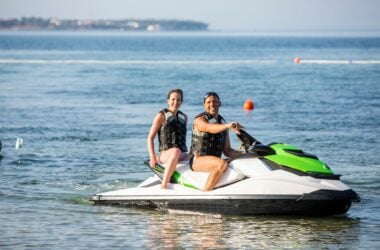


Jet skiing 101 may feel like navigating uncharted waters, especially for beginners who’ve never ridden on a jet ski before. You may be asking yourself: Do you need to spend the time learning how to drive a jet ski, or is it relatively self-explanatory–even on your first go-around? Do boating safety rules apply, or do you follow different guidelines?
Don’t let the excitement of gliding over the waves overshadow the importance of learning the jet ski basics: mastering the controls, understanding safety protocols, and overcoming the intimidation that comes with handling a powerful watercraft for the first time.
Equipped with the right knowledge and tips on how to ride a jet ski, you’ll be able to enjoy the thrill of jet skiing–knowing you’ve done your due diligence to learn the safety protocols
Let’s dive in!
Phase 1: Getting to Know Your Jet Ski
Before you plunge into the deep end, it’s crucial to familiarize yourself with the different types and functionalities of jet skis.
Learning the Different Types of Jet Skis
Most jet skis fall into two main categories:
- Stand-Up Jet Skis: Known for their agility and speed, stand-up models are ideal for thrill-seekers and those looking to test their balance and fitness on the water. Perfect for solo adventures, stand-ups demand more physical effort but offer an exhilarating jet ski ride.
- Sit-Down Jet Skis: Offering stability and ease of use, sit-downs are the go-to choice for beginners. These models seat jet skiers in a comfortable riding posture, making it easier for new jet ski riders to get accustomed to the controls and enjoy the ride (with confidence).
Best Beginner-Friendly Jet Ski Models
Introducing beginners to jet skiing means having the right machine. Some of the best user-friendly jet skis on the market include:
- Kawasaki Jet Ski SX-R
- Sea-Doo Spark
- Yamaha WaveRunner EX
Understanding the Jet Drive System
The jet drive system is at the heart of a jet ski, a powerful mechanism that propels the craft forward. Water is drawn into the system through an intake grate, accelerated, and expelled through a jet nozzle at the stern, creating thrust.
Understanding this system is key, as it highlights why jet skis require some throttle to steer effectively. Unlike boats with rudders, jet skis rely on the redirection of this water jet for steering, emphasizing the need for a bit of speed to achieve sharper turns and better control.
Phase 2: Working Through Pre-Ride Safety Checklist
Before you plunge into the thrill of jet skiing, you’ll need to ensure your safety (and the safety of those around you), especially if you live in a state that mandates certain safety equipment to be onboard a personal watercraft (e.g., a jet ski).
When doing your pre-ride safety check, make sure you have the required safety equipment on board:
#1: Put on a Life Jacket
You will need a personal flotation device (PFD), and there are specific models for jet skis. Wearing a US Coast Guard-approved life jacket is mandatory in many US states, especially for children.
#2: Attach Your Safety Lanyard (Kill Switch Cord)

Attach this device before you start. It’s designed to immediately cut off the engine if you fall off, helping to prevent your jet ski from becoming a runaway hazard. Federal law now mandates this when riding jet skis.
#3: Confirm You have a Fire Extinguisher Onboard:
Keeping a marine-grade fire extinguisher within reach is a smart move. It’s required by law in many areas and crucial for addressing any fire-related emergencies.
#4: Install a Signal Device
While these next two steps aren’t mandatory, they’re considered best practice:
For safety purposes, equip your jet ski with a signaling device such as a whistle or horn. These can be lifesavers in emergencies or when there’s heavy boat traffic, allowing you to signal for help or communicate with other water users.
#5: Fill Out the Proper Documentation
Since having documents like your vessel registration and insurance on board may not always be practical or safe, consider keeping digital copies accessible on a waterproof device–or at least stored safely onshore for easy reference if needed.
These safety rules help you keep the focus on fun, even in rough waters.
Phase 3: Mastering the Controls of Your Jet Ski
Getting familiar with your jet ski’s controls is the first step toward a safe and enjoyable ride. Here are key tips to help beginners understand and master jet ski operation:
Starting Your Jet Ski
- Before turning the ignition key, make sure you’re in a safe, clear area away from other people or obstacles in the water.
- Find a comfortable sitting position with your elbows slightly bent.
- Attach the safety lanyard to your wrist, bathing suit, or life jacket. This ensures the engine stops if you fall off.
- Turn the ignition key to start the engine. Keep the throttle in a neutral position to avoid sudden acceleration.
Understanding the Throttle
- The jet ski throttle controls your speed. Jet skis require acceleration and there is no brake, so slowing down means releasing the throttle.
- Practice gentle throttle adjustments to get a feel for how your jet ski responds. Remember, more throttle means more speed but also requires more space to slow down or stop.
- Each machine is different, so try to get a sense of your jet ski throttle’s sensitivity before you head into large waves.
Steering and Maneuvering
- Jet skis require thrust to steer. If you’re moving too slowly or the engine is off, you won’t be able to turn.
- Practice steering in a straight line at low speeds in an open area. Get comfortable with turning left and right, noting how the jet ski behaves as you adjust the throttle.

Learning to Stop
- Without traditional brakes, stopping a jet ski involves releasing the throttle and allowing the craft to coast to a stop. Begin this process well in advance of where you intend to stop.
- In emergencies, cutting the engine using the kill switch will stop the jet ski more quickly, but remember, you will still glide some distance based on your momentum.
Practicing Safe Speeds
- As a beginner, start at slower speeds until you’re comfortable handling the jet ski.
- Observe speed limits and no-wake zones, adjusting your speed accordingly to ensure safety for yourself and others on the water.
By getting into your comfort zone and practicing in a safe, open area, you’ll build the skills and confidence needed for more advanced maneuvers. The key is to respect the power of your jet ski and the natural elements you’re navigating.
Phase 4: Learning Navigation and Riding Techniques for Jet Skiing
Driving a jet ski requires understanding key techniques that ensure your safety and enjoyment on the water. Here are some tips to help you ride like a pro:
Balancing and Keeping Your Jet Ski Straight
- Keep your weight centered over the jet ski to maintain stability. Adjust your position slightly as you speed up or slow down to counteract the force of the water.
- In turns, lean in the direction of the turn. This helps maintain balance and enhances maneuverability.
Turning with Precision
- Because jet skis steer with thrust, you must apply some throttle to turn. Practice applying gentle throttle as you turn to get a feel for how your jet ski handles.
- Anticipate turns by looking ahead and adjusting your speed and position accordingly.
Managing Speed in Various Conditions
- Practice accelerating and decelerating smoothly in calm waters to understand how your jet ski responds.
- In rough water, be sure to keep a steady, moderate speed so you maintain control. High speeds can make handling difficult and increase the risk of accidents.
Navigating Traffic and Obstacles
- Always be aware of your surroundings, including other watercraft, swimmers, and fixed obstacles.
- Maintain a safe distance from others, respecting speed limits and no-wake zones. Use hand signals if you need to communicate with other boaters.
Practicing Reboarding
- Should you fall off your jet ski, you’ll want to familiarize yourself with the right technique for climbing back onto the PWC. Many models have a reboarding step or handle to assist you. Practice in shallow water until you feel confident.
Final Thoughts
Learning how to ride a jet ski can be a thrill. However, the practicalities of jet ski ownership, such as storage, soon come into play. After the initial thrill, you’ll need to decide where to store your new jet ski safely. For many, a cluttered garage isn’t an option.
This is where Neighbor, the go-to vehicle storage marketplace, comes into the picture. As a peer-to-peer vehicle storage marketplace, Neighbor connects you with local, convenient storage solutions. Whether you’re looking for garage storage near your home or a secure spot closer to your favorite boating spots, Neighbor offers Vehicle storage options across all 50 states.
Discover spaces near prime boating locations at prices around 50% lower than traditional storage options, ensuring your jet ski is ready and waiting for your next adventure.