

If you’ve been watching HGTV lately, I’m sure you caught a few shows about tiny homes. Once thought of as a fad, the tiny house movement isn’t going anywhere. So, if you’ve got an extra acre laying around, building and renting tiny homes could be a smart way to turn your land into a mini real estate empire.
In this post, I’ll walk you through the steps of starting your own tiny house rental business.
Why Tiny Homes?
In certain situations, tiny home rentals can make big profits. Their growing demand, flexibility, and lower investment cost make the tiny home industry standout.
Reason #1: High Demand
The tiny home market is expected to grow by 3.7 billion dollars over the next few years. As housing costs rise, more people are finding traditional home ownership unattainable. Tiny homes offer a chance at home ownership at a fraction of the cost. Sites like Tumbleweed and even Amazon are finding creative ways to deliver cheaper homes.
Beyond the financial aspect, tiny homes are just plain neat. People appreciate the craftsmanship, ingenuity, and the humble feel of a tiny home.
Reason #2: Eco-Friendly Appeal
There’s a sustainable movement that surrounds tiny home appeal. As an investor in tiny homes, you get to provide housing that takes up less space, uses less energy, and is often built with more sustainable materials.
Tiny house owners and renters like that, and the demand for tiny homes is proof.
Reason #3: Low Overhead
It’s pretty obvious that smaller homes equal smaller expenses. Fewer windows, fewer doors, less framing and foundation make tiny homes cost effective to build and manage. A lower overhead means you can get your feet wet without massive amounts of financing.
Reason #4: Flexibility and Mobility
Tiny house business owners enjoy the flexibility of being able to move homes around. If you want to scale (or you’re just looking to give your tenants a change of scenery), you can move your tiny homes to different plots of land or reconfigure these tiny homes on the same plot of land as you build your neighborhood of rental properties.
Reason #5: Attracts a Wide Range of Guests
Tiny homes can serve as long term and short term rentals, attracting a big range of tenants. Despite the space constraints, they’re one of those unique rental types that can work for a single guest or a family. I love taking my family on road trips and always prefer to stay somewhere with character than a standard motel or hotel.
Reason #6: Increased Profit Potential
Tiny homes may be small, but they offer a big opportunity for investors. Their novelty and charm allow them to command a higher price per square foot than traditional properties.
Because of their compact size, you can fit multiple tiny homes on a single lot that might only accommodate just one standard home. Instead of renting out one traditional home for $2,000 a month, you could place three tiny homes on the same lot, each renting for $1,200, bringing in a cumulative $3,600/month. The combined lower building costs and higher rental rates per square foot, tiny homes offer a strong return on investment compared to traditional real estate.
Types of Tiny Home Business Models
There are different ways to structure your tiny home rental business. Here are the most common business plan models.
Type #1: Short-Term Vacation Rental (Airbnb/VRBO Model)
The vacation rental business model is very popular for tiny home owners. Tiny homes are rented out as vacation rentals for short stays, typically ranging from a few days to a week. This model allows you to take advantage of high seasonal demand in tourist-heavy areas.
- Ideal for: Properties in vacation destinations
- Benefits: Higher nightly rates during peak seasons, greater flexibility in booking, and low management costs with the help of platforms like Airbnb rentals and VRBO
- Drawbacks: Higher turnover and increased expenses for cleaning and maintenance. Also, seasonal demand fluctuations might cause periods of low occupancy.
- Example: A tiny home near a national park, beach, or in the city that attracts weekend tourists
Type #2: Long-Term Rental Model
Tiny homes do well as long term rentals, especially in metro areas with housing shortages.
- Ideal for: Popular, growing areas with limited rental options and low housing supply.
- Benefits: Steady, consistent rental income with lower turnover, long-term relationships with tenants, and fewer management/administrative tasks than short-term rentals.
- Drawbacks: Long-term rentals offer steady income with less turnover, but they may be less profitable than short-term stays. Rent control laws and zoning restrictions can limit pricing and rental options. Finding tenants who are comfortable with limited space long-term can be challenging, and full-time occupancy can lead to more wear and tear over time.
- Example: A tiny home rented out for a year or more to individuals or couples looking to downsize
How to Start a Tiny House Rental Business
So, if you’re ready to invest or start a tiny house rental business, here’s how to get started.
Step 1: Assess Your Land
Before joining the tiny house industry, determine if you’ve got the space suitable for tiny homes.
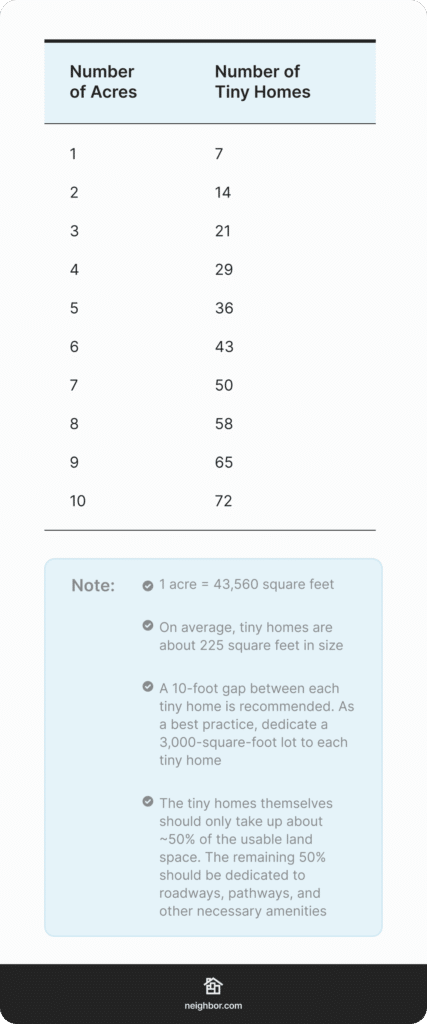
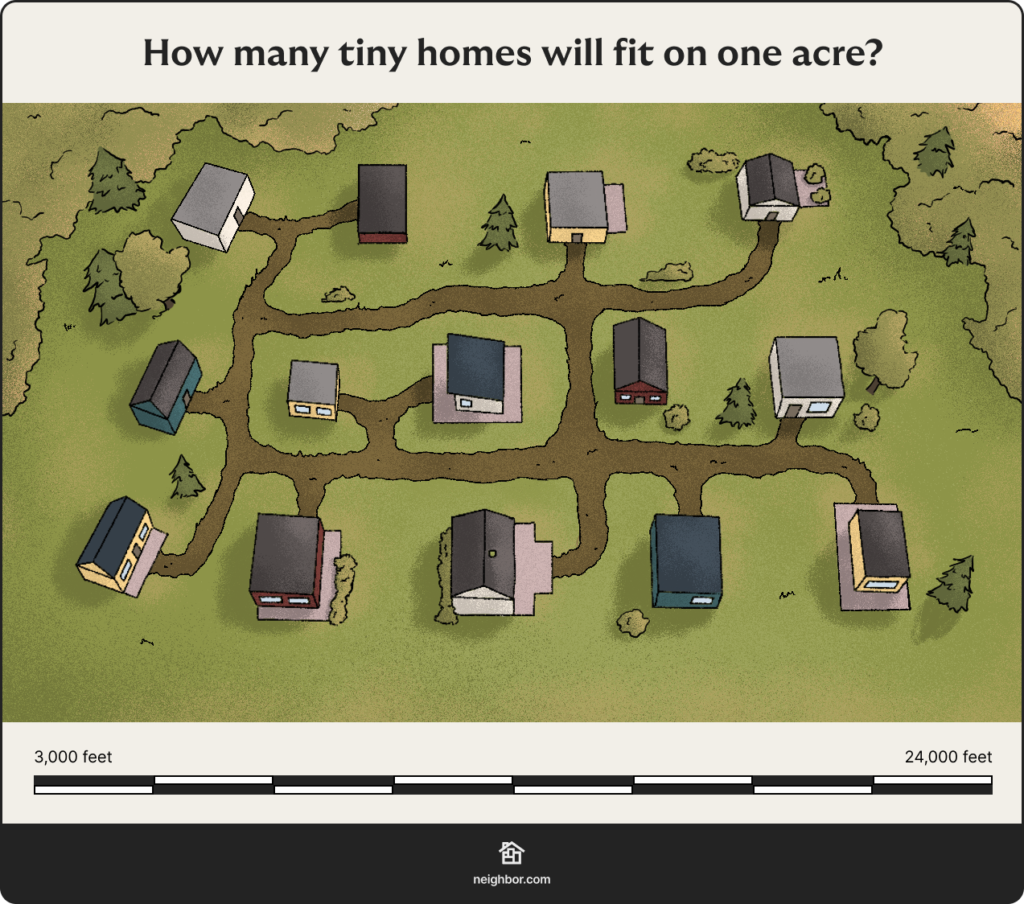
With an acre measuring 43,560 square feet, you’ll be able to fit approximately 14 tiny homes (assuming you allocate a 3,000 square foot lot for each tiny home).
Space Requirements and Accessibility
Tiny homes are compact, but they may require more space than you might initially think. It’s not just about how many homes you can fit in the area. You’ll also need to allocate space for parking, road access, walkways, communal spaces, and utility connections.
Zoning regulations also dictate minimum lot sizes and spacing between homes. If you’re planning a community, think about shared amenities like laundry, mail pickup, or recreational areas to maximize space.
Utilities
Tiny homes need reliable access to water, electricity, and sewage. If your site is already connected to municipal utilities, setup may be simple. Although, in many cases, you’ll need to plan for alternatives like wells, water tanks, solar power, and septic.
Electricity can come from the local grid, solar panels, or generators, depending on availability and budget. Don’t forget about internet access, trash disposal, and recycling – especially if you’re in a remote area.
Step 2: Determine Costs and Budget
Once you know your land is suitable, you can start calculating development costs.
Tiny Home Purchase or Build
Prefabricated tiny homes are available from companies like Tumbleweed Homes or Escape. A tiny home can cost anywhere from $10,000 to $70,000, depending on the size of the living space and its features. Custom-built tiny homes will be more expensive.
Installation Costs
Placing tiny homes on a property involves more than just setting them down. You’ll need to decide whether a foundation, concrete pad, or elevated platform is needed. Each of these come with their own cost. Utility hookups can be a major expense if water, electricity, or sewage connections aren’t already available. Permitting fees, road access improvements, and site preparation should also be included in the budget.
Step 3: Legal and Zoning Requirements
Many municipalities have local building codes and specific rules about where and how tiny homes can be placed.
Zoning Laws
Zoning laws dictate whether tiny homes are allowed on a property and under what conditions.
For example, in California, many cities allow ADUs but require a minimum lot size. Texas has more relaxed zoning in some areas, permitting tiny home villages. However, New York City and other urban areas often prohibit tiny homes due to strict housing codes.
Some areas permit tiny homes only as accessory dwelling units (ADUs), meaning they must be placed behind a primary residence. Other areas may prohibit tiny homes outside of designated tiny home communities or RV park
These variations in tiny home policies make one thing abundantly clear: you always need to check with your local zoning office to see if you need a variance or special approval.
Permits and Licenses
Depending on your location, you may need multiple permits before legally placing and renting out tiny homes (including, building permits, business licensure, or occupancy permits). Each state and local government has its own regulations when it comes to new construction.
Step 4: Set Up Your Tiny Homes
Once the boring legal stuff is handled, it’s time to set up your tiny homes. Here’s what you need to consider.
Tiny Home Community Layout
Again, we’d recommend that you allocate a 3,000 square foot lot for each tiny home in your community. That way, residents don’t feel like they’re living on top of one another.
Prefab vs. Custom
Do you want to build or buy? Prefabricated homes have their perks, but with custom homes, you’ll have more flexibility to design according to your unique style. It may be more expensive initially, but you’ll be able to get to market much faster.
Interior Layout
Due to the nature of tiny homes, the interior layout and furniture has to be carefully curated to maximize available space. Everything in a tiny home should serve more than one purpose. For example, a dinette might turn into a bed, while a staircase doubles as extra storage.
Step 5: Market Your Tiny Home Rentals
With your homes set up, the next step is marketing. Here’s how to attract guests:
Create High-Quality Listings
List your tiny homes on platforms like Airbnb, Vrbo, or Booking.com. Take professional photos of both the inside and outside of the homes. Highlight special features, design, scenic views, and interior design.
Good Marketing Strategy
Marketing isn’t complicated but before you create a bunch of social media accounts you need to fully understand your market so you know how to attract potential tenants in your area. Here are some powerful marketing strategies.
Step 6: Manage the Business
Once your business is up and running, managing it effectively will be key to its success.
Guest Communication
Be responsive to guest inquiries and booking requests. Keep communication clear and professional to ensure a smooth experience for everyone.
Cleaning and Maintenance
Schedule regular cleaning and maintenance between guest stays. Consider hiring a cleaning service that specializes in turning around rentals quickly. Note that if you’re renting short term, this will be a regular expense.
Monitor Reviews
If you’re listing your tiny homes on a rental platform, encourage and incentivize guests to leave reviews.
Alternative to Starting a Tiny Home Business?
If building a tiny house doesn’t seem like the right fit for you, there’s no shortage of creative ways to monetize your empty land. If you want to start making money quickly with little to no startup costs you should rent your space on Neighbor.
Neighbor is a peer-to-peer self storage platform that makes it easy to connect with renters in need of parking or storage space for their things (RVs, Boats, Cars). The cool thing is that they do all the searching for you. Just list your space and collect payments monthly. Find out how much your space can earn you.