


As a parking operator, you’ve got a lot on your plate. You have to manage vehicle access, enforce traffic laws, and keep track of stolen vehicles–all on top of routine lot maintenance. Without the help of a license plate recognition system, juggling it all can be difficult to do.
Traditional methods–like human inspection or basic security cameras–often fail to capture crucial details, especially in fast-moving or low-light conditions. This can create a massive security risk.
License plate recognition systems (LPR) offer a solution to this security issue by providing automatic license plate detection and data processing.
But before you invest in an LPR system, you probably have some questions.
1) How does this license plate recognition work?
2) Is this technology right for all parking lots and garages?
We’ve got the answers.
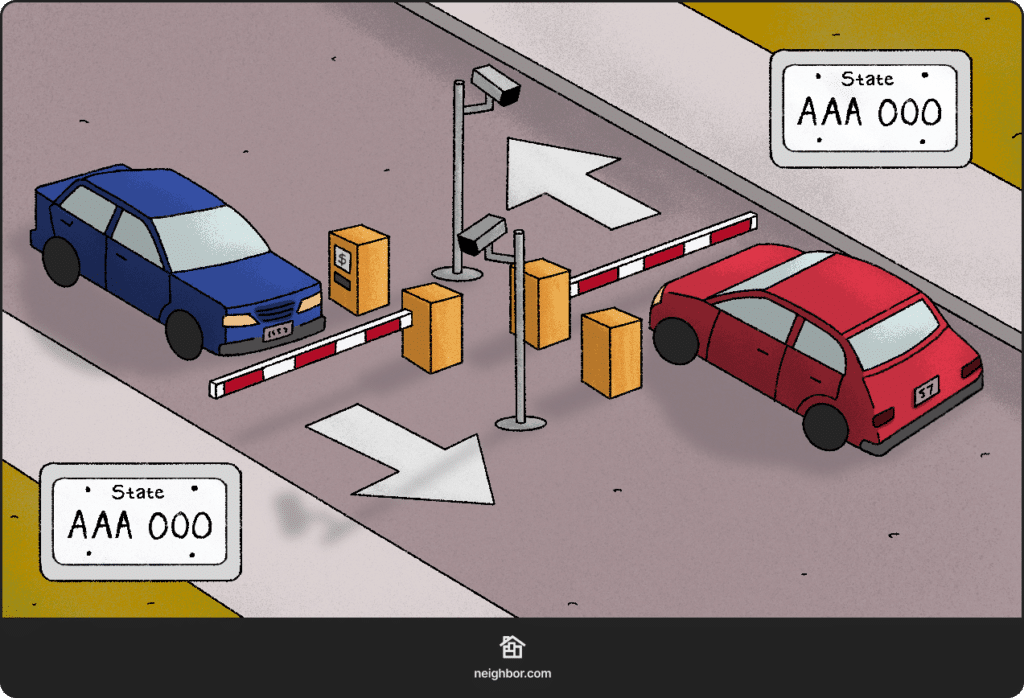
What is Automatic License Plate Recognition and How Does it Work?
License plate recognition–also known as automatic number plate recognition (ANPR) or automated license plate readers (ALPR)–is designed to read vehicle license plates and identify vehicles (as well as their drivers). The technology is pivotal for:
- Law enforcement agencies
- Parking management
- Traffic control
Before the information the LPR collects is usable, it will need to filter through a couple of license plate recognition phases, including the following:

Phase #1: Image Capture
High-resolution cameras, which are often mounted on traffic lights or patrol vehicles, will capture clear images of license plates under various lighting conditions.
Bullet cameras are generally preferred for LPR systems due to their design and effectiveness. These cameras typically record in 1080p high definition, although some newer models offer 4K quality footage. They can capture license plate information at speeds of up to 150 mph.
Infrared cameras, on the other hand, are particularly valuable tools for night-time or low-light environments.
Phase #2: Pre-Processing
Once the images are captured, they’ll go through the pre-processing phase, where the clarity of the license plate numbers is enhanced and contrast is improved. Pre-processing is crucial for recognizing the shape, size, and location of license plates while removing background noise that could interfere with the recognition process.
Phase #3: License Plate Localization
Localization is the next step in the license plate recognition process, where the system identifies and isolates the license plate from the rest of the image. This phase is essential for accurately recognizing the dimensions and position of license plates, which is critical for character recognition steps.
The system detects the license plate’s boundaries and focuses on the relevant area. This precision is vital for minimizing errors and improving the overall accuracy of the LPR system.
Phase #4: Character Segmentation and Recognition
Character segmentation and recognition form the bulk of the LPR process. Optical character recognition technology translates the license plate image into digital characters. This process involves separating individual characters, identifying spaces between them, and recognizing the letters and numbers that make up the license plate.
The segmentation process is where mistakes are most likely to happen. You can expect LPR systems to be over 90% accurate, with many newer models reaching closer to 100% accuracy. However, broken and dirty license plates can cause the system to detect false or incorrect characters.

Phase #5: Post-Processing Actions
Post-processing is the final phase of the LPR system, where the recognized license plate data is analyzed, and specific actions are triggered. This phase includes geometric analysis to resolve any ambiguities between similar-looking characters. The system then compares the data to regional license plate rules to ensure its accuracy.
Benefits and Challenges of License Plate Recognition Systems
With an idea of what license plate recognition is, it’s important to understand its range of benefits, from enhancing security and automating access control to improving traffic management and law enforcement. However, like any technology, LPR comes with challenges as well, including privacy concerns and accuracy limitations in certain conditions.
- Pro: Parking Management with LPR – License plate recognition technology automatically identifies and records vehicle license plates, leading to efficient entry and exit tracking. It provides your lot with real-time monitoring, streamlined payment processes, and better enforcement of your parking regulations.
- Pro: License Plate Recognition Data Integration – LPR systems collect and share valuable data that enhances public safety and boosts law enforcement efficiency. (Integrating LPR with parking lot access control systems can make your lot extra safe!)
- Con: Public Resistance – Privacy concerns and fears of data misuse lead to public resistance against LPR technology.
- Con: Accuracy Issues – LPR systems can struggle with poor lighting, high speeds, dirty plates, and weather conditions, affecting their accuracy.

The Cost to Implement License Plate Recognition Systems
The cost of a license plate recognition system varies depending on the hardware, software, installation, and ongoing maintenance. Generally, you’ll pay between $1,000 to $10,000 for the entire system. Whether you’re considering LPR for security, traffic management, or business parking operations, understanding the key cost components can help you plan your investment wisely.
Installation Costs
The installation price tag for one of these systems depends on the number of cameras, the parking lot’s complexity, and integration with existing infrastructure. Installation may involve mounting cameras, setting up network connections, configuring software, and calibration. Professional installation will cost more, with general costs ranging from about $250 to $1,000 per camera.
Hardware Costs
LPR hardware includes high-resolution cameras, infrared lighting for night-time recognition, processing units, and sometimes dedicated servers. The price depends on the quality of the equipment, the number of cameras needed, and whether the system requires a centralized processing unit. Generally, basic hardware will cost up to $1,000 per camera and higher quality HD hardware will be around $1,000 to $3,000 per camera.
Cloud Storage Costs
Cloud-based LPR systems require storage for captured images and video footage. Costs are usually based on data retention duration, the volume of stored footage, and access requirements. Some providers charge per gigabyte, while others offer tiered pricing based on storage needs, but you can expect to pay about $30 per month for each camera.
Ongoing Maintenance Costs
Maintaining a parking lot LPR system involves software updates, hardware servicing, and potential repairs. Subscription-based LPR solutions may include automatic updates and technical support, while other systems might require manual upgrades.
Regular maintenance ensures optimal performance, accuracy, and compliance with evolving security standards, making it an essential ongoing expense to consider. Maintenance will cost up to about $500 per year for each camera.
Final Thoughts
Selecting the right LPR system involves considering its cost-effectiveness, including the total ownership costs, not just the initial purchase price. Organizations should also assess the camera type, software capabilities, and integration options to ensure the chosen system meets their specific needs.
Are you noticing more spots opening up in your garage or lot? Neighbor, a peer-to-peer car storage marketplace, can help you list those empty spaces and generate more income. You’ll benefit from the host guarantee and can make up to $294 per hour that you work.

Frequently Asked Questions
How Accurate is the License Plate Recognition?
License plate recognition accuracy typically ranges from 90% to 98% in real-world scenarios. Accuracy depends on factors like camera quality, software capabilities, and environmental conditions.
How Much Does a License Plate Reader Cost?
License plate readers themselves can cost anywhere from a couple of hundred dollars to a couple thousand. This doesn’t include installation, maintenance, or hardware and software costs. Some popular options include Dahua ($750 to $1,000), AXIS ($1,300 to $2,000), and Speco ($600 to $1,200).
