

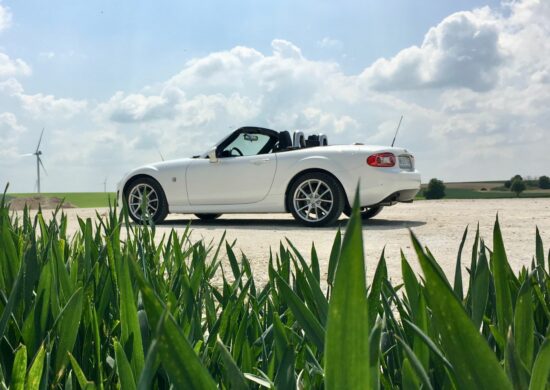
Imagine yourself behind the wheel, the sun casting its golden glow on the open road, a gentle breeze tousling your hair.
The appeal of a convertible is undeniable: the style, the sleekness, the sophistication. But what do you have to compromise on in exchange for that head-turning style? Fuel-efficiency? Durability? Cargo space? Performance on winter roads?
Before answering the call of open skies, you’ll want to peel back the soft top of your dream convertible and evaluate the pros and the cons. Owning a convertible isn’t all sunshine, rainbows, and wind rushing through your hair.
You’ll need to be prepared for higher maintenance expenses and convertible insurance rates, too.
Keep reading as we help you determine if a convertible is the right choice for you.
Benefits of a Convertible
Right from the jump, a convertible’s sleeky and sporty style often turns heads on the road, adding a touch of glamor to your drive.
However, style isn’t the only thing you get when you buy a convertible. Other benefits include:
Balance on the Roads
Who said you have to compromise style for safety?
Modern convertibles feature roll bars and other safety systems, enhancing their sporty look without sacrificing safety (Check out these top convertible sports cars of 2023, equipped with advanced safety features).
Because convertibles are designed with a lower center of gravity, they are surprisingly well-balanced, even when zooming through tight bends in the road. Much like roll bars, this lower center of gravity contributes to added rollover protection.
But when exactly does your convertible sports car need a roll bar? Check out this article.
Versatility and Adaptability
Another significant benefit of owning a convertible is its versatility. With the option to drive with the top on or off, you can adapt to various weather conditions and personal preferences at a moment’s notice.
Enhanced Visibility
Driving a convertible with the top down offers better visibility, making it easier to maneuver and park. With no fixed roof or door frames obstructing your view, you’ll be able to see your surroundings more clearly (with fewer blindspots).
Things You May Not Like About Owning a Convertible
So, here’s the deal with convertibles – they’re awesome, no doubt, but like anything in life, they come with their own set of issues. It’s important that you consider these cons before spending money on a convertible.
Security Risks
One of the questions that many prospective owners ask is, “Are convertibles safe?”
The rumors are true: owning a convertible—particularly a soft-top model—can make you more susceptible to theft and vandalism. This is because the soft top is easier to cut into and as a result, thieves can more easily gain access into your vehicle.
You can minimize this risk and secure your convertible by storing your items in the trunk and ensuring nothing is visible inside your parked car. Or, better still, you can opt for a hard-top convertible that provides better protection.
Higher Maintenance and Repair Costs
Owning a convertible typically comes with higher maintenance and repair costs due to the intricate roof mechanisms (and the higher potential for leaks). *Note: The potential for leaks is high with both soft-top and hard-top convertibles.
Repairing a convertible top, in some cases, can be more expensive than repairing the bodywork on a damaged sedan or a coupe.
Replacement costs for convertible tops can range from $220 to $1100, depending on the make and model of the vehicle.
Comfort and Noise Concerns
Soft-top convertibles often have less insulation and soundproofing, resulting in a noisier and less comfortable ride. Wind noise can particularly be a problem when driving a soft-top convertible with the top down.
However, comfort levels may vary depending on the specific make and model of the convertible, with some offering adjustable seats and advanced suspension systems to reduce wind noise.
Considerations to Make When Buying a Convertible
More than the benefits and issues, you’ll want to know the factors to consider when buying a convertible car.
Some of these considerations include:
Financial Implications
It’s crucial to assess the financial factors, such as insurance costs, fuel economy, and resale value, before purchasing a convertible.
Insurance Costs
To start with, insurance costs for convertibles may be higher due to potential safety concerns and more costly repairs. The increased premiums are also attributed to convertibles’ higher purchase price than their non-convertible counterparts. The average cost of car insurance for convertibles is $1,873 per year, which is $449 more than the national average cost to insure a car.
Greater Fuel Costs
Generally speaking, convertibles tend to have slightly worse fuel economy than their non-convertible counterparts due its less aerodynamic body style, along with the added weight of the mechanisms that power the convertible top.
For instance, the MINI Convertible is the most fuel-efficient convertible with an EPA rating of 32 MPG, while V8-powered convertible models such as the BMW M6 convertible have a combined mileage of 16-17 MPG.
This means that for every 32 miles traveled by the MINI convertible, it takes a gallon of fuel. To put that in perspective, the new Toyota Camry Hybrid sedan has an EPA rating of 53 MPG.
Lower Resale Value/Higher Depreciation Rate
The resale value for convertibles is an equally important factor to consider. While the resale value will vary from model to model, you should bear in mind that convertibles generally depreciate faster than their hardtop counterparts.
However, some models, such as the Mazda MX-5 Miata, have a resale value of 4.3 percent above the average for convertibles, which is 64.5 percent.
Luxury convertibles like the Porsche 911 can retain 73.3 percent of their value after five years.
With these examples in mind, evaluating the potential resale value of the specific make and model is crucial when considering buying a convertible.
Practicality and Lifestyle Factors
Perhaps the most important question of all is, “Does a convertible fit into your lifestyle?” If you plan to treat your convertible as your daily driver, consider trunk or cargo space, weather conditions in your area, and how the convertible will fit into your daily routine, such as commuting and running errands.
Before purchasing a convertible, you’ll want to weigh how important cargo space is to you (and anyone else who plans to drive the vehicle), as convertibles often have limited trunk space and cargo capacity. As a result, if ample space is vital for your day-to-day activities (think weekly soccer practices, complete with all the gear, trips to the grocery store, and Saturdays spent helping your friends move), a convertible might not be the right fit.
You’ll want a car that is as practical as it is stylish, so do a deep dive into your daily routine.
Local Climate
Weather conditions in your area may also impact how often you can enjoy driving with the top down. Hot and sunny weather is optimal for top-down driving, while cold and wet conditions can make for an uncomfortable driving experience.
Though, you certainly don’t have to rule out a convertible just because you live in a state known for its brutal winters. Convertibles make for great summer cars. So, you have room in your budget for
Summary
If you are thinking about getting a convertible (and plan on using it as a summer car—rather than your daily driver), first, make sure you have space for a second or third vehicle.
If you don’t have room in your home garage for a new convertible, outdoor storage is not recommended. Instead, it’s recommended that you store your new vehicle in an indoor storage unit. With Neighbor, a peer-to-peer storage marketplace, you can also rent out a residential garage near you (if you’d prefer not to store your convertible in a 10’x20′ storage unit).
Frequently Asked Questions
Are Convertibles Worth Buying?
Convertible ownership comes with a few compromises, but the experience of driving them can be enjoyable enough to make up for it. If you find yourself frequently opening the roof and making use of the car’s unique features, then buying a convertible could be worth it.
Are Convertibles High Maintenance?
Due to additional moving parts and the higher risk of wear-and-tear that a soft-top poses, convertibles require more maintenance than other cars. As a result, owners of convertibles typically face higher initial costs and increased maintenance and repair expenses compared to non-convertibles.
Why Is Convertible Car Insurance So High?
Convertible cars have added safety features such as steel-reinforced A-pillars and are more expensive to build due to their motor and other components that control the convertible top, so they cost more to buy and repair. Therefore, insurance companies charge higher premiums to cover the higher cost of a potential physical damage claim.