


Are you concerned about leaving cars in your unsecured multifamily property lot? Car break-ins, vandalism, and theft are extremely common offenses, especially in parking lots and garages that lack parking lot access control systems.
Just over the past few years, vehicle theft incidents increased to 283.5 per 100,000 people from a previous 199.4! These numbers can be intimidating, especially since many of your residents rely on their cars as their primary mode of transportation.
While things happen, a single-car break-in can sour a multifamily property’s reputation, especially if that tenant leaves a negative review (a review that will live on the site for months–potentially years–to come).
Luckily, parking lot access control systems can be an easy fix to keep the lot a little safer and give residents some peace of mind!
Types of Parking Lot Access Control Systems
Parking access control systems can be helpful tools if you’re concerned about car crimes. They will aid in monitoring and logging the cars that come in and out of the lot, which can make it much more difficult for unauthorized people to get into the lot.
If you’re looking to add a parking lot access control system to your multifamily property, there are a few options to choose from:
- Barrier Gate Systems
- Keypad Access Systems
- RFID-Based Systems
- License Plate Recognition
- Video Intercom Systems
- Fob Access Control
Each type offers different features and advantages, making it essential to understand their specific applications and benefits.
#1: Keypad Access Systems
Cost: About $1,500 Per Entry Point
Keypad parking lot access control systems require residents to enter a PIN to access the parking facility. These systems are similar to phone dial pads and are commonly used in residential parking areas and small commercial properties.
The primary function of keypad access control systems is to control vehicle access with entry codes for approved tenants, ensuring that only authorized vehicles can park in the designated areas.
| Pros | Cons |
| Cost-effective | Codes and PINs can easily be shared |
| Limits the lot to tenants only | Can be susceptible to hacking |
| Simple design, no need for keys | Cannot be used during power outages |
#2: Fob Access Control
Cost: $1,000 – $3,000 Per Entry Point
Fob parking lot access control systems offer convenient access and quick control, making them ideal for busy environments that often operate at peak hours.
These systems provide secure and efficient entry, allowing for automatic identification and access with small handheld devices (fobs). This type of technology ensures that only authorized individuals can get into the parking facility, enhancing security measures and streamlining access.
| Pros | Cons |
| Fobs are very easy to use | Fobs can be stolen and used by unauthorized users |
| They use encrypted technology | The fobs need batteries to operate, requiring periodic replacements |
| Provides a data trail of who enters and leaves |
#3: Video Intercom Systems
Cost: $1,500 – $5,000
Video intercom parking lot access control systems provide real-time monitoring and communication, allowing for efficient vehicle access verification. These systems allow guests and visitors to request access at the parking entrance, making them particularly useful in high-security areas, business centers, and gated communities.
Integrating video intercom systems with barrier gates and security cameras ensures that only authorized individuals gain access, making this option a comprehensive security solution.
| Pros | Cons |
| Allow remote access | Repairs and upgrades may be needed over time |
| Can deter crime since there are cameras | The system won’t work with power outages |
| You can integrate these systems with barriers and gates | There are some cybersecurity risks |
#4: Barrier Gate Systems
Cost: About $6,000
Barrier gate parking lot access control systems are a popular choice for many parking facilities due to their effectiveness in blocking unauthorized vehicle entry. These systems typically consist of a physical barrier that rises and lowers to allow or restrict access, controlled by an approval method such as a card reader or a keypad.
Additionally, parking gate systems are often equipped with security cameras and other monitoring devices to enhance the security of the parking area. These are especially helpful if you have valuable equipment, like EV charging stations, in your lot, as the gate keeps unauthorized drivers from charging their vehicles and monopolizing tenant resources.
| Pros | Cons |
| The visible barrier can deter unauthorized users | The gates will need periodic maintenance |
| Can be integrated with other systems | They can malfunction |
| Improves traffic flow | Injuries are possible |
#5: License Plate Recognition
Cost: $3,000 – $10,000
Automated License Plate Recognition (ALPR) technology simplifies vehicle entry and exit by automatically reading license plates. This parking control system is useful in managing parking duration and controlling access for authorized vehicles. In gated communities, license plate readers can register residents’ cars for automatic entry, providing a hassle-free experience for residents.
However, license plate recognition systems may struggle with new or dirty plates, which can be difficult to read.
| Pros | Cons |
| Heavily restricts entry to specific license plates | The system may not work if a license plate is dirty or weather interferes with license plate visibility |
| Easy to use | It requires regular software updates and maintenance |
| Provides real-time tracking |
#6: RFID-Based Systems
Cost: $10,000 – $20,000
RFID-based systems utilize tags for non-contact vehicle access. This RFID technology also promises quick vehicle identification, enhancing entry/exit speed and minimizing congestion.
| Pros | Cons |
| Only people with tags can enter | Can be expensive |
| Hands-free access | People can share tags |
| Tracks who enters and leaves | Bad weather can prevent accurate tag reading |
Choosing the Right Parking Lot Access Control System
Trying to choose the right parking lot access control system for your multifamily investment? You’ll need to consider factors like traffic patterns, the number of users, and integration capabilities. It can also increase the value of your property to potential renters and boost the occupancy rate.
Assessing Property Needs
Understanding the unique needs of your property, such as the volume of traffic and the types of users, is key to selecting the optimal parking access control system for you.
For instance, a commercial building with high traffic might benefit more from an RFID-based system, while a small residential complex might find a keypad access system more suitable.
Integration Capabilities
Integrating the parking access systems with existing systems is one way to achieve efficient parking management. Integrating the access control system with automated payment systems, security cameras, and management software allows for comprehensive monitoring and control from a single interface.
Scalability and Flexibility
Scalability and flexibility should be two top priorities when choosing a parking lot access control system. Look for parking systems that use artificial Intelligence (AI) and Machine Learning (ML), as these systems can analyze parking data, predict parking demand, and optimize resource allocation.
Adaptability is crucial for properties anticipating changes in parking requirements, such as increased traffic or additional spaces.
Final Thoughts
Your end goal is simple: pick a parking management solution that provides a secure and seamless experience for all tenants. That way, you can reduce tenant turnover and keep spaces occupied.
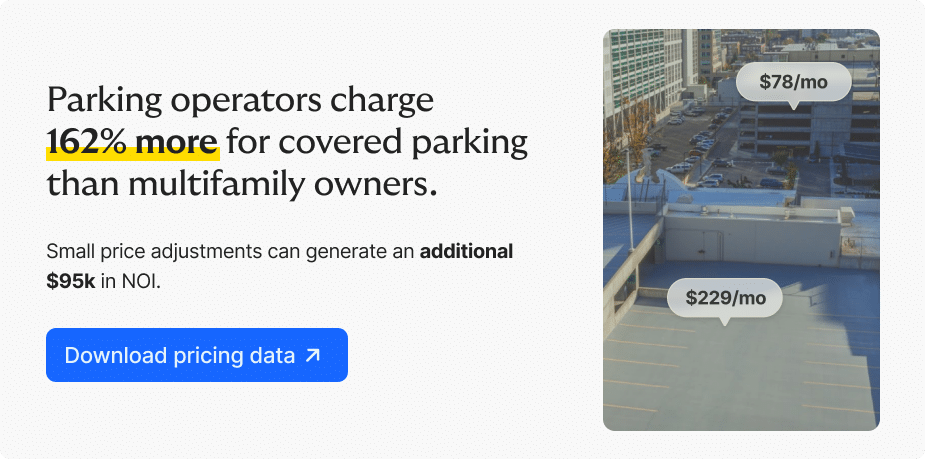
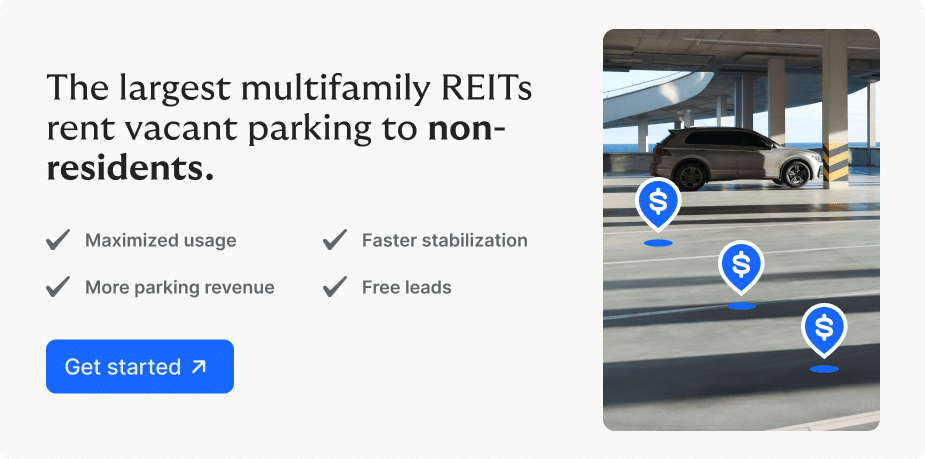
If you’re starting to notice an uptick in empty parking spaces in your parking lot, you can always use Neighbor, a peer-to-peer car storage marketplace, to list those vacant spaces and generate ancillary income from non-residents. As a Neighbor partner, you benefit from the host guarantee and can make up to $294 per hour that you work.
To learn more about optimizing your parking strategy further, fill out this form here, and don’t forget to download the 2025 Multifamily Parking Intelligence Report.
Frequently Asked Questions
What Is Access-Controlled Parking?
Access-controlled parking is a type of technology system that helps property owners manage traffic flow in their parking garages or lots. They keep track of who enters and leaves and help ensure security by only allowing authorized vehicles in.
What Are the Disadvantages of a Smart Parking System?
The primary disadvantages that come with a smart parking system are cybersecurity issues and maintenance. Data inside the systems can potentially be hacked if it isn’t encrypted, and you’ll often need to perform regular software updates and maintenance checks.
