


While salty dogs and ornery sea captains had a good run for a few hundred years, today’s modern boater is a kinder and gentler sort.
That is, until, you see a backup at the boat ramp. Then it’s just like old times. (Picture Captain Hook waiting in line at the DMV.)
So, how can you stay within the good graces of other boaters at the boat launch ramp? Read on, and we’ll fill you in.

Master the Basics of Boat Ramp Etiquette
While some boat launch ramps have posted rules, a sizeable proportion do not.
As a boater, you’re expected to arrive at the ramp ready to follow a tacit set of rules that dictate the proper boating etiquette.
Following these unspoken guidelines not only ensures everyone’s safety near the ramp but also prevents traffic backups and interruptions for others.
Respect Launch Ramp Rules and Regulations
Be aware of the number of boats permitted on the ramp at one time, the speed limit, and the type of boat that can be launched. If uncertain of the rules, seek clarification from the boat ramp attendant, port captain, or other marina employee.
Prepare Your Boat in Advance
Before nearing the ramp, it’s vital to prepare your boat and equipment in the allotted staging area. Preparing your boat away from the launch area reduces congestion and ensures a smoother launch for everyone involved.
This involves aligning your boat and trailer and properly securing your equipment. When it comes to your lines – you don’t want to suddenly realize that you can’t find your painter while you’re on the ramp.
Here’s our essential boating checklist to help you make sure you have everything you need.
Follow the Correct Launch Procedure on the Ramp
- Remove the boat from the trailer
- Immediately move out of the way of other individuals trying to launch or retrieve
- Tie off on the courtesy dock
- Proceed to a parking space with your truck
- Return to your boat and disembark from the courtesy dock post haste.
It’s also important to acknowledge those ahead of you in the queue. The ramp should operate on a first-come-first-serve basis, so be considerate of the fact that they arrived before you – especially when the parking lot is crowded.

Perfect Your Launching and Retrieving Techniques
Improving your launch and retrieval techniques will help you minimize time spent on the ramp, thus reducing congestion and enhancing safety.
Align Your Boat and Trailer
Accurate alignment of your boat and trailer is pivotal for a seamless launch or retrieval procedure. Here are the steps to follow:
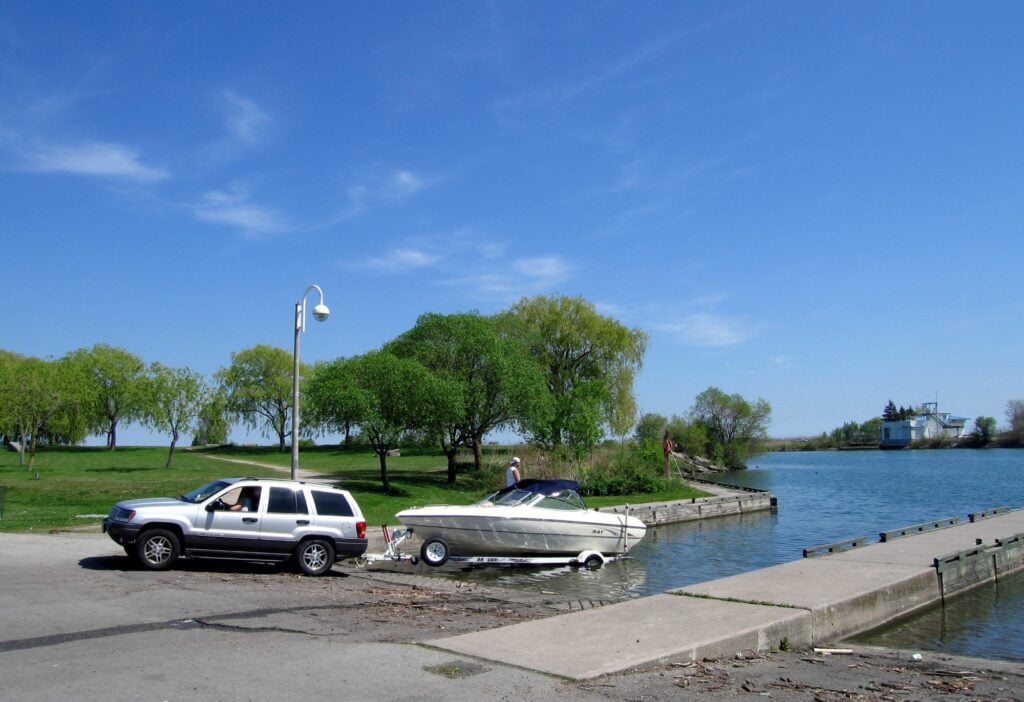
- When backing down the ramp, cease when the trailer tires come into contact with the water.
- Gradually, continue backing down until the boat is low enough to float.
- If the trailer begins to deviate from the desired path, maneuver slowly and adjust the trailer’s position.
Use a Spotter for Assistance
A spotter is invaluable during boat launch to ensure the path is clear. These spotters will inform the driver when it’s safe to back down the ramp.
If you encounter difficulty launching your boat or someone else’s boat, don’t hesitate to request assistance from a spotter or a fellow boater. A helping hand can make all the difference in ensuring a smooth and safe boat launch.
Safely Secure Your Boat
Securing your boat safely is critical to preventing accidents and potentially damaging your vessel.
Before fastening your boat to the courtesy dock, assess the condition of the mooring lines. To secure your boat to the dock:
- Use mooring lines and cleats to tie your boat securely.
- Make sure the lines are properly tensioned and not too loose.
- Double-check the knots to ensure they are secure. After securing your boat, verify its location to ensure it’s not too close to other boats or the dock.
When securing your boat to a trailer, use straps, tie-downs, and a safety chain.
Respect the Boat Ramp Area
Navigating the boat ramp area with caution and awareness is vital for maintaining a safe and orderly environment. Being aware of other boaters and pedestrians and abiding by the ramp rules and regulations ensures everyone can enjoy their time on the water.
Choosing a suitable parking spot for your tow vehicle and trailer is also vital if you don’t want to be a hindrance to other boaters. Park your vehicle in a designated parking facility or a location that is not obstructing traffic.
Promote a Positive Boating Community
Most boaters are relatively courteous, but you never really know who you’re dealing with when using a public ramp. Other boaters may be inexperienced, intoxicated, or not speak English. Before you launch, do a quick scan to assess who’s around and who’s next in line.
Communicate Effectively with Crew
Many boaters have had this experience: an experienced crew member is told to “grab the line,” and the crewmember looks around confused because there are several lines to choose from.
Things can happen very fast in boating, so this type of ambiguity is dangerous.
Use clear and concise language when providing instructions or commands, employing nautical terms when possible. (If you still use “right” instead of “starboard,” you could benefit from basic boating education.)
Brief your crew before you get to the boat ramp. Select an appropriate communication channel for the situation, such as verbal communication, hand signals, or other methods of communication. Ultimately, the captain is responsible for ensuring that all crew know enough to carry out their functions – even on land.
Environmental Considerations at the Boat Ramp
Being environmentally responsible at the boat ramp is essential for preserving local ecosystems and preventing the spread of aquatic invasive species. This section covers the US Fish and Wildlife Service’s ‘Clean, Drain, Dry’ regimen.
Clean, Drain, and Dry Your Boat
The “Clean, Drain, Dry” practice is vital for preventing the spread of invasive species and protecting local ecosystems. This involves:
- Remove weeds from your boat and trailer
- Drain the bilge, live wells, and bait wells before departing the ramp
- Clean, drain, and dry your boat
By following these steps, you play a crucial role in protecting the environment.
Consult the manufacturer’s instructions for cleaning and draining your boat, using eco-friendly cleaning products when possible. Proper boat maintenance not only benefits the environment but also prolongs the life of your vessel.
Proper Waste Disposal
Correct waste disposal at the boat ramp is crucial in maintaining cleanliness and safety for all users. Here are some guidelines to follow:
- Refrain from dumping waste into the water.
- Properly dispose of hazardous materials, such as used oil or batteries, to protect the environment.
Store Your Boat Properly
Getting your boat in and out of the water safely is one part of the boat ownership equation. But just as important is how you store your boat and protect your investment.
You should ideally store your boat in an enclosed (or at least covered) storage space, such as your garage or a storage facility. If you are looking for an affordable way to store your boat close to home, you can search for nearby boat storage on Neighbor.

Frequently Asked Questions
What if There’s a Traffic Jam at the Ramp When I Want to Retrieve?
Avoid pulling your vessel into a launch lane until the towing vehicle is at the ramp. Wait offshore and clear the ramp until the trailer arrives with the driver.
Why Do Boat Ramps Get Slippery?
Theoretically, only ill-maintained boat ramps get slippery because the marina staff is supposed to deal with this problem.
Boat ramps get slippery in warmer months as slime and algae build up on the ramp’s underwater surface.
And not just trucks slip…so watch your footing!