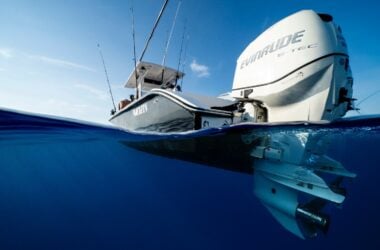


There are four basic types of boat motors to choose from as a boat owner (or potential boat buyer). The engine you choose has to complement the intended use for your boat, along with the size and type of boat you’re purchasing (or the type you currently own).
But did you know that your current boat may have more than one option of engine? Eventually, you may decide to convert from one engine type to another. But before you do, you’ll need to understand the different types of boat motors and learn to identify which motor types are compatible with your model.
Understanding Boat Motor Types
To make an informed decision, you’ll need to understand the differences between boat motor types.
Outboard Motors
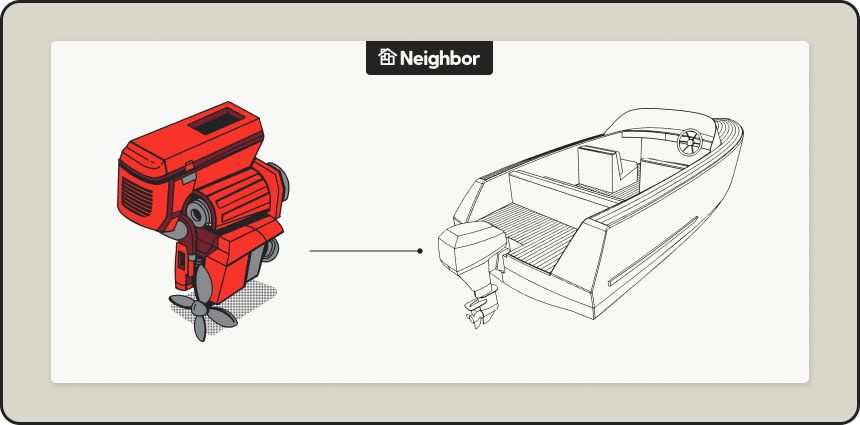
When it comes to versatility, outboard motors are hard to beat. Mounted externally on the boat’s transom, outboard motors combine the entire engine, gearbox, and propeller in one compact unit. These motors are available in a range of sizes, along with varying horsepower and power sources, including:
- Electric
- Two-stroke
- Four-stroke
- Diesel engines
An outboard engine is commonly used for water sports, fishing, and boating activities. Honda and Yamaha are two popular outboard motor choices.
Positives of Outboard Engines
- High power-to-weight ratio when compared to inboard engines
- Easier to maintain (easy access)
- Can be trimmed in lower water
- Available in many sizes and options
Negatives of Outboard Engines
- Not optimal for large boats
- It can be limiting for some water sports
- Limited power output
- Reduced interior space
- Higher purchasing costs
Inboard Engines
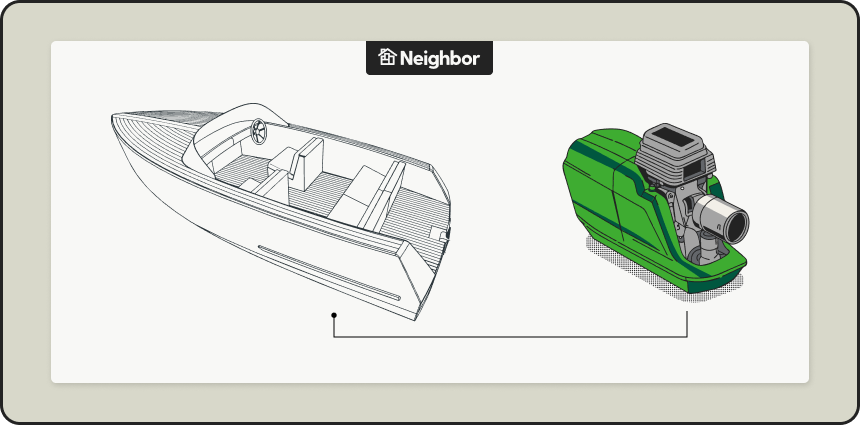
Inboard engines are mounted inside the boat’s hull, very similar to a four-stroke automotive engine. Inboard engines provide stability for larger boats because they have more weight in the rear of the boat. MerCruiser is a popular inboard engine brand.
These engines are available in both gasoline and diesel options, with power outputs ranging from 90 to over 1000 horsepower per engine. One key feature of inboard engines is the direct drive system, in which a drive shaft connects the engine to the propeller beneath the boat.
Positives of Inboard Engines
- Great fuel efficiency
- Excellent weight distribution
- Less noise than outboard motors
- Protection from damage because of its location in the hull
- Increased longevity
- Superior torque
Negatives of Inboard Engines
- Maintenance challenges
- A larger draft makes them not suitable for shallow water
- More expensive upfront costs
Sterndrive Motors
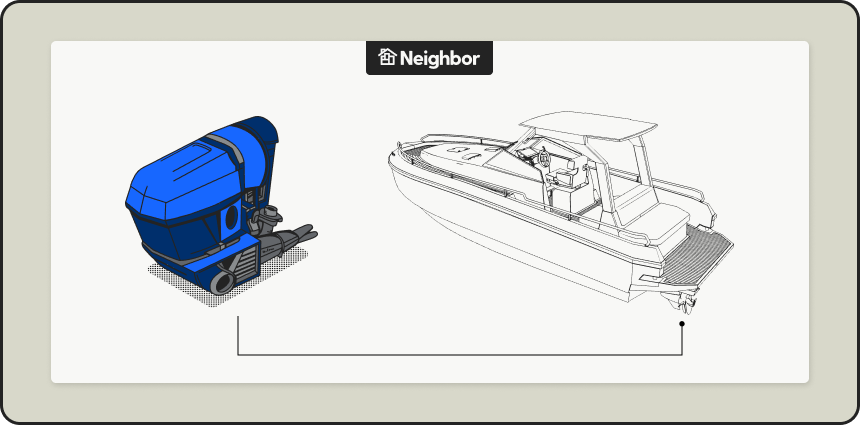
Sterndrive motors, also known as inboard/outboard engines, combine elements of both inboard and outboard engines, offering excellent versatility and performance for pleasure boats. Mercury makes a range of sterndrive motors.
A sterndrive motor consists of an inboard engine located within the boat and an external drive unit attached to the transom, featuring a gearbox, vertical driveshaft, and propeller.
Positives of Sterndrive Boat Engine
- Excellent maneuverability
- Somewhat adjustable for shallow water operation
- Greater power than an outboard motor
- Smart choice for large motorboats
- Improved fuel efficiency
Negatives of Sterndrive Boat Engines
- Demand more maintenance
- More parts (more opportunities for issues)
Jet Drive Engines
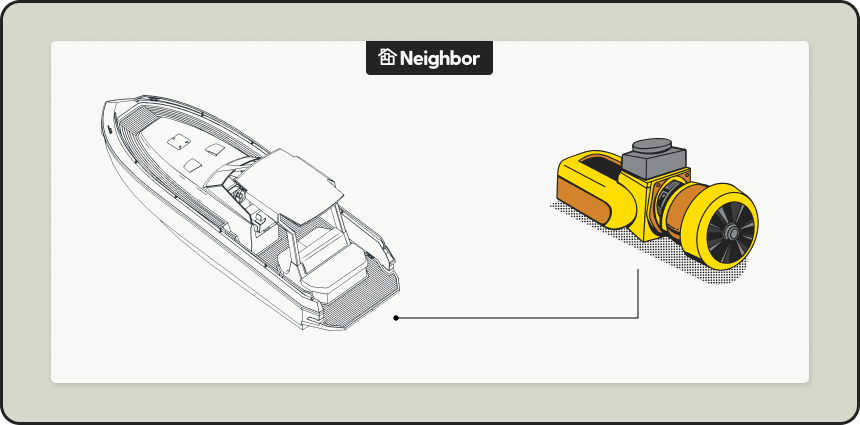
Jet drive engines are designed for high-performance and shallow water applications, making them a popular choice for personal watercraft.
Instead of a traditional propeller, jet drive engines use water propulsion for superior performance. Yamaha produces many of the most popular jet-drive engines.
Positives of Jet Drive Engines
- Excellent performance in shallow water
- No exposed propeller blades
- Highly maneuverable even at slow speeds
- Enhanced safety for swimmers and marine life
Negatives of Jet Drive Engines
- Require a lot of maintenance
- Restricted availability in the boat model options
- Lower top speeds than other engines
Factors to Consider When Choosing a Boat Motor
When selecting a boat motor, you’ll need to account for the following factors: boat size and weight, fuel delivery systems, and the boat’s intended use.
Boat Size and Weight
Boat size and weight are crucial in determining the appropriate boat motor type based on maximum horsepower rating and overall performance.
Here are some general guidelines:
- Larger boats will require more powerful motors for propulsion.
- Smaller boats can be powered by smaller motors: Fair warning: overpowering a small boat negatively impacts both performance and safety.
- Larger boats mean higher weights. The heavier the boat, the more motor power is required.
Outside of a boat’s size and weight, it’s also vital to consider the manufacturer’s recommendations for maximum horsepower and confirm that the chosen motor is within the suggested range.
Fuel Delivery Systems
Fuel delivery systems play a significant role in boat motor performance, i.e., fuel efficiency, emissions, and throttle response.
There are three primary fuel delivery systems for boat motors:
- Carbureted fuel systems: These are less efficient and produce higher emissions.
- Direct fuel injection engines: These offer reduced emissions and improved fuel efficiency.
- Electronic fuel injection: This is the most advanced and efficient fuel delivery system.
Carbureted fuel systems are outdated and mostly found on older boats.
However, electronic fuel injection systems (EFI) are the standard for sterndrive, outboard, and inboard engines because of their benefits. They provide uniform air and fuel distribution, which in turn, leads to better throttle response and improved power.
Remember: A boat’s fuel delivery system directly affects the performance, fuel efficiency, and emissions of the motor.
Intended Use of the Boat
How you intend to use your boat should be a key consideration when comparing motor types, Activities such as fishing, water sports, or recreational boating will demand a motor of a certain horsepower.
For instance, water sports enthusiasts may prioritize a motor with high power, while fishing enthusiasts will require an engine with excellent fuel efficiency and quiet operation.
Summary
During periods of inactivity, all types of boat engines require proper storage. If stored in an outdoor storage space, weather-related damage and corrosion can occur.
To get the most out of your vessel, protect the engine by storing it in a place where it isn’t subject to theft or extreme temperatures that can result in damage. Be warned: boat motors are expensive and highly susceptible to robbery.
If you are struggling to find a place to store your boat, use Neighbor, a self-storage marketplace that provides safe and budget-friendly storage space for your boat (and its motor!).
FAQ
What Are the 4 Basic Types of Boat Engines?
The 4 basic types of boat engines are outboard motors, inboard engines, sterndrive motors, and jet drive engines.
What Are the Different Types of Outboard Motors for Boats?
The most common types of outboard motors for boats are two-stroke and four-stroke engines.
What Is the Most Efficient Boat Motor?
In general terms of fuel efficiency, emissions, and overall performance, the Four-Stroke Electronic Fuel Injection (EFI) Outboard Motors are considered among the most efficient. These engines also have lower emissions and better longevity.