


Transporting a car on a trailer, whether it’s your cherished classic or your dealership’s latest model, comes with the potential for damage (and danger to others on the road) if it’s not tied down to the trailer well enough.
Below, you’ll find step-by-step instructions for securely tying down any car on a trailer. This step-by-step walkthrough applies to classic car owners, car dealers, and virtually anyone in need of transporting their vehicle safely.
Essential Equipment for Car Tie Downs
First of all, you’ll need the right gear if you want your car to make it to its destination, fully secured to a trailer. You will need to make sure the following are available and in good working order:
- Axle straps: These are used to anchor the vehicle to the trailer. They wrap around the car’s axles, providing a stable point to secure the load. Choose axle straps made from durable materials for long-lasting use. (Brand recommend: US Cargo Control)
- Tire straps: Costing around $50 per strap, these are an alternative to axle straps. Tire straps wrap around a car’s wheel, offering another secure method to keep it in place. This is particularly useful for cars where axle strap use is not ideal. (Brand recommend: US Cargo Control)
- Ratchet straps: Typically in the $20 to $30 range, this type of strap is usually made from flat polyester webbing and a ratchet mechanism. Ratchet straps work in tandem with axle straps to tighten and secure the load, ensuring the car doesn’t shift during transit. (Brand Recommend: Uline)
Each piece of equipment plays a critical role in the safety and stability of your vehicle when you hitch it to a trailer for transport, so it’s important to choose high-quality products made from durable materials.
Preparing Your Vehicle for Trailer Transport
Before you start the tie-down process, preparing your vehicle correctly is essential for safe transport. Here are the steps to follow:
- Inspect the vehicle: Check for any loose parts or items that could shift or fall off during transport. Ensure that all doors, windows, and compartments are securely closed.
- Clean the vehicle: A clean car allows for better strap grip and reduces the risk of damage from debris during transit or scratches beneath the straps.
- Check tire pressure: Properly inflated tires help maintain the balance of the car on the trailer, and they reduce the risk of strap slippage.
- Disable alarms and parking brakes: To prevent any complications during transport, disable any alarms and release the parking brake. This step is crucial to avoid brake lock-up and potential damage.
- Choose the right tie-down points: Identify strong, non-moving parts of the vehicle’s frame or chassis to attach the straps. Avoid using parts that can easily be damaged, like spoilers or rear-end bumpers.
Step-by-Step Guide: Securing Your Car on a Trailer
If you’re looking for instructions on properly securing your car to a trailer, we’ve broken it down into 7 easy steps.
- Position the car on the trailer: Drive the car onto the trailer, ensuring it’s positioned in the center so that the weight is evenly distributed across the four corners of the trailer. This balance is crucial for maintaining stability during transport. Once positioned, apply the car’s parking brake temporarily to prevent it from rolling while you attach the tie-downs.
- Attach axle straps: Place these straps around the car’s back and front axle, avoiding any contact with sharp edges or moving parts. Ensure the straps are snug but not overtightened to prevent damage.
- Secure with four ratchet straps: Attach ratchet straps to the axle straps, making sure to hook the ratchet strap securely to a D-ring, snap hook, or other solid attachment point on the trailer for easy access and tightening with a straight pull. Pull the strap through the ratchet, pulling tighter until firm. This step will ensure the car is held securely but without excessive force that could damage the vehicle.
- Use tire straps if appropriate: If you’re using tire straps, wrap them around each tire, securing them to the trailer’s tie-down points.
- Double-check all attachments: Go over each strap to ensure they are properly secured and tightened. This step is crucial to prevent any movement of the vehicle during transit.
- Perform a final inspection: Before setting off, conduct a final inspection to ensure everything is secure. Check for any excess slack for any loose strap ends or chains, potential rubbing points, or other issues that could cause damage during transport.
- Monitor the vehicle during transit: Regularly check the straps during stops to ensure they remain tight and the car is secure. Vibrations and movements during the journey can sometimes loosen straps.
Chains vs. Straps: Securing Your Vehicle Effectively
When it comes to tying down a car on a trailer, you may have a choice between straps and chains. Both have their specific uses and benefits.
Using Axle Straps and Ratchet Straps
Axle straps are Ideal for vehicles with delicate finishes, providing strength without risking damage to the car’s surface. Axle straps should be wrapped around solid parts like axle tubes, avoiding sensitive areas such as brake lines. Typically, four straps are recommended for securing a car on a trailer.
Ratchet straps, used in conjunction with axle straps, offer easy adjustment and firm securing. They should be attached to strong points on the vehicle’s frame or axle, ensuring a tight hold without over-compression.
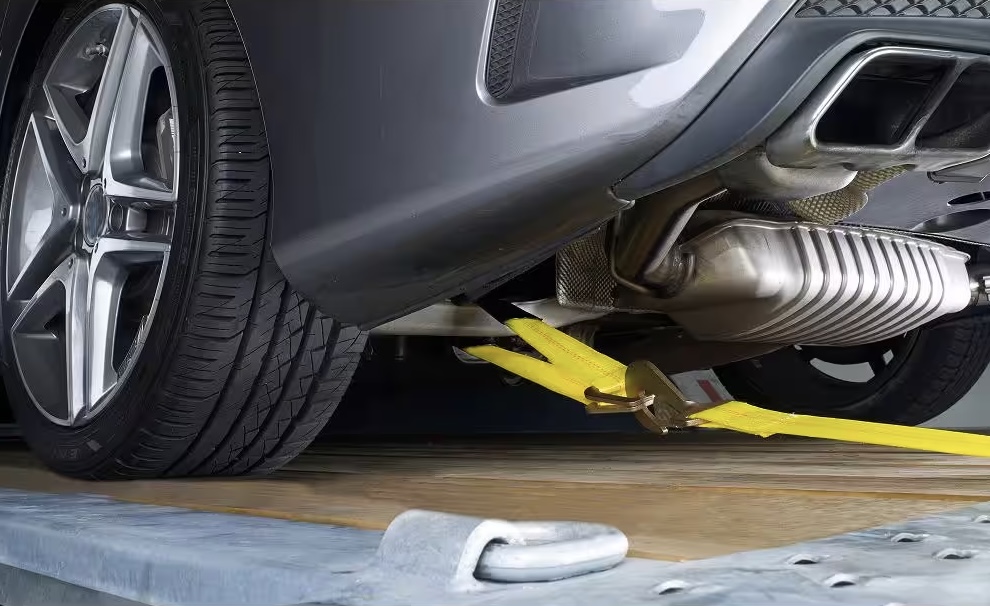
Image courtesy of Home Depot (Product shown above: 2 in. x 36 in. x 3,333 lbs. Keeper Axle Strap with D-Ring and Protective Sleeve Rope)
Using Chains and Chain Binders
Generally speaking, chains are used for heavier vehicles, in situations requiring robust securing, and for towing. They are known for their strength and ability to handle significant weight. However, due to their rigidity, chains might not be suitable for all vehicles, particularly those with delicate exteriors, as they can cause scratches or dents.
Chain binders are tools used to tighten the chains, ensuring the vehicle is firmly anchored to the trailer. When using chains, it’s important to attach them to the vehicle’s strongest points, such as the frame, or directly to the axles, to ensure a secure and stable hold.
By understanding the differences between using straps and chains, you can choose the best method for securing your vehicle, ensuring it remains stable and secure throughout the journey.
Troubleshooting Common Car Issues with Tie Downs

Image courtesy of Amazon (Product shown above: Mytee Products (4 Pack) 2″ x 120″ Car Tie Down Lasso Style Straps with Flat Hook)
Securing a vehicle on a trailer with tie-downs can sometimes present challenges. Here are some troubleshooting tips to ensure safe and secure transport.
- Cross straps or chains: To enhance stability, crossing straps or chains beneath the vehicle. This technique helps prevent lateral movement during transit. However, be cautious to avoid any contact with sharp edges or loose components that could damage the straps or chains.
- Adjust loose straps or chains: It’s not uncommon for straps or chains to become slightly loose during a journey. Regularly inspect them, particularly after the first few miles. If you notice any looseness, tighten them immediately to prevent the vehicle from shifting.
- Check attachment points: Regularly inspect the D rings or hooks on the trailer used for attaching straps or chains. These points must be in robust condition and capable of supporting the vehicle’s weight without bending or breaking.
- Monitor trailer suspension: Keep an eye on the suspension movement of both the vehicle and the trailer. If you notice excessive movement, it could be a sign that the straps or chains are either too tight or too loose. Adjust the tension to find a balance that secures the vehicle while allowing for some natural movement.
- Inspect for wear and tear: Before each use, inspect your straps, chains, and attachment points for signs of wear, tear, or damage. Replace any equipment that shows signs of deterioration to maintain safety standards.
- Avoid sharp edges: Ensure that straps or chains are not in contact with any edges on the vehicle or trailer. Use edge protectors if necessary to prevent wear and potential snapping of the straps or chains.
By following these troubleshooting steps, you can address common issues that arise during the tie-down process, ensuring your vehicle remains secure throughout its transport.
Final Thoughts
Mastering the art of properly tying down your vehicle is essential, whether you’re moving, showcasing your car at a show or fair, or delivering it to a buyer in another city. The right technique ensures your car remains safe and protected from potential accidents or damage.
Finding space for the trailer you’ll use to tow your car can be challenging, especially if your garage doesn’t accommodate the height of the car on the trailer. Whether you need a 5’x10’, 5’x15’, or 10’x20’ unit, having a secure place to store your trailer ensures it’s always ready and in good condition for your next journey.
For those who frequently travel to car shows or fairs, having a conveniently located storage unit or garage can save time and reduce the risks associated with frequent hauling. This is where Neighbor comes in.
As a peer-to-peer storage marketplace, Neighbor offers safe, nearby, and budget-friendly storage options for your car and trailer. With a variety of storage spaces available, you can find the perfect solution to fit your needs.