

Buying an RV is a dream for millions around the country. With the keys to an RV in hand, you can travel the country, explore new terrain, and spend time in the Great Outdoors. However, finer details like finding reliable RV storage can be the roadblock detouring many from their dreams of RV ownership.
Unlike buying a car, garage storage isn’t always a give-in when buying an RV. When dealing with a recreational vehicle that measures 22 feet long and 7 feet wide, you’ll need to choose your RV storage option wisely.
Contrary to popular belief, there are quite a few RVs and travel trailers that can fit in a traditional one-car or two-car garage.
But what types of RVs (and models of RVs) can fit comfortably in a standard garage bay? Read on for more insights.
Key Points
- Small teardrop trailers, pop-up campers, and travel trailers are all types of RVs known to fit in a standard garage.
- It’s important to consider your garage’s size, dimensions, and clearance when choosing a camper that can fit inside.
Types of RVs That Can Fit in a Standard One-Car Garage
The prospect of fitting an RV in a standard garage might seem like a tall order, but several types of RVs fit the bill. Teardrop trailers, pop-up campers, and small travel trailers are compact enough to fit in a standard one-door garage measuring 8′ tall, 22′ deep, and 12′ wide.
As long as your camper of choice is smaller than these dimensions, you can safely keep it in your garage.
Type #1: Teardrop Trailers
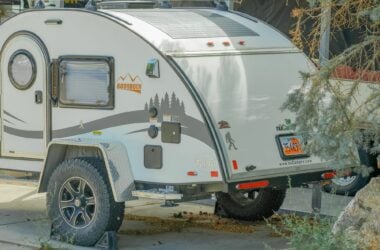
Teardrop trailers are the quintessential compact camper, with their small, lightweight, and aerodynamic design. With average dimensions of 10′ long, 5′ tall, and 6′ wide, teardrop trailers can easily fit in a garage, and their low profile makes them easy to tow with most vehicles.
As an alternative to a tent camper, popular teardrop models such as the Little Guys Shadow, Escapod TOPO2 Teardrop Travel Trailer, and MeerKat trailer provide a variety of features, including a tiny kitchen, wet bath, full bed, and built-in interior storage space.
With their charming retro look and modern amenities, teardrop trailers offer the perfect balance between style and function.
Pros
- Aerodynamic design
- Eco-friendly
- Lightweight and maneuverable
Cons
- Low ceilings
Type #2: Pop-up Campers
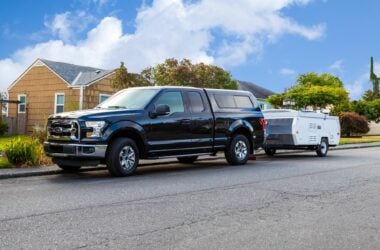
Ranging in length from 12′ to 18′ and width from 6′ to 7′, popup campers feature a unique collapsible design. This makes them an excellent option for garage storage because they’re typically less than 5′ tall when fully collapsed. When fully raised, however, pop-up campers are tall enough to comfortably stand and walk around in.
Brands like Rockwood Hard-Sided Pop-Up Campers and Aliner A-Frame Campers showcase impressive features such as indoor/outdoor stovetops, furnaces, fridges, and optional air conditioners.
Thanks to their ability to transform from compact storage mode to roomy living quarters, pop-up campers are a fantastic choice for those seeking a versatile and space-saving RV solution.
Pros
- Easier to tow
- Spacious after they’re set up
- Lightweight and maneuverable
Cons
- Take time to set up
- Aren’t always entirely hard-shelled
Type #3: Small Travel Trailers
For those who desire more amenities, such as mini-kitchens, half-baths, and air conditioning, small travel trailers may be the answer. While still compact enough to fit in a standard garage, small travel trailers often have more living and storage space than other small RVs.
- MeerKat Travel Trailer
- Scamp 13
- Geo Pro 15 TB
- Jayco Hummingbird 10RK
- Taxa Outdoors Tigermoth
- Coachman Clipper Express
Each of these trailers come in various layouts and configurations, allowing you to tailor your RV experience to your specific needs and preferences. In general, however, they can be anywhere from 5′ to 7′ wide, 4′ to 7′ tall, and 10′ to 20′ long.
Pros
- No set-up required
- Feature more amenities than other small RVs
Cons
- Tend to be heavier
- You’ll need a larger towing vehicle
Top 5 RV Models That Fit in a Standard Garage
Now that we’ve covered the types of RVs suitable for garage storage and the factors to consider when making your selection, let’s explore our top 5 RV models that fit in a standard garage. These include the Happier Camper HC1, Aliner Expedition, Scamp 13′ Deluxe, Taxa Outdoors Cricket Overland, and Safari Condo Alto.
Happier Camper HC1
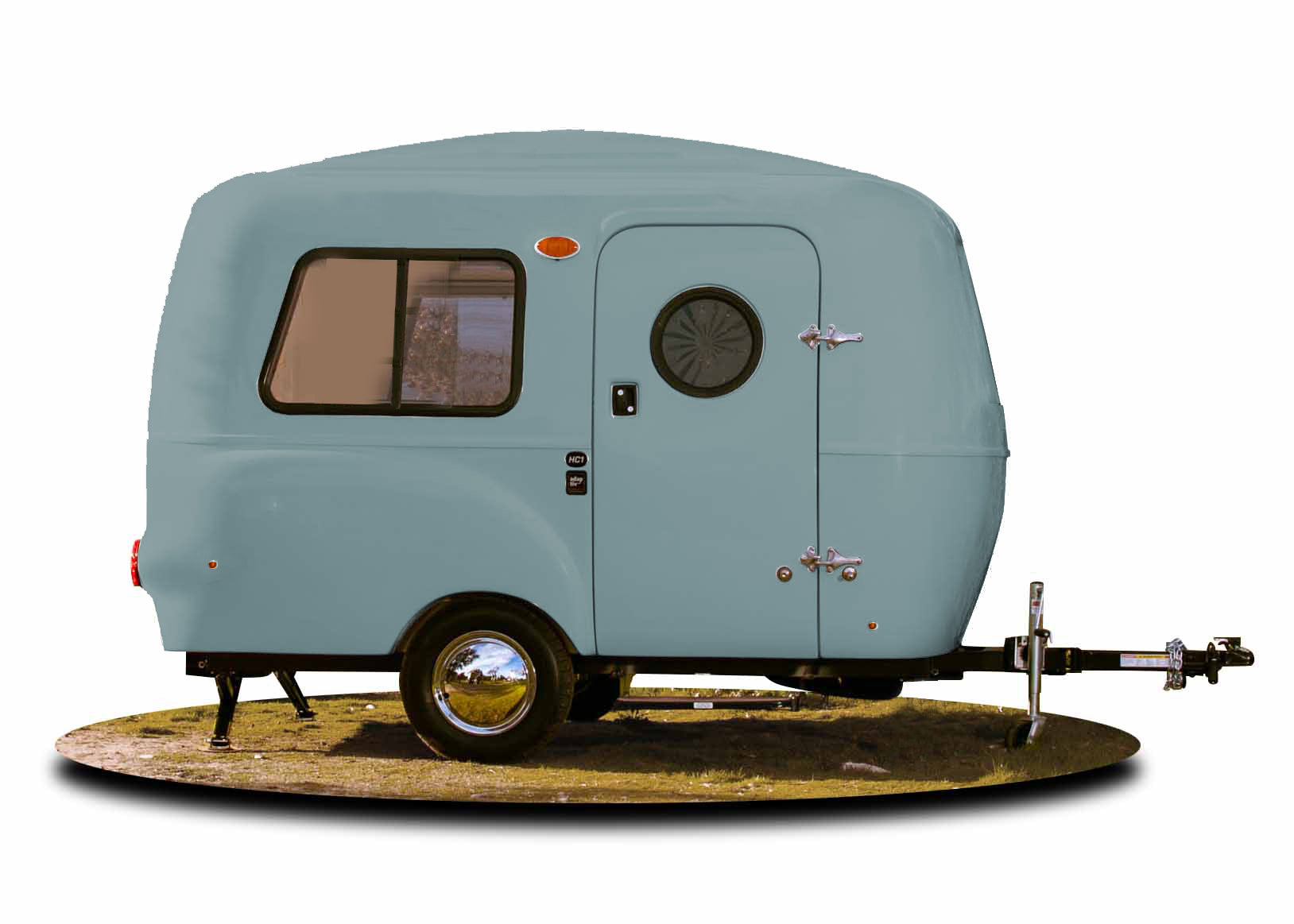
With a starting cost of $29,950, the Happier Camper HC1 stands out thanks to its customizable, modular design and unique, retro-style aesthetics. This compact camper fits in a standard garage, allowing for convenient storage and protection from the elements.
The HC1 features a modular interior, allowing you to rearrange the layout to suit your needs and preferences. With its versatility and charming design, the Happier Camper HC1 is an excellent choice for those seeking an RV that fits in a garage without sacrificing style or functionality.
Aliner Expedition
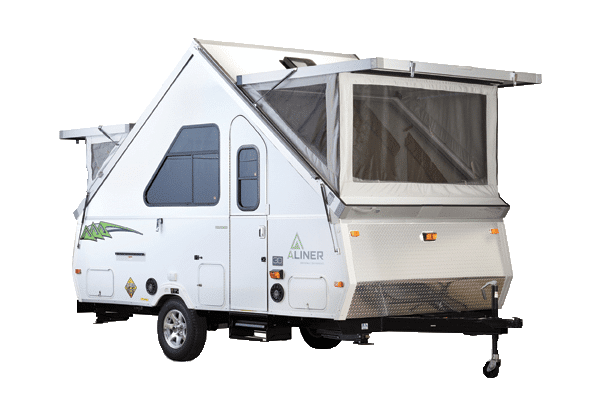
At $40,000, the Aliner Expedition is a rugged, hard-sided pop-up camper that provides ample living space and storage while fitting in a garage. This versatile A-frame camper is lightweight and easy to tow, ideal if you’re constantly moving from one campground to another.
With a surprisingly spacious interior, the Aliner Expedition is great for anywhere from two to five people. Its durable construction and practical design make it an excellent choice for those seeking an RV that fits in a garage while offering ample living space.
Scamp 13′ Deluxe

Costing $30,000 and up, the Scamp 13′ Deluxe is a lightweight fiberglass trailer boasting a compact design, allowing it to easily fit in a standard garage. Scamp also offers a 13′ Standard model, which doesn’t have quite as many amenities but is more affordable, with the total price coming in around $25,000.
The Scamp 13′ Deluxe offers a sleek, low profile, making it perfect for those who want a convenient and comfortable camping experience without worrying about garage storage.
Taxa Outdoors Cricket Overland

With a starting price of $29,995, the Taxa Outdoors Cricket Overland is a great option if you enjoy camping off the grid. This expandable pop-up camper is built to handle rough terrain and has specially designed plumbing and electrical systems built for travelling off-grid.
It features a surprisingly tall ceiling when fully raised, which provides ample headroom. However, when the camper is lowered, it will easily fit into most residential garage bays.
Safari Condo Alto
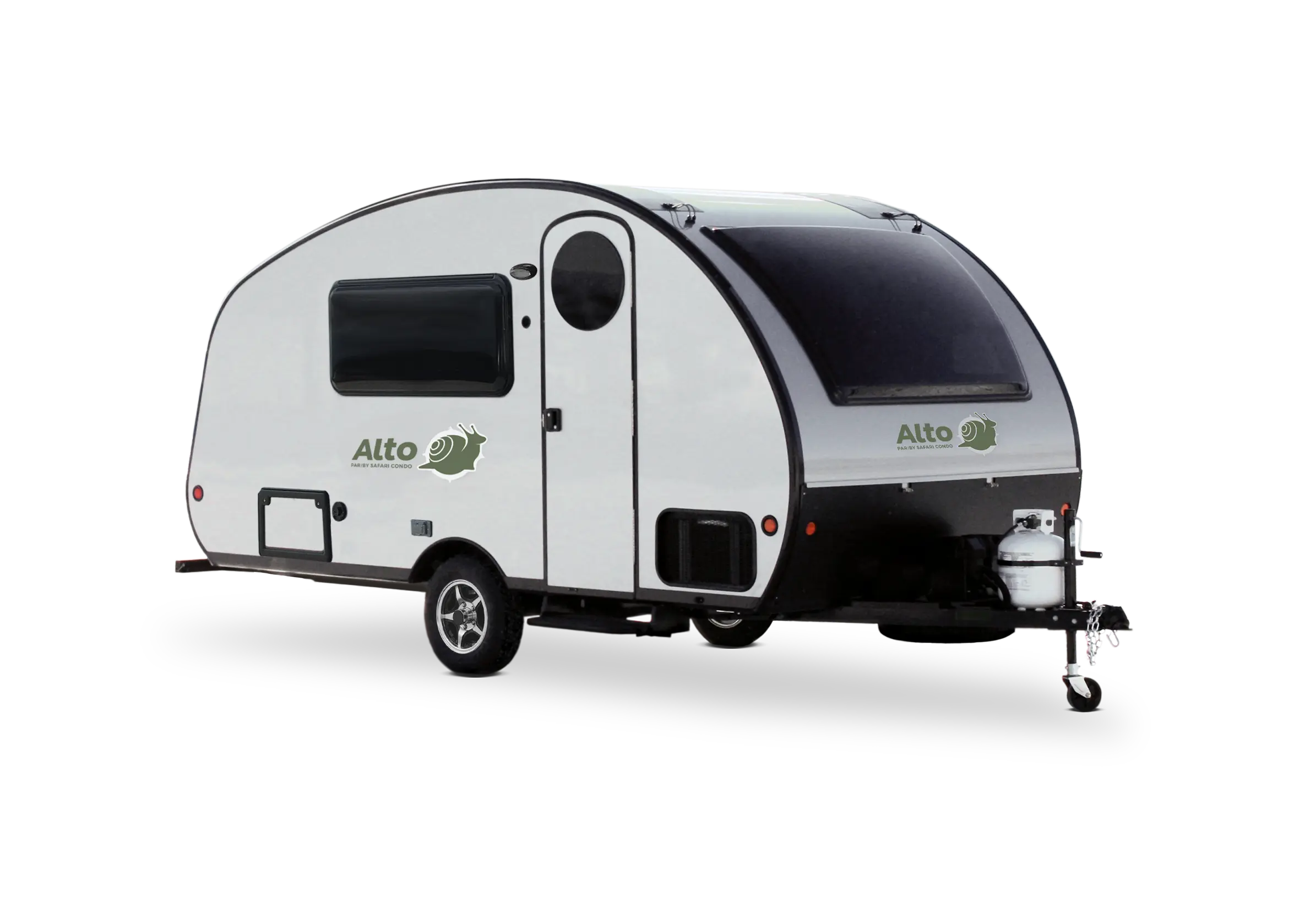
The Safari Condo Alto is a fresh take on the original teardrop camper and offers a unique electric-powered roof and adjustable suspension system. Starting at $53,000, the Alto features an innovative design allows this camper to fit in a standard garage while still affording enough space to move around and live comfortably.
The Alto’s aerodynamic teardrop shape and durable construction make it an excellent choice for those seeking an RV that combines style, functionality, and garage storage capabilities.
While there are other RV makes and models that can fit in your garage, these are five of the most common.
Why Choose an RV That Fits in a Garage?
As you can see, most RVs that fit in standard residential garages are quite small. Therefore, they typically have less living space, exterior storage, and amenities, such as full kitchens, bathrooms, and bedrooms, than larger travel trailers.
However, there are plenty of reasons why someone might want to purchase a small RV that fits in their garage, including the following:
- An RV stored at home is ready to go at a moment’s notice
- You can protect it from rain, snow, UV radiation, and potential theft
- Storing it elsewhere will likely cost money
If you value the ability to store your RV at home in your garage over having a larger rig you need to keep elsewhere, then choosing one that fits in a residential garage is the way to go.
Factors to Consider When Choosing an RV for Garage Storage
When selecting an RV for garage storage, it’s essential to consider dimensions and clearance, weight and maneuverability, and accessibility.
Factor #1: Dimensions and Clearance
The dimensions and clearance of your RV are critical factors to consider when choosing an RV for garage storage. This is especially true if you have a standard residential garage bay designed for cars, vans, and small trucks.
A typical residential garage door is 8 feet wide and 8 feet tall, so selecting an RV with a height and width that can comfortably fit through the garage door opening is essential. By accurately measuring your garage and RV, you can avoid any unpleasant surprises when storing your RV.
Factor #2: Will There Be Room For an Additional Car?
If you have a traditional 12′ x 22′ garage, your RV will more than likely take up the entire space. Therefore, you will need to find other parking arrangements for your car. If this is unacceptable and your car needs to get parked indoors, you may need to find another storage option for your camper at a nearby RV storage facility.
Factor #3: Weight and Maneuverability
Weight and maneuverability are also important factors when choosing an RV for garage storage. Lighter RVs, such as teardrop campers, pop-up campers, and similar options, are generally easier to maneuver, making them ideal choices for squeezing into your garage.
Tips for Storing Your RV in a Garage
Now that we’ve discussed the types of RVs that can fit in a garage and our top 5 RV models, let’s explore some tips for storing your RV in a garage. Even though you’re keeping it in a garage, it’s important to prepare your RV for upcoming storage and take measures to protect it during storage.
Proper preparation and storage can protect your RV from damage, maximize space and organization, and ensure your RV is ready for use when needed.
Preparing Your RV for Storage
Additionally, here are a few more tips to properly prepare it for storage.
- Thoroughly clean the inside and outside of the camper
- Perform an inspection for damage or leaks
- Check to ensure that all systems are working properly
- Winterize your RV by draining all fluids
- Ensure the circuit breaker, outdoor propane hookup, water pump, and refrigerator are switched off
By taking these steps, you can ensure your RV is ready for use when you’re ready to hit the road again.
Final Thoughts
There are many advantages to purchasing an RV that’s small enough to fit inside a standard, residential garage. You can protect it from the weather year-round, keep it safe from burglars, and it’s ready to take out at a moment’s notice.
However, if you have your heart set on an RV with dimensions that aren’t compatible with a standard garage bay, you can always visit a peer-to-peer storage marketplace like Neighbor for your RV storage needs.
Frequently Asked Questions
Will a Camper Fit in My Garage?
Pop-up campers, small travel trailers, low-roof camper vans, and pop-up truck campers are all good candidates for a standard one-car garage.
Can You Live in an RV Inside a Garage?
Unfortunately, it will be very difficult to live in an RV inside a traditional garage that measures 12 feet wide, 10 feet high, and 22 feet deep. However, if you keep your RV inside a larger shop or barn, you can comfortably live inside it.
What Size Enclosed Trailer Will Fit in a Garage?
A single one-car garage is large enough for an 8′ wide and 20′ long enclosed trailer.
How Do I Ensure My RV Will Fit in My Garage?
Accurately measure your garage and RV to make sure they fit, taking into account any clearance or maneuverability needed. This will ensure your RV will fit in your garage.