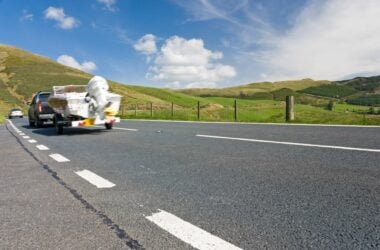


When you need gas for your car, it’s not hard to find a gas station. But when you need gas for your boat, you better be in the range of a marina.
And while most cars have roughly similar-sized gas tanks, this is definitely not the case with boats.
The size of your boat’s gas tank can range from a few gallons (outboard engine) to ¼ million gallons (superyachts). The average boat fuel tank holds 40 gallons.
Knowing your gas capacity will help you plan boat trips, and also help you store your vessel in a way that protects your engine. Let’s take a look at what you need to know.
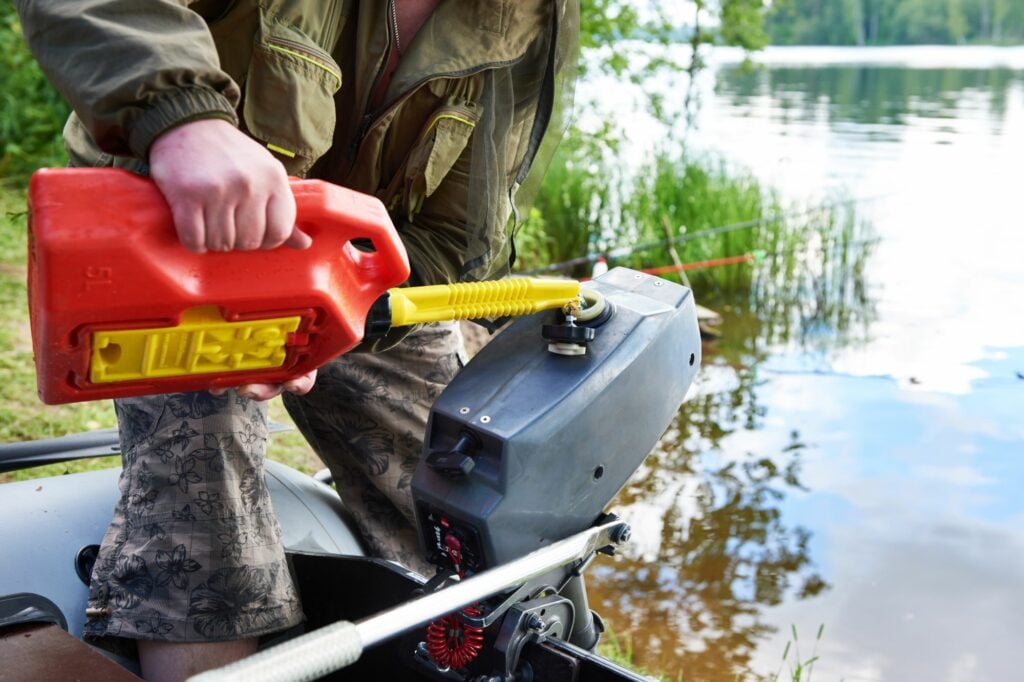
How to Determine Your Boat’s Gas Tank Size
Usually, you can find your boat’s gas tank capacity posted in three places:
1. The owner’s manual
2. A sticker or placard on the gas tank or valve
3. The manufacturer’s website
There are also ways to work backward and manually calculate your tank size, such as measuring cubic inches, or counting how many gallons it takes to fill up your tank when it is completely empty.
Unless the previous owner of your boat installed a new fuel tank, you shouldn’t need to take these measures.
Warning: If you’re buying a used boat and the previous owner doesn’t know the capacity of the fuel tank, there’s a decent chance they didn’t take good care of the boat.
What Kind of Mileage Can I Expect from My Boat Engine?
Boats require more fuel than other vehicles because they have to push through water, which adds resistance and increases fuel consumption.
Think about it this way: if you stop a car’s engine while it’s moving on a flat surface, it will keep rolling for a while. Try this with your boat, and it will slow down very quickly. There’s simply more resistance involved with boats because they displace so much water.
Did you know?: Supertankers have so much inertia that it can take them 20 minutes to stop once the pilot cuts the engine!
Here’s an article to help you calculate the fuel efficiency of your boat.
Increasing Fuel Capacity on Your Boat
Boat gas tanks are broken down into two types: permanent and portable. Permanent tanks are built into the boat’s structure, whereas portable tanks can be added or removed as needed.
If your boat’s fuel capacity falls short of your needs, you can increase it by either upgrading the existing tank or adding portable tanks.
Upgrade the Existing Tank
Though upgrading the existing tank can provide additional fuel storage, it could be more costly and complex than adding portable tanks. It’s not a DIY job that an article can explain, either – this is a case where you need an experienced boat mechanic.
Add Portable Tanks
Adding portable tanks to your boat allows for increased fuel capacity–without permanently altering the boat’s design.
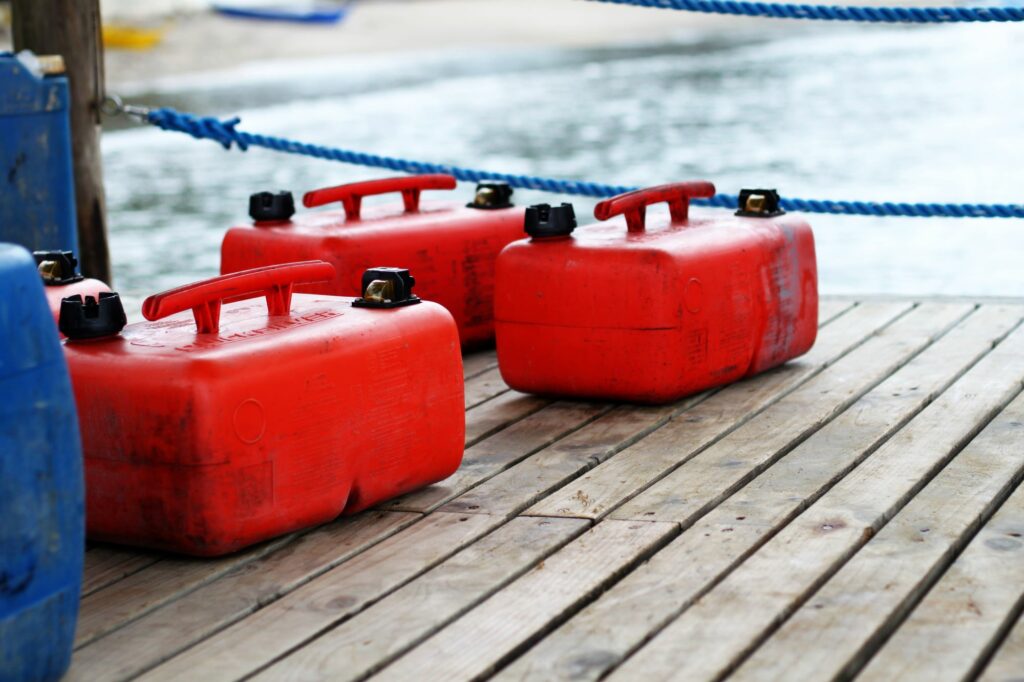
Portable tanks come in various sizes and materials, such as plastic, metal, and fiberglass, and can be mounted on the deck or stored in the boat’s hull.
Portable tanks come with their own concerns. Ensuring the tanks are securely mounted and properly connected are just two of the necessary pre-checks. Additionally, it’s crucial to regularly inspect the tanks for any signs of wear or damage before each use, as portable tanks may not be as durable as permanently installed tanks.
Pontoon boat owners often face a unique challenge; their boats usually come equipped with two tanks instead of one. To increase their fuel capacity, many pontoon boat owners replace one or both tanks with larger ones or add portable tanks. The suggested additional tank size for pontoon boats ranges from a 12-20 gallon tank.
Proper Engine Maintenance
Regular engine maintenance is paramount for optimal fuel efficiency and mitigating the risk of engine problems. Here are some important steps to follow:
- Conduct regular oil changes as recommended by the manufacturer.
- Schedule tune-ups to ensure all engine components are in good working condition.
- Follow the manufacturer’s instructions for routine maintenance checks.
In addition to oil changes and tune-ups, it is essential to monitor oil and fuel levels, inspect fuel lines for leaks, and ensure the engine is running optimally. Proper engine maintenance not only contributes to fuel efficiency but also minimizes the risk of engine failure or damage, promoting safe boating experiences.
We recommend this article for an overview of boat maintenance.
Pro Tip: When you are out on the water, it’s best not to fill your tank more than 90% full because the fuel will expand as it heats up.
But when your boat goes into storage, you want to fill the tank as close to 100% fuel to limit the amount of air (which can lead to oxidation/corrosion over time). Check out our guide How to Winterize a Boat.
How Much Does It Cost to Fill up a Boat?
This is a little like the “if you have to ask, you can’t afford it” rack at a boutique.
Gas isn’t getting any cheaper, and you’ll often pay 10%+ more at the marina. Actual fuel efficiency varies widely, so you’ll have to do the math here based on your specific boat model and usage patterns.
If you’re worried about boat fuel costs, it’s a good idea to take a step back and appreciate that boat ownership is a lot more costly than a car. It’s not a process you want to start if you are in any danger of shorting funds. You won’t want to rack up debt just to keep your boat afloat.
You can read about the costs of boat ownership in this article.
An Overview of Boat Gas Tank Sizes
Fuel capacities in boats vary significantly according to their type and size. If you’re wondering how much fuel different boats can store, here are some examples:
- Small boats (like these) typically store around 5 gallons of fuel.
- Medium-sized boats may have a fuel capacity of 20-50 gallons.
- Large yachts can carry over 250,000 gallons of fuel.
We offer a primer on the various types of boats in this article: 15 Types of Boats: Complete Guide.
Small Boats
Small boats, such as jet skis and small fishing vessels, typically have fuel capacities between 5-10 gallons. These smaller capacities are suitable for short trips and recreational activities.
Many owners of pontoon boats replace or add fuel tanks to increase their capacity.
The suggested additional tank size for pontoon boats ranges from twelve to twenty gallons.
Bear in mind that small boats with larger fuel capacities might necessitate further safety measures, like adequate ventilation and correct fuel line connections.
Medium Boats
Medium-sized boats like bass boats usually have fuel capacities ranging from 20-70 gallons. These vessels are designed for various purposes, from leisurely cruising to competitive fishing.
The typical fuel capacity of a bass boat, for example, is around 40 gallons. This capacity allows for extended trips on the water without constantly refueling.
Remember that a boat’s fuel consumption rates fluctuate based on its weight, motor type, and speed. It’s important to factor these in when determining your boat’s fuel capacity requirements. A clear understanding of your boat’s fuel capacity and consumption rates aids in efficient outing planning and timely refueling.
Large Boats
Large boats, such as cabin cruisers and yachts, have much larger fuel capacities compared to smaller vessels. The typical fuel capacity of a cabin cruiser is approximately 200 gallons.
But gas tanks grow larger with bigger boats, and in the case of superyachts, the fuel tank can be 250,000 gallons. The most expensive superyacht in the world, Lürssen’s M/Y Azzam, contains enough fuel to refill a typical hatchback car more than 23,800 times.
Down the Tank
Boats aren’t cheap to run or maintain, but there are always ways to reduce costs. One of the best is to use a peer-to-peer storage service like Neighbor, which allows you to cheaply store your boat in a convenient location near to you.