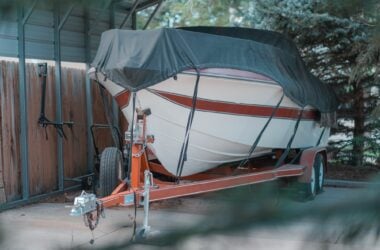


Your boat is likely one of your largest expenditures. Covering your boat in between uses (or during long-term storage) is essential to its long-term serviceability. But is a tarp an effective enough solution to keep your boat protected from the elements (be it rain or shine)?
Most experienced boat owners recognize boat covers deliver better results than big blue (and supposedly waterproof) sheets of polyethylene, tossed half-heartedly over your boat. In most cases, a boat cover (preferably a custom boat cover) is a superior alternative to a tarp.
Nevertheless, there are circumstances in which a tarp is just as good as a boat cover.
For example, if you plan to store your boat in an enclosed structure, like a garage, a tarp is an excellent and cost-effective solution, especially as a second layer of defense (in addition to the four walls of your enclosed storage space). For all sorts of storage options, including garages, check out Neighbor for boat storage nearest you.
Key Takeaways
- Select a high-quality tarp that fits your boat’s size and shape.
- Diligence pays dividends when positioning and securing a tarp on a boat.
- In some situations, a tarp will perform just as well as fitted covers do.
- Neighbor offers all kinds of boat storage options. Check them out at boat storage near me.
When to Use a Tarp to Cover a Boat
Consider a boat tarp if:
- The storage space for your boat isn’t exposed to the elements
- The boat’s “profile” is essentially flat (no highs or lows)
- The budget doesn’t allow for anything else
- There’s an urgent situation and the boat needs to be covered ASAP
Having established those basic principles, let’s uncover some watertight truths about how to cover a boat with a tarp (and tie down the concerns some may have).
Selecting the Ideal Tarp for Your Boat
Choosing the right tarp for your boat improves the level of protection. Compared to standard tarps, waterproof tarps are usually the best choice for safeguarding your boat from the elements.
When choosing a tarp, make sure to consider the following factors:
Size
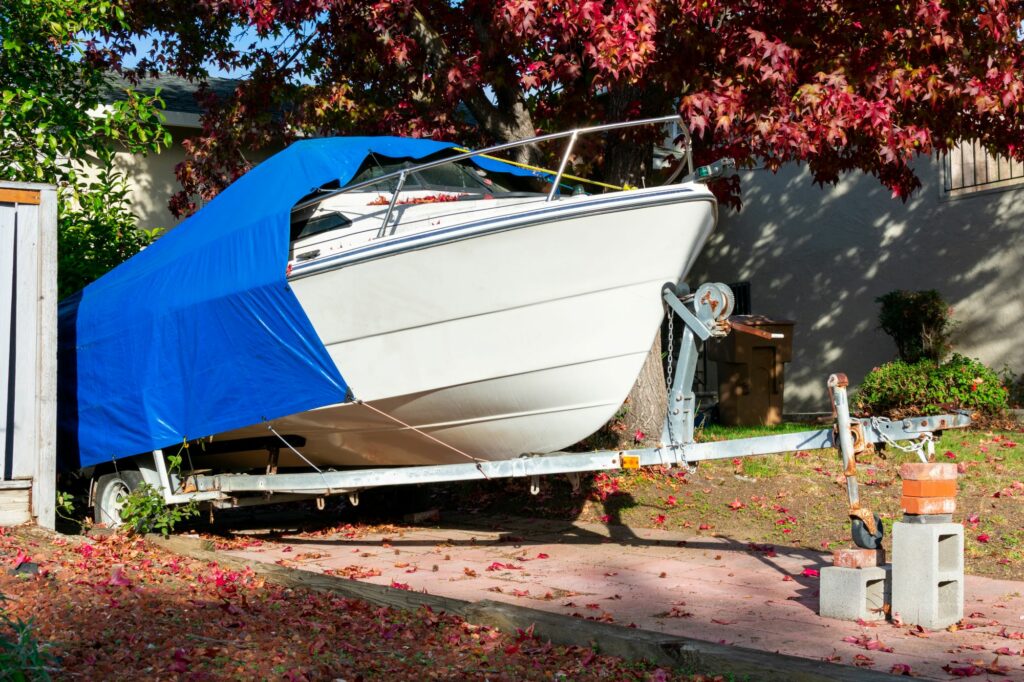
To completely cover the boat, it must be large enough to cover the entire length and width of the boat, with some extra material to ensure complete coverage.
Pictured below is an improper use of a boat tarp.
Material
Heavy-duty tarps made from materials like polyethylene or canvas offer the best protection.
The Fastening System
The tarp should have a secure fastening system to keep it in place during strong winds.
Make sure to choose a reliable source for high-quality tarps, like Defender or Jamestown Distributors,
How to Measure Your Boat (For a Boat Tarp That Fits)
In order to purchase a properly-fitting tarp, you’ll need to know the rough measurements of your boat beforehand. The measurements don’t have to be too precise. When in doubt, it’s better to err on the large side and overestimate your boat’s length/width (rather than underestimate).
To measure the width of the boat, you’ll need to measure from exterior edge to exterior edge–perpendicular to its centerline. Determine the centerline length from the tip of the bow to the stern.
When measuring your boat, account for any vertical protrusions or indentations caused by:
- Windshield frame corners, seating, rails, ladders, etc.
- Rocket launchers
- Antennas (consider removing the antenna’s “whip”; seal the mount)
- outboard engine
Avoid Combining Smaller Tarps
Avoid using more than 1 tarp. Joints will “catch the wind” or allow water incursion. If you have no other option, pay attention to the joints and arrange them so that water “ponding” or leakage is minimized.
How to Prepare Your Boat for Tarping
To prevent tarp and/or boat damage, you’ll need to read up on best practices for tarping your boat. One recommended step is padding sharp edges with items such as:
- Old T-shirts
- Towels
- Old carpet remnants
This will reduce the chance of puncturing the tarp.
Whenever possible, minimize the use of adhesive tape to fasten padding, since it may leave a residue if exposed to the sun. Repair kits are available to patch damaged spots or tape over tears
Consider Proper Tarp Placement and Height Considerations
Low spots in the tarp will collect water. These need to be minimized as much as possible. Though the weight of the water may not always rip the tarp (this does happen), the constant presence of water can degrade the tarp’s waterproofing, leading to leakage.
To minimize these problems, drape the tarp to allow water to flow to its edge. You can position several rubber-capped telescopic poles in the interior of the boat. Drape the tarp over the poles
Defender carries two alternative products that may work better in many cases. See this support system or this kit of “bows” that arc across the boat’s width
Ensure Ventilation for Mold Prevention
Ventilation mitigates the risk of mold developing on covered boats. Regrettably, a tarp does not lend itself well to ventilation.
You can take preventive measures to reduce the likelihood of mold. The best are:
- Apply lots of moisture-absorbing products (desiccants) like DampRid under the tarp. They collect a significant amount of water in a short period, so empty them frequently.
- Clean and dry the tarp regularly using a mild detergent and water. Avoid bleach or vinegar solutions unless approved in the care instructions, which you should always follow
- Re-apply waterproofing material. One of the best is Star Brite Waterproofing and Fabric Treatment with PTEF, in spray bottles or gallons.
How to Secure the Tarp
Secure the tarp tight enough so that it stays in place during severe weather or winter storage. Look for tarps with sewn-in grommets around the perimeter. Fasten cordage to them, and secure the other end to a (heavy) weight or fixed object.
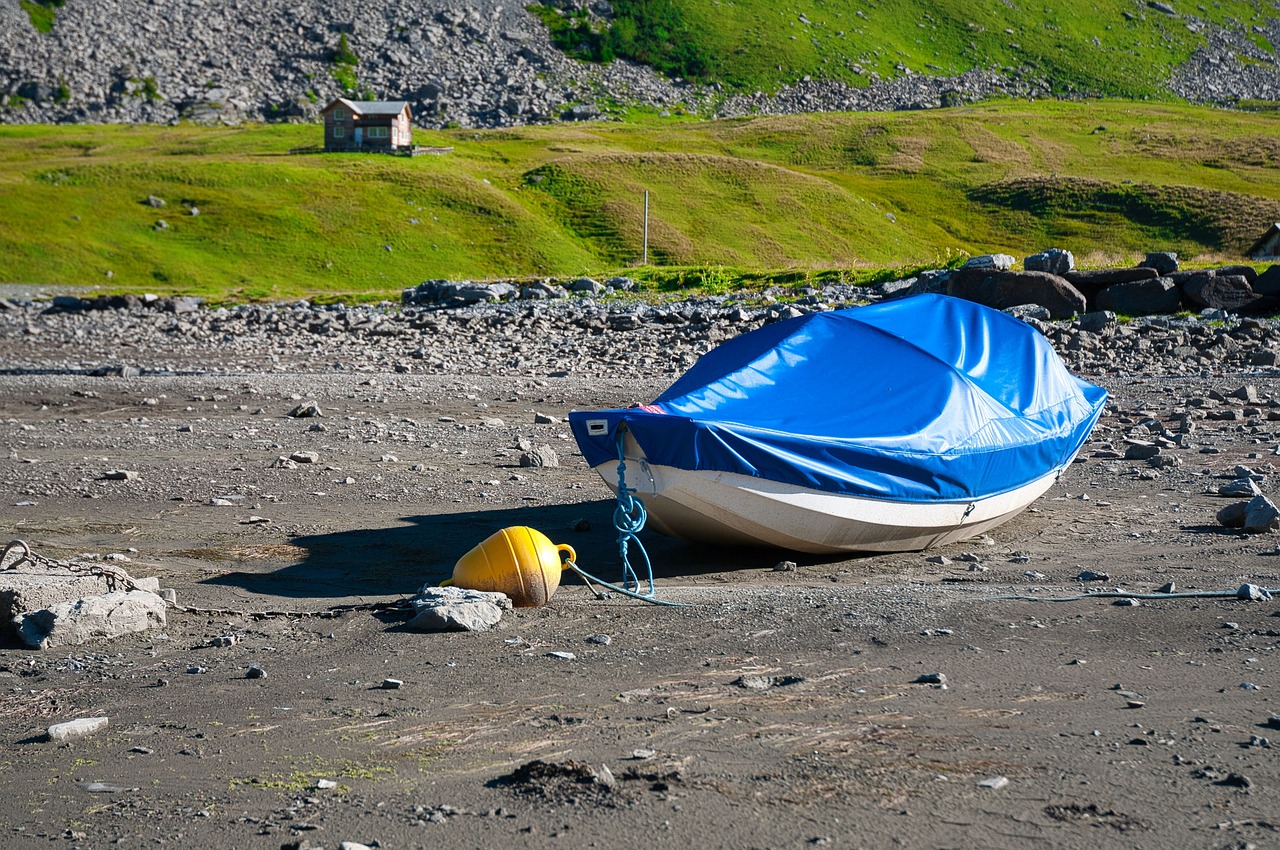
There are additional methods to secure boat tarps:
- Webbed tie-down straps with quick-release fasteners
- Rope ratchet devices (CAUTION: these can apply excessive force and loosen or tear out grommets)
- Bungee cords
Regular Tarp Maintenance and Inspection
Inspecting and maintaining your boat cover regularly is required to protect its serviceability. Here are some steps to follow:
- At least monthly, look for any tears, rips, holes, or other signs of degradation, especially over sharp edges.
- Ensure the tarp is still fastened and that low spots are minimized..
Final Thoughts
Using a tarp to cover boats typically will not produce the same quality results as a fitted cover. Settling for a tarp may mean additional maintenance or repair work on the boat. Covering boats with a tarp may get the job done, but if you really want to protect your investment, splurge on the custom cover and upgrade to indoor/enclosed boat storage.