

Electric vehicles aren’t going anywhere–and neither is the demand for electric vehicle charging stations.
In fact, many countries and states like California have already started to phase out the production of gas cars altogether. This means electric vehicle charging stations aren’t just a “nice to have.” They are a core part of infrastructure.
The good news is that If you’re a property owner or manager of a multi-family building, offering EV charging stations is a great way to generate additional income.
In this article, I’ll go over how to make money from EV charging stations on your rental property.
What % of Multifamily Properties Currently Offer EV Charging?
In a 2024 study, Neighbor.com contacted 240 multifamily properties across the U.S. (Los Angeles, Seattle, Phoenix, New York, Tampa, etc.) for insight into their on-site EV charging amenities (if any were offered).
Of these 240 properties, 42% mentioned that they offer EV charging, 30% mentioned they don’t offer EV chargers on-site, and 28% did not offer insight into their EV charging amenities.
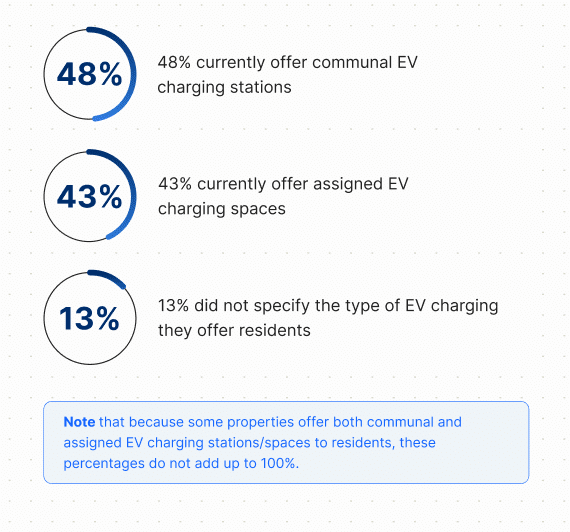
Types of EV Charging Offered
Looking at the 42% of properties that offer EV charging, some properties only offered one type of EV charging (communal charging stations OR assigned EV parking spaces), while others offered both communal and assigned spaces.
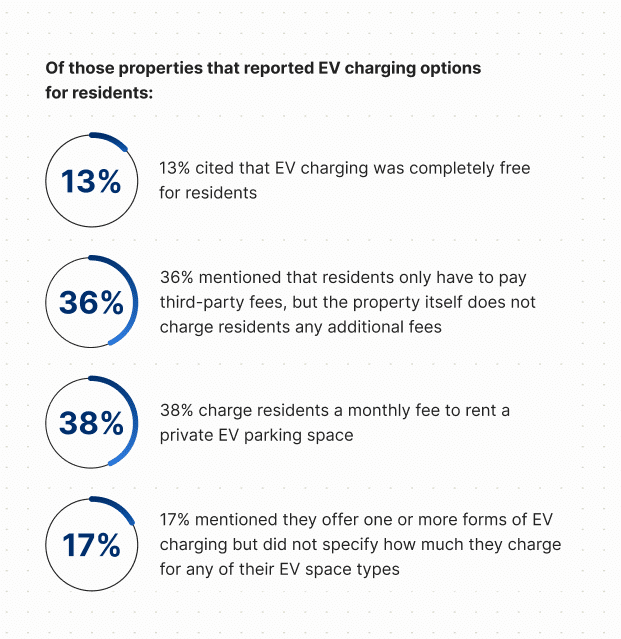
EV Charging Prices Set by Multifamily Property Owners
Looking at the 42% of surveyed properties that currently offer EV charging, these amenities were either completely free to residents, charged through a third party, OR charged via a monthly rate.
Why EV Chargers are a Smart Investment
All electric vehicle owners need access to power. Most have a home charger, while others don’t.
Properties that offer charging stations can attract a wider pool of renters, namely those who are eco-conscious and willing to pay a premium for convenience.
In some cases, apartment hunters will completely rule out apartments that don’t offer EV charging ports–reiterating, once again, that EV charging isn’t just an amenity. They’re make-or-break.
By simply installing an EV charging station, you could also boost your occupancy rate, allowing you to charge higher rents.
How Much Do EV Charging Stations Make?
No two setups are the same. The profitability of EV stations depends on a lot of different variables.
- Utilization Rates: The more people use your stations, the more money you’ll make.
- Pricing Strategy: Higher usage fees might turn people away, but underpricing can hurt your revenue. A balanced pricing model is key.
- Energy Costs: Installing smart charging stations can help you monitor energy usage and take advantage of cheaper off-peak electricity rates.
Every profit opportunity has its downside, and in the case of EV charging stations, it’s the upfront costs.
How EV Charging Stations Make Money
Now, let’s talk about the actual revenue potential. There are a few ways to make money from EV charging stations, whether you have a small property or manage several buildings.
Direct Revenue from Charging
This is the most straightforward option. You install the charging stations, and tenants (or non-residents) pay to use them. You can set up a few different pricing strategies.
- Pay-Per-Use: Drivers pay based on how much energy they use. This is one of the most flexible options because the price can be adjusted based on energy costs.
- Monthly Subscriptions: Tenants pay a flat monthly fee for unlimited access. The downside is that overconsumption might drain profits, so be careful when you price this.
- Time-Based Pricing: Charge by the hour when using the charging spot. This is another flexible option, assuming the rate of charge doesn’t offset the time spent charging.
Parking Fees
Most EV owners are willing to pay more for the convenience of easy charging. This makes it easy to offer parking next to EV stations at an additional cost.
However, keep in mind that many EVs only need access to a typical 110 V outlet. That means you can charge residents a premium just to park near a dedicated outlet—no muss, no fuss.
Advertising Revenue
Some charging stations include digital displays that can run advertisements while in use. While it will take a little extra footwork to find advertisers, this is another great opportunity to monetize charging stations.
Government Incentives
To improve air quality, state and local governments will do just about anything to incentivize EV adoption.
In fact, did you know that several federal, state, and local programs provide financial incentives for installing EV charging stations? These incentives can come in the form of government subsidies, grants, tax credits, rebates, and low-interest loans. For instance, federal tax credits may cover a percentage of the installation costs, reducing the financial burden for you.
These incentives can vary widely, so research what incentive is available in your area.
Indirect Revenue
In addition to the direct revenue you make from charging fees, you also reap the indirect benefits of offering a high-demand service, such as:
- Increased Rent Prices: You can attract tenants who are willing to pay more for EV-friendly amenities.
- Lower Vacancy Rates: Properties with charging stations often see better tenant retention and quicker turnover when units become available.
Setting Up EV Charging Stations: What to Consider
Installation Costs
Unfortunately, EV adoption involves significant initial costs. The most substantial expense is the cost of powering the EV charging station (also known as the charging infrastructure).
Unlike AC chargers, DC quick charging requires particularly high power. Therefore, you’ll need to install transformers and electrical panels to ensure a reliable and efficient power supply. Note: If your installation site lacks sufficient electrical capacity, you might need to coordinate with your utility provider for grid upgrades, which can add to the overall expense.
In addition to transformers and panels, you may also incur costs for electrical upgrades to your existing infrastructure, like wiring and circuit modifications.
Site preparation can also be a huge cost. Depending on your location and the site’s existing conditions, this might include excavation, concrete work, or trenching to lay cables.
If you’re placing stations in public or commercial areas, you may also need to factor in costs for permits and compliance with local regulations.
Choosing the Right Charging Solution
Not all EV charging networks are created equal. Some popular options include ChargePoint, Blink, and Tesla, but there are also plenty of others. These networks will vary according to the following factors:
- Cost Structures: Different networks have varying pricing models. Some charge a flat rate per session, while others charge based on kilowatt-hours (kWh) consumed or a combination of both.
- Profit-Sharing Models: Some networks offer revenue-sharing options where they take a percentage of the fees collected.
- Charger Types: Consider the types of chargers offered by each network. For instance, Tesla Superchargers are optimized for Tesla vehicles and provide rapid charging, making them ideal for properties that expect a high volume of Tesla drivers. On the other hand, networks like ChargePoint offer a broader range of charging options that are compatible with various EV models. With a versatile network like this, you can attract a wider range of tenants to your property.
- User Experience: Look into the user interface and customer support each network provides. An intuitive app for locating charging stations and managing payments can enhance the user experience, leading to higher usage rates.
- Location and Accessibility: Evaluate how well the network integrates with your property’s layout. Are the stations blocky and take up too much room? Can other tenants navigate around charging areas while in use?
Long-Term Profitability
Here’s the thing – once you’ve installed the stations, it’s not all passive revenue. First, it’ll take a while to recapture the cost of your initial investment. Second, there are some ongoing expenses to keep in mind, like electricity costs and maintenance. However, with the right energy management strategy, these costs can be kept low.
Use a solid energy management strategy to cut ongoing costs and boost profitability. Smart energy systems track usage and optimize consumption, helping you take advantage of lower electricity rates during off-peak hours.
Adding renewable energy sources like solar panels can significantly reduce or eliminate electricity costs. This hybrid model can also support sustainability and create revenue opportunities through green energy incentives and tax credits.
You can also try to partner with local businesses to drive traffic to your stations and increase usage.
Additional Ways to Monetize Your Parking Lot
Electric vehicle chargers aren’t the only way to drive more revenue for your rental. If you’re looking for creative ways to monetize your parking lot (without the overhead), you can help others store their vehicles by renting your unused space.
Neighbor.com allows property owners to rent vacant parking spaces to non-residents and effectively expand their customer base. This is a great way to turn vacancy into opportunity, covering costs until occupancy is up again. The cool part? It’s super simple to get started. Just list your space, and we’ll partner you up with qualified renters. Once you approve the terms, you can start making additional ancillary income right away. Get started with Neighbor today and see how much you can earn.