
Mastering the dirt bike isn’t accomplished overnight. If you want to be great at riding a dirt bike, first, you need to stock up on protective gear. Then, it’s time to learn the basics of controlling the throttle and getting into the correct body position.
Want the best tips on riding a dirt bike? If so, this article is a great place to start. Whether you’ve ridden a dirt bike before or not, this comprehensive guide covers it all. That way, you can improve your riding skills (can avoid errors that can result in nasty dirt biking accidents).
Tip #1: Choose the Right Dirt Bike Size

Dirt biking is not just about hopping on a bike and hitting the trail. The journey starts with selecting the appropriate dirt bike.
Knowing the intended use of dirt bikes is key. Are you looking to ride dirt bikes for:
- Trail riding
- Motocross
- Hill climbing
- Flat-track racing
Each activity requires a specific type of dirt bike. So, the first step is to understand your interest and choose the dirt bike accordingly.
| Rider Type | Bike Size | Engine Type | Notes |
| Young Riders | Mini Bikes | Under 110cc | Suitable for younger or smaller riders |
| Adults | Standard Bikes | Under 250cc | Ideal for adult riders without extensive experience |
| Novices | Standard Bikes | 125cc to 250cc (Four-Stroke) | Offers controllable power for learners |
| Experienced Riders | Standard Bikes | Over 250cc | For those with prior street riding experience, seeking more power |
Selecting the right dirt bike size not only boosts your confidence but also fosters skill advancement and guarantees safety, especially for kids and novice riders.
So, fellow riders, remember that the key to a safe (and equally thrilling) dirt biking experience begins with choosing the right bike!
Tip #2: Have All The Safety Gear Ready

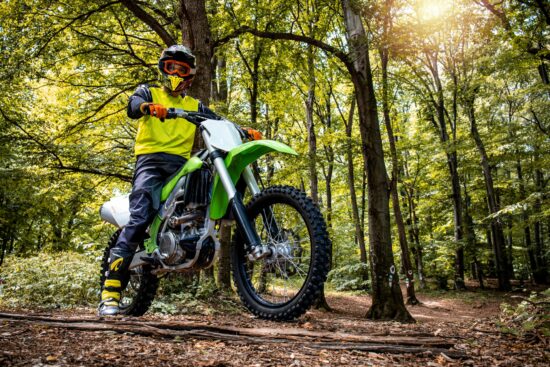
With your bike ready, it’s time to equip yourself! Safety comes first in any sport, and dirt biking is no exception. Essential safety gear includes:
- Full-face helmet
- Gloves
- Dirt bike goggles
- Long-sleeved shirt
- Pants
- Boots
Crashes can occur at any speed, and hazards don’t discriminate between adults and children. So, whether you’re an adult or a child rider, it is crucial to wear safety gear. Wearing the right safety gear not only reduces the likelihood of an accident occurring in the first place–but will reduce the severity of accidents that do happen.
Helmet Selection
Helmets with certifications like ECE, DOT, or SNELL have passed specific safety tests. But don’t stop there! Evaluating additional features, such as impact absorption and rotational protection, is critical for comprehensive safety.
A properly fitting dirt bike helmet should:
- Feel snug, with cheek pads firmly against the cheeks and a comfortable brow fit
- Correspond to the rider’s head shape for long-ride comfort
- Have a large eye port for goggles
- Have an extended chin bar
- Have adequate ventilation
- Have visors to shield from sunlight and debris
Keep in mind that the materials used in a helmet’s construction, like premium plastics or carbon fiber, affect the level of safety and comfort.
Choosing Body Armor and Padding
Body armor for dirt bike riders offers protection against impacts and abrasions. These include knee armor and full upper-body protective jackets made with ventilated materials for comfort.
Some vests feature optional add-ons, such as chest pads, which protect riders from impacts from flying debris.
Body armor’s adjustability, provided by features like thumb loops, adjustable straps, and body belts, is crucial for ensuring the gear remains secure and properly protects riders during falls.
Tip #3: Find The Proper Sitting/Body Position

The seat height of a dirt bike should allow you to touch the ground with at least the balls of your feet for stability. Position your feet back on the pegs with your toes inward. This allows you to grip the bike with your knees for better control.
When seated, hold the bike between your knees while keeping your head up and looking forward. A loose grip on the handlebars is also necessary for natural balance and control over the bike.
Standing vs. Sitting
Standing on a dirt bike encourages a naturally balanced stance. This is beneficial for maneuvering difficult trails where balance is crucial.
Sitting is also important, especially when riding on flat surfaces or taking a rest during long rides. Practice standing or sitting on a dirt bike for optimal balance and control during different riding situations.
Cornering Techniques
Cornering can significantly reduce your lap times as it allows you to take corners more smoothly and quickly.
Staying neutral over the bike while cornering is key to maintaining stability. Note that as a beginner, it might be challenging to manage adjustments in body position, resulting from braking and terrain changes.
Tip #4: Master Throttle Control and Acceleration
Throttle control is one of the most challenging things to master for beginners. Ultimately, the throttle controls the speed of the bike.
Beginners should practice throttle control by using gradual, smooth inputs and not going full-on and full-off. This can be learned by using the palm of the hand without gripping the throttle tightly.
Mastering clutch control allows the engine to be kept in the power band. You’ll get effective acceleration without stalling or wheel spin.
Tip #5: Work On Shifting Gears and Clutch Control
Similar to mastering throttle control, using the gear shifter is also an essential skill to acquire. To shift gears on a dirt bike, pull in the clutch and then use the shift pedal to select the desired gear. This ensures smooth transitions and avoids stalling or gear grinding.
Listening to the engine’s RPMs and the sound it makes helps determine the appropriate time to shift gears up or down. Proper gear selection, like staying in lower gear, can increase responsiveness, especially in situations like approaching jumps.
Remember, consistent practice is key to learning the correct timing for gear shifts. It’s not just about the ability to switch gears; it’s also about the proper timing. When you master these things, you’ll have better handling and control.
Tip #6: Learn to Lean Into Turns for Balance

Steering and balancing are two critical facets of dirt biking. Leaning into turns is essential for steering; more lean is needed for sharper turns. Here are a few other things to consider:
- High-speed turns require synchronized leaning of the bike and body.
- For better traction, distribute weight between the front and rear tires. To do so, you’ll need to adjust your body position.
- Push handlebars down and towards the turn, keeping the outside elbow up for balance.
- Look ahead through turns to anticipate terrain and adjustments.
- For balance corrections, use subtle shifts of the hips and waist, avoiding extreme movements for increased stability.
Tip #7: Practice Front vs. Rear Braking Techniques
The front brake is used for more rapid stops, while the rear brakes, operated by the left foot, are preferred for grounding and gradual slowing, offering better bike control.
Rolling the throttle forward to stop, rather than relying on the springs to close the throttle, teaches riders more precise control over braking.
Tip #8: Prepare for Jumps and Obstacles
Executing jumps and navigating obstacles add to the thrill of dirt biking, but it requires skill and practice. If you want to avoid a crash, approach jumps carefully and with the correct body position.
Here are more tips and tricks for executing the perfect jump:
Preparing for a Jump
As a beginner, before attempting a jump, walk over it or ride slowly to comprehend the dynamics of takeoff and landing. Make sure to:
- Stand, not sit, with your upper body at a 45-degree angle to the hips
- Squeeze the bike with your knees for better control during a jump
- Maintain a comfortable pace with the throttle consistently through the top of the take-off. Don’t make any aggressive adjustments.
Overcoming Obstacles
Control your speed when encountering obstacles. This will allow you to navigate more effectively and make better decisions about line choices.
To overcome a log or similar obstacle, approach the obstacle squarely. You’ll also want to compress the front suspension to lift the front wheel. Shift some of your weight backward to help maintain control.
Tip #9: Increase Confidence for Better Performance
As any dirt bike rider would recommend, beginners should first practice on smaller jumps to build skill and confidence before advancing to larger ones. Apply a similar mindset when working to gain speed.
If you need some moral support during these practice sessions, engage with the dirt biking community. Signing up for group rides or a club membership can provide valuable learning experiences (and access to exclusive tracks and training sessions).
Tip #10: Stay Up-to-Date on Bike Maintenance/Care

Dirt bike maintenance is something that makes sense to keep up with. Here are a few dirt bike maintenance procedures to keep an eye on.
- Conduct pre-ride fluid checks (oil, coolant, brake fluid, gas).
- Regularly inspect tires for proper pressure, wear, and hazards.
- Adjust chain tension to avoid being too loose or tight.
- Perform regular chain lubrication and engine oil checks.
- Routinely check and replace worn brake pads for safety.
Summary
Riding a dirt bike may be fun, but dirt bike ownership isn’t all fun and games. Take these tips seriously. Otherwise, your safety or your dirt bike’s condition may be compromised.
But proper riding technique is just one part of maintaining your bike’s condition. You’ll also need to store your dirt bike properly.
If you don’t have room at your residence, choose Neighbor, a peer-to-peer vehicle storage marketplace with affordable and convenient storage options in your very own neighborhood. Pricing with Neighbor can be up to 50% lower than traditional dirt bike storage options.
Frequently Asked Questions
Are Dirt Bikes Easy to Ride?
Dirt bikes may not be as easy to ride as bikes or scooters, but they can be learned (and mastered) with time, practice, and dedication. It is recommended that beginners start with a smaller, less powerful bike in a safe and open area.
How Do You Shift Gears on a Dirt Bike?
To shift gears on a dirt bike, use the gear selector (shift pedal) while gripping the clutch, feathering the throttle, and slowly releasing the clutch. Remember to hold the clutch in whenever you are shifting gears.
How Do You Ride a Dirt Bike for the First Time?
To ride a dirt bike for the first time, learn the basics of controls. From there, it’s just a matter of practicing and gaining confidence in the bike’s handling.
Can an Adult Ride a 125 Dirt Bike?
Yes, an adult can ride a 125 dirt bike. The 125 offers a good balance of power and manageability and is suitable for riders of various sizes and skill levels.
Is 50 Hours a Lot on a Dirt Bike?
A dirt bike with 50 hours has been well-loved, but not to an excessive point. It’s important to check the maintenance and condition of any dirt bike you purchase.