


We analyzed 200,000+ self storage prices near 197 U.S. universities to find the cheapest summer storage for college students — and where students can save up to $1,200.
Table of Contents
Table of Contents
- Key Findings: What Summer Storage Costs for College Students in 2026
- How Neighbor is changing storage
- Methodology
- What Size Storage Unit Do College Students Need?
- 4 Ways College Students Can Save on Summer Storage
- Top 10 Universities Where Students Can Save Most on Summer Storage
- #1. Storage Near University of San Francisco — Save Up to $1,208 This Summer
- #2. Storage Near Boston University — Save Up to $1,152 This Summer
- #3. Storage Near Harvard University — Save Up to $1,152 This Summer
- #4. Storage Near Northeastern University — Save Up to $1,152 This Summer
- #5. Storage Near University of Massachusetts Boston — Save Up to $1,136 This Summer
- #6. Storage Near George Washington University — Save Up to $1,104 This Summer
- #7. Storage Near Howard University — Save Up to $1,104 This Summer
- #8. Storage Near American University — Save Up to $1,056 This Summer
- #9. Storage Near New York University — Save Up to $1,016 This Summer
- #10. Storage Near Georgetown University — Save Up to $1,006 This Summer
- Surprising Findings From the Summer Storage Data
- Frequently Asked Questions About Summer Storage for College Students
- Full Data Table: Summer Storage Pricing Near 197 Universities
- About This Study
Summer storage for college students costs an average of $253 over four months for a 5×5 unit — the standard size for a dorm room’s worth of belongings. We pulled prices on 200,000+ self storage units near the 197 largest U.S. universities and found the gap between the cheapest and priciest option on the same campus averages $337 over the summer. At some schools, that gap exceeds $1,000.
The data is clear: some general knowledge and the right tools can save the average student hundreds of dollars on summer storage this year.
Key Findings: What Summer Storage Costs for College Students in 2026
- The median student across all 197 universities could save $364 this summer — and students at 47 universities could save over $500 on storage near campus.
- Students who book online save an average of $44 over four months compared to students who walk into a college storage facility without a reservation. At some schools, booking online saves more than $100 over the summer.
- 42.8% of all storage facilities near major universities are currently running promotions — first-month-free deals, $1 move-in specials, percentage discounts, and more. Nearly half of students have a deal waiting for them if they look.
Methodology
This study analyzed pricing for over 200,000 individual self-storage units within 5 miles of the 197 largest U.S. universities, using data from Radius+ and Neighbor.com’s pricing database. Of those, 6,711 units were available 5×5s — the most common size for storing a dorm room’s worth of belongings — and form the basis of this analysis. All prices were collected in April 2026.
For each university, we identified every available 5×5 storage unit within 5 miles of campus. For each unit, we captured the online (web) price, the in-store (walk-in) price, whether a promotion was being offered, whether the unit was climate controlled, and its distance from campus in miles.
Universities were ranked by in-person student population, not total enrollment, to focus on students who physically need storage near campus. Four fully online universities were excluded from the top-line analysis but included in the raw data. Several schools with large online programs (Arizona State University, Liberty University, Grand Canyon University, and Southern New Hampshire University) had their in-person populations adjusted accordingly. Enrollment figures were sourced from the National Center for Education Statistics.
All cost projections assume a 4-month summer storage period (May through August), which aligns with the typical gap between spring move-out and fall move-in at most universities.
The savings opportunity for each university measures the gap between the two extremes a student might encounter: the most expensive walk-in price versus the most affordable online price for a 5×5 unit within 5 miles of campus. This monthly difference is multiplied by four to reflect the full summer. It represents the maximum potential savings available to a student who does their research versus one who doesn’t — not the average experience, but the range of outcomes within the same market.
What Size Storage Unit Do College Students Need?
For most college students, a 5×5 storage unit (25 square feet) is the right size for a single dorm room’s worth of belongings. A 5×5 college dorm storage unit typically holds a small bookshelf, two to three totes of clothing and bedding, a mini fridge, a desk chair, and 8–10 medium moving boxes. It’s the standard size used throughout this study and the most common pick for college student storage.
If you’re storing the contents of a shared apartment or have larger furniture (a futon, dresser, or full-size mattress), step up to a 5×10 storage unit (50 square feet), which holds the contents of a single bedroom. Students splitting storage with a roommate to save money often go in together on a 5×10.
4 Ways College Students Can Save on Summer Storage
The data points to four concrete strategies that can save students real money on summer storage. They’re listed from easiest to hardest — because the simplest change often produces the biggest result.
1. Book Your College Storage Unit Online Instead of Walking In
This is the single easiest way to save on student storage, and most college students don’t know it exists.
Across the full dataset, students who reserve a storage unit online pay an average of $11 less per month than students who walk into the same facility without a reservation. Over four months, that adds up to $44 in savings — for nothing more than making a booking on your phone before showing up.
At some schools, the gap is far more dramatic. Students at UMass Boston save $139 over the summer by booking online. At Northeastern, the savings are $136. At Boston University, $129.
Storage facilities use dynamic pricing, and web rates are typically discounted to encourage advance reservations that help facilities plan capacity. The walk-in rate is effectively the “convenience tax” for not planning ahead.
2. Look for Student Storage Promotions and Discounts
42.8% of all storage facilities within 5 miles of the 197 largest universities are running some type of promotion right now. The most common deals include first-month-free offers, $1 first-month specials, percentage discounts on the first several months, and move-in fee waivers.
On a 4-month summer rental, a first-month-free promotion on a $60/month unit saves $60 outright — cutting the total summer cost by 25%. Some promotions go further: we found “$25 for the first 3 months” deals, half-off offers, and introductory rates that shave more than $100 off the summer total.
Promotion availability varies dramatically by university. At some schools, nearly every nearby facility is running a deal. At others, like Brigham Young University and Purdue, promotions are nonexistent — students there have to rely on price comparison alone.
Before committing to a college storage facility, check whether a promotion is running. Nearly half are, and even a modest deal meaningfully reduces the summer total.
3. Know When Climate-Controlled Storage Is Worth It for College Students
The conventional wisdom is that climate-controlled storage always costs more. The data tells a more nuanced story: nationally, the average online price for climate-controlled and non-climate-controlled 5×5 units is nearly identical. In some markets, climate-controlled units are actually cheaper because there’s more inventory available.
That said, climate control matters most in specific regions, and the decision should be driven by what’s being stored and where.
Where climate control is most valuable: Houston, Miami, New Orleans, Tampa, and other Gulf Coast and southern cities where summer temperatures regularly exceed 95°F with extreme humidity. Prolonged heat and moisture can damage electronics, warp wooden furniture, cause mold on upholstered items, and degrade important documents.
Where students can likely skip it: San Francisco, Portland, Seattle, and other mild-summer cities where temperatures rarely reach extremes. Students storing basic items — plastic bins, clothing in sealed containers, non-electronic belongings — can generally use standard storage safely in these climates.
The rule of thumb: If the items include electronics, musical instruments, wooden furniture, leather goods, or anything sensitive to moisture, climate control is worth the investment in hot and humid markets. For a box of textbooks and winter clothes in a mild climate, standard storage will do.
4. Expand Your Search Radius Beyond Campus
One of the clearest patterns in the data: college storage gets cheaper the farther you go from campus.
Facilities within 1 mile of campus average $67/month. At 2–3 miles, the average drops to $60/month. At 4–5 miles out, it falls to $57/month. That’s a $40 difference over four months just for being willing to drive a few extra minutes.
In many urban markets, the savings are even larger. Students at schools in expensive downtown corridors — like NYU, George Washington University, Georgetown, and Boston University — often find dramatically cheaper options just a short drive or transit ride into neighboring areas. For a belongings drop-off at the start of summer and a pickup at the end, even a 20-minute trip can be worth hundreds of dollars.
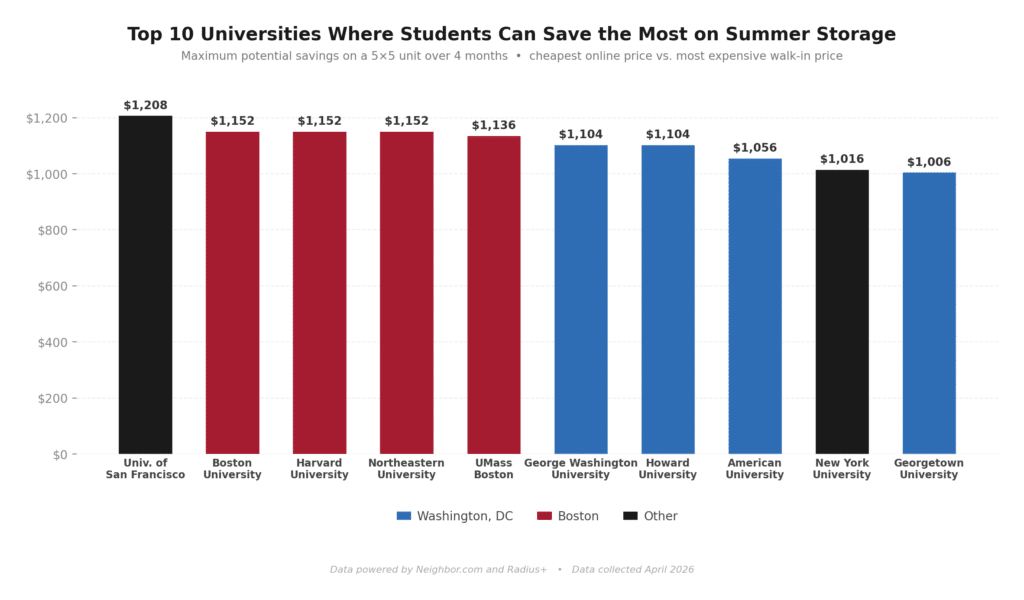
Top 10 Universities Where Students Can Save Most on Summer Storage
We ranked universities by savings opportunity — the difference between the most expensive walk-in price and the cheapest online price for a 5×5 unit near campus, multiplied across a four-month summer. This measures the gap between the worst-case scenario (walking into the priciest facility) and the best-case scenario (booking the cheapest option online). These are the schools where doing your homework on college storage pays off the most.
#1. Storage Near University of San Francisco — Save Up to $1,208 This Summer
Total 5×5 unit options: 43
Locations running promotion: 27.9%
Online vs. walk-in prices: Online prices range from $66 to $269/month. Walk-in prices range from $90 to $368/month. A student who walks into the most expensive facility pays $1,472 for the summer. A student who books the cheapest option online pays $264. The difference: $1,208.
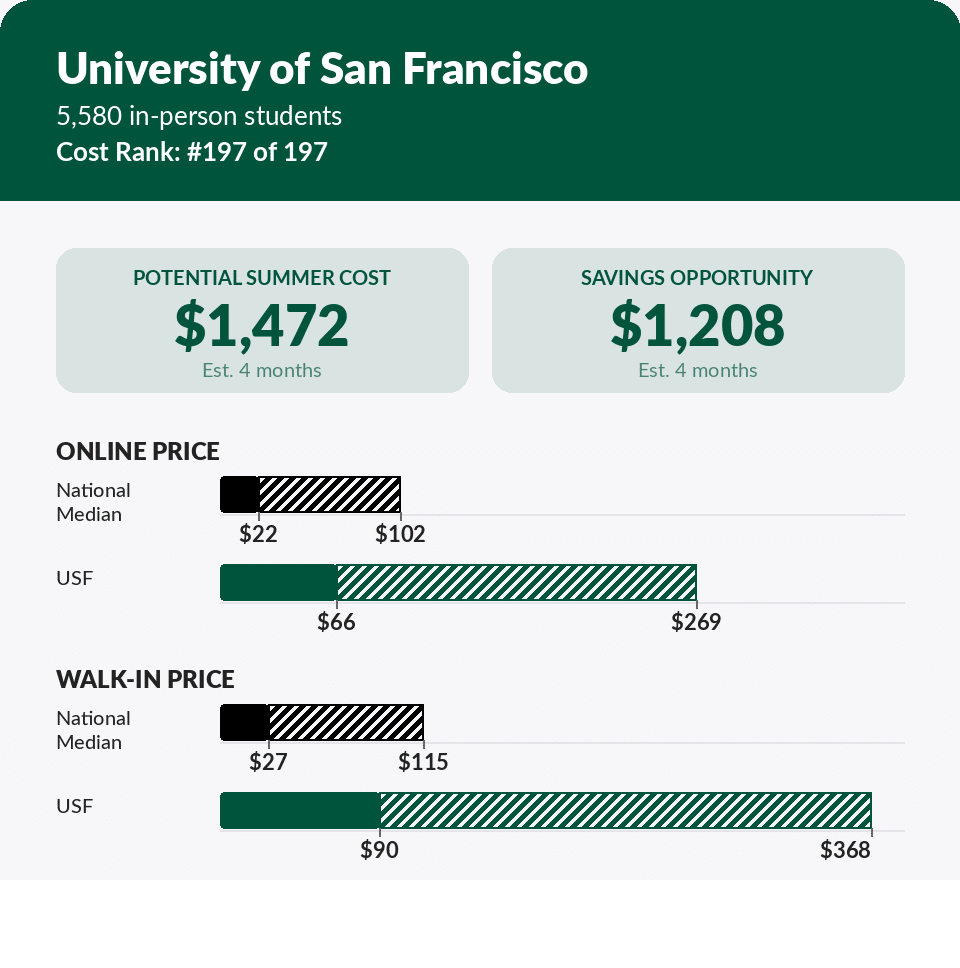
USF tops this list because of a brutal combination: San Francisco commercial rents push the ceiling sky-high while a handful of budget options keep the floor relatively low. With only 43 options within 5 miles and a below-average promotion rate of 27.9%, there’s limited competitive pressure to bring top-end prices down. The good news: San Francisco’s mild summers (highs rarely break 70°F) mean climate control is essentially unnecessary for most student belongings, so students can safely choose standard units. For real savings, look south — facilities in Daly City and South San Francisco, accessible via BART, offer meaningfully lower prices than anything in the city itself.
#2. Storage Near Boston University — Save Up to $1,152 This Summer
Total 5×5 unit options: 58
Locations running promotion: 31%
Online vs. walk-in prices: Online prices range from $38 to $240/month. Walk-in prices range from $41 to $326/month. The most expensive walk-in option costs $1,304 for the summer. The cheapest online option costs $152.
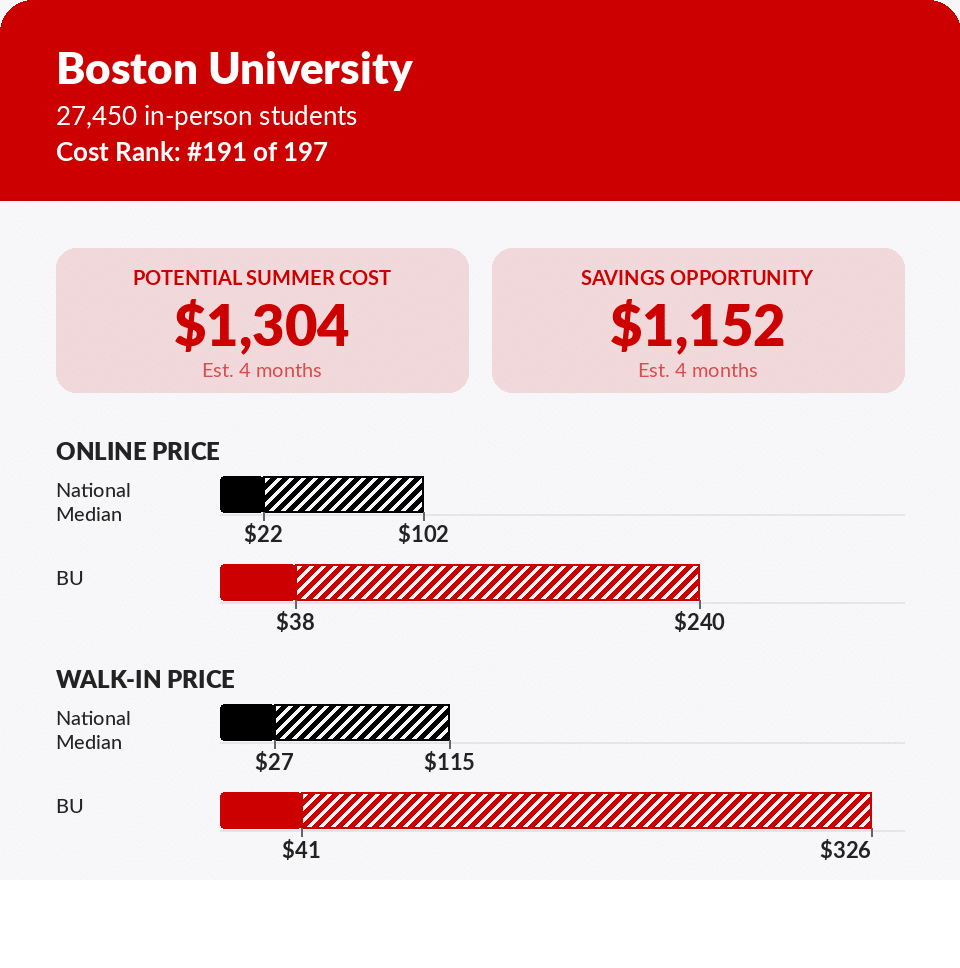
BU ranks among the most expensive storage markets in the country, and timing is the key variable. Boston’s May move-out rush — when tens of thousands of students across BU, Northeastern, BC, and a dozen other schools all vacate at once — creates a run on nearby storage. Students who book before finals get better selection and pricing. The best options go fast, but with 58 facilities competing for student business, those who start early have plenty to choose from.
#3. Storage Near Harvard University — Save Up to $1,152 This Summer
Total 5×5 unit options: 69
Locations running promotion: 26.1%
Online vs. walk-in prices: Online prices range from $38 to $240/month. Walk-in prices range from $41 to $326/month. The most expensive walk-in option costs $1,304 for the summer. The cheapest online option costs $152.
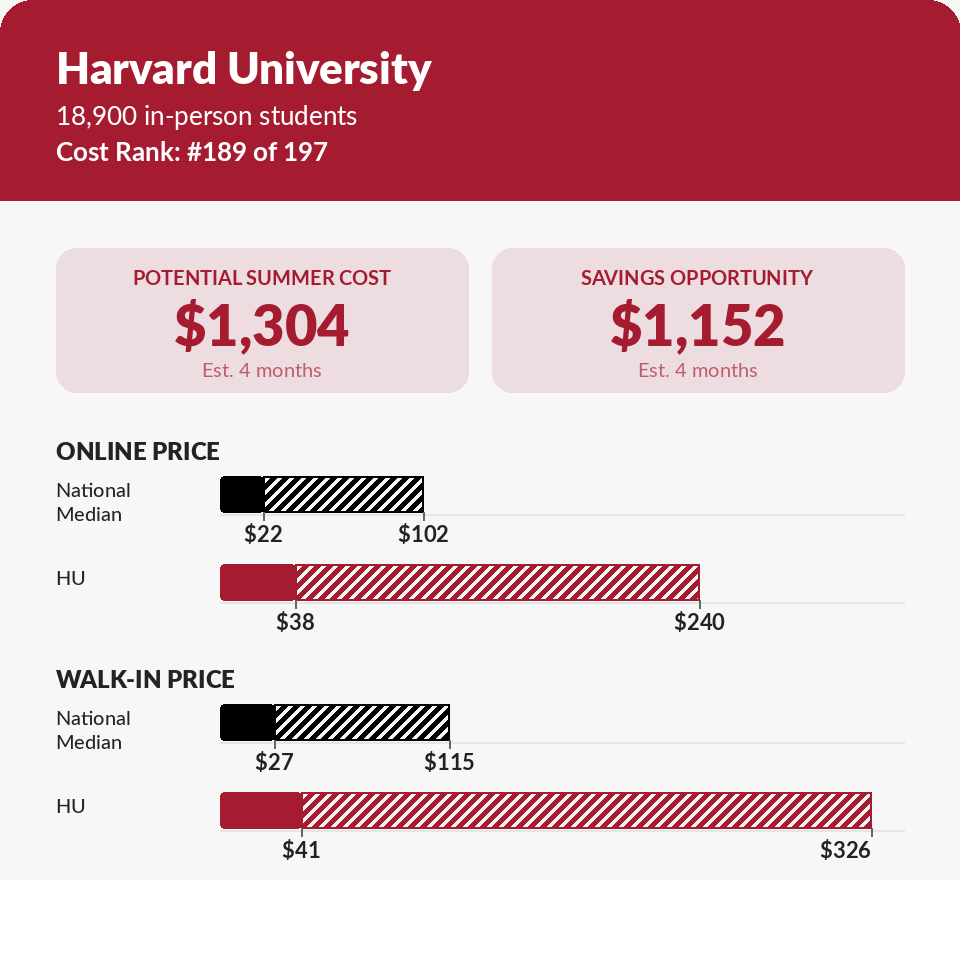
Harvard’s savings opportunity matches BU and Northeastern because all three campuses pull from overlapping facilities in Allston, Brighton, and Somerville. But Harvard students face a distinct challenge: only 26.1% of nearby facilities are running promotions — the lowest rate in the top 10 and well below the 42.8% national average. Deals are scarce here, which means pure price comparison is the primary strategy. With 69 options, students who compare at least 5–6 facilities before committing are likely to find meaningful savings.
#4. Storage Near Northeastern University — Save Up to $1,152 This Summer
Total 5×5 unit options: 52
Locations running promotion: 32.7%
Online vs. walk-in prices: Online prices range from $38 to $240/month. Walk-in prices range from $41 to $326/month. The most expensive walk-in option costs $1,304 for the summer. The cheapest online option costs $152.
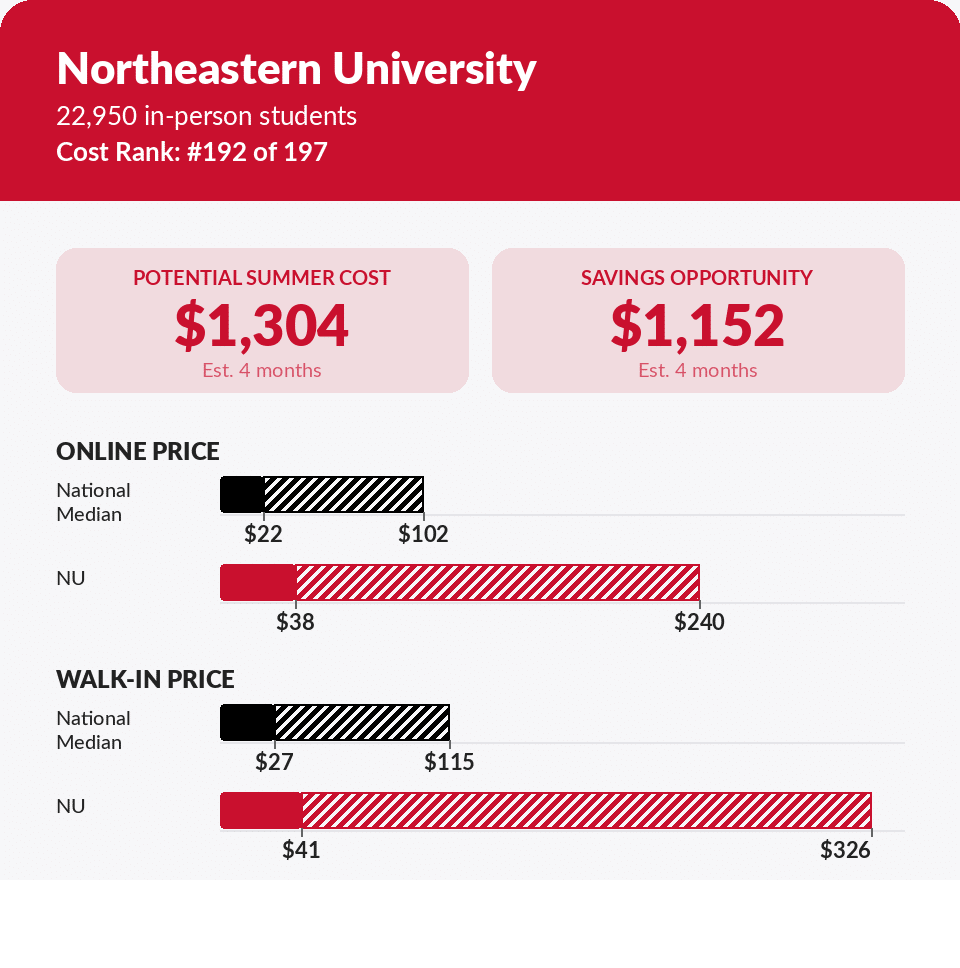
Northeastern’s academic calendar is actually a storage advantage. The university’s rolling co-op schedule means many students move out at non-peak times — outside the late-May crush that defines the Boston market. Students departing for a co-op rotation in January or September may find better availability, lower prices, and more month-to-month flexibility than classmates competing during the traditional summer rush. For those who do move out in May, booking well before the departure date is critical.
#5. Storage Near University of Massachusetts Boston — Save Up to $1,136 This Summer
Total 5×5 unit options: 42
Locations running promotion: 26.2%
Online vs. walk-in prices: Online prices range from $42 to $240/month. Walk-in prices range from $55 to $326/month. The most expensive walk-in option costs $1,304 for the summer. The cheapest online option costs $168.
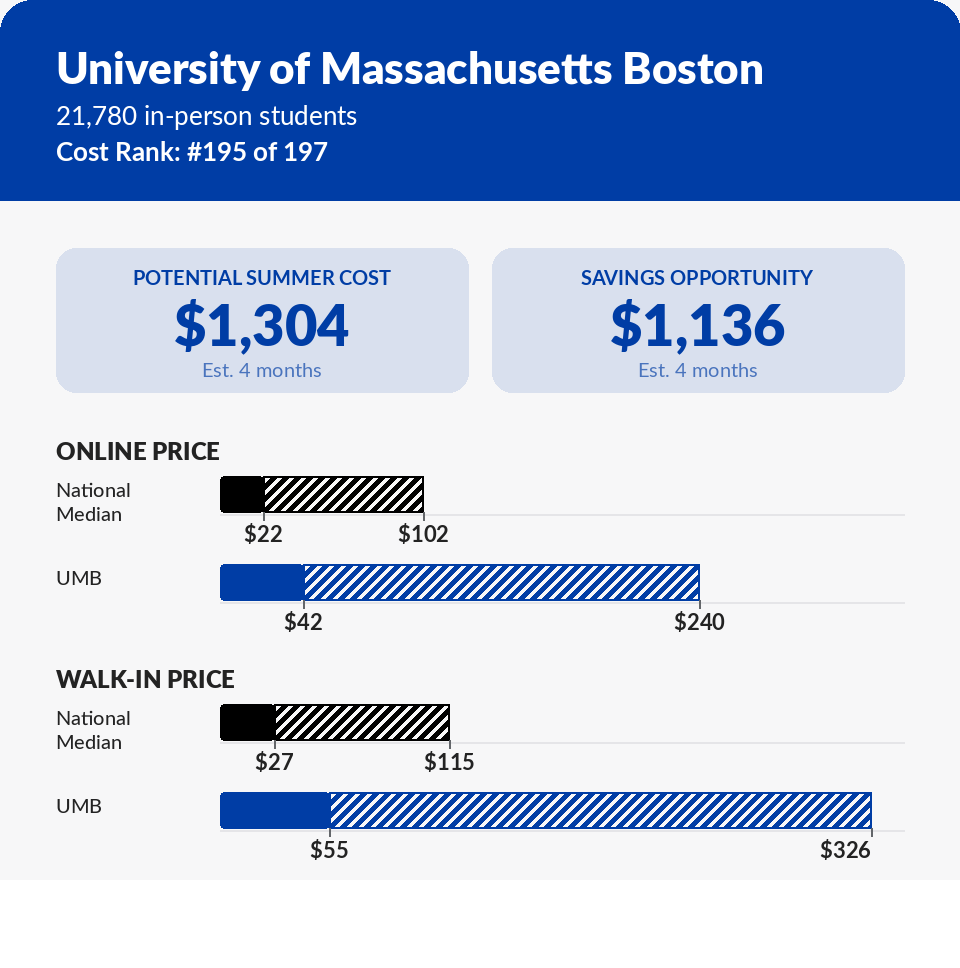
Unlike the other Boston schools on this list, UMass Boston is a commuter campus — and that changes the calculus. Most students have cars, which unlocks suburban facilities that transit-dependent students at BU, Harvard, and Northeastern can’t easily reach. Facilities in Quincy, Braintree, and other towns south of the city tend to run significantly cheaper than anything near downtown. The tradeoff is that UMass Boston’s Columbia Point campus sits on a peninsula in Dorchester, so the immediately nearby options are limited. Students who are willing to drive 15–20 minutes will find the most competitive prices.
#6. Storage Near George Washington University — Save Up to $1,104 This Summer
Total 5×5 unit options: 84
Locations running promotion: 51.2%
Online vs. walk-in prices: Online prices range from $9 to $241/month. Walk-in prices range from $10 to $285/month. The most expensive walk-in option costs $1,140 for the summer. The cheapest online option costs just $36.
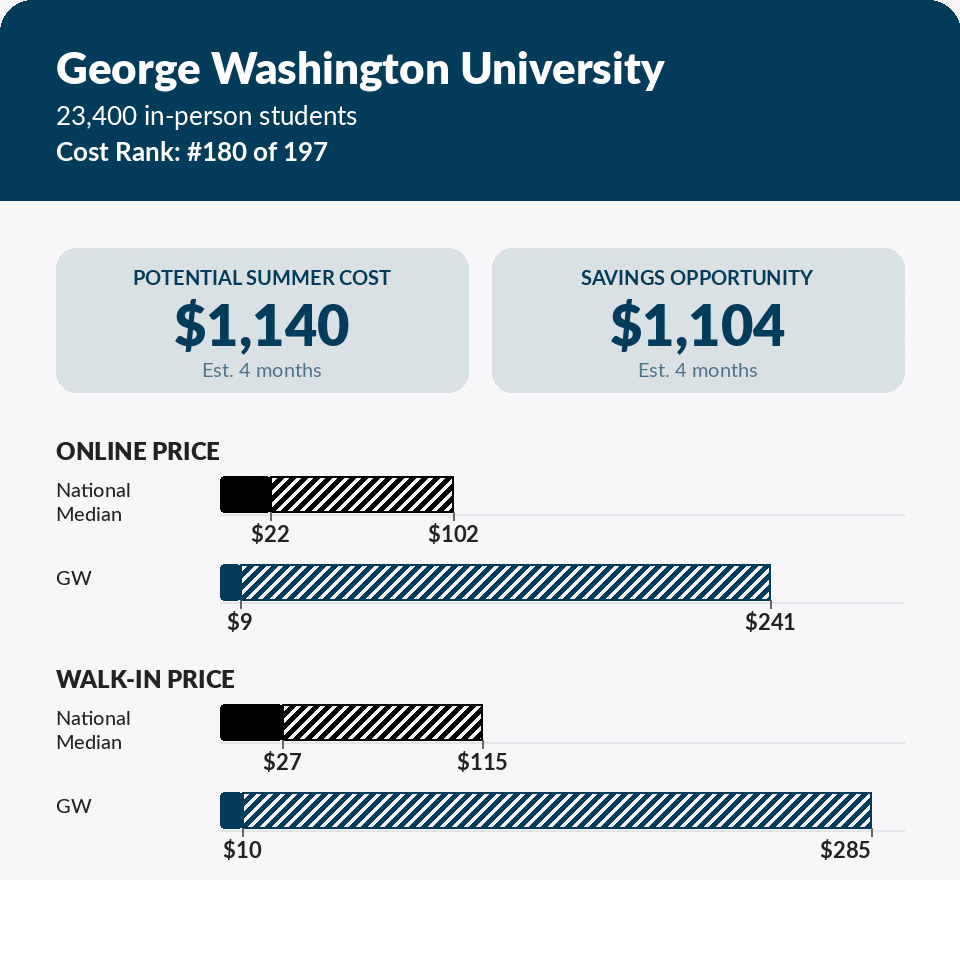
Geography and transit make GW the easiest DC school to save at. The Foggy Bottom campus sits directly on the Blue, Orange, and Silver Metro lines, giving students car-free access to cheaper facilities in Arlington, Alexandria, and the Virginia suburbs — where commercial rents are a fraction of DC proper. With 84 options and more than half running promotions (51.2%), GW students are in one of the strongest positions in the country to shop around. DC’s hot, humid summers make climate control worth considering for electronics or wooden furniture, but standard units work fine for basic belongings.
#7. Storage Near Howard University — Save Up to $1,104 This Summer
Total 5×5 unit options: 113
Locations running promotion: 47.8%
Online vs. walk-in prices: Online prices range from $9 to $214/month. Walk-in prices range from $10 to $285/month. The most expensive walk-in option costs $1,140 for the summer. The cheapest online option costs just $36.
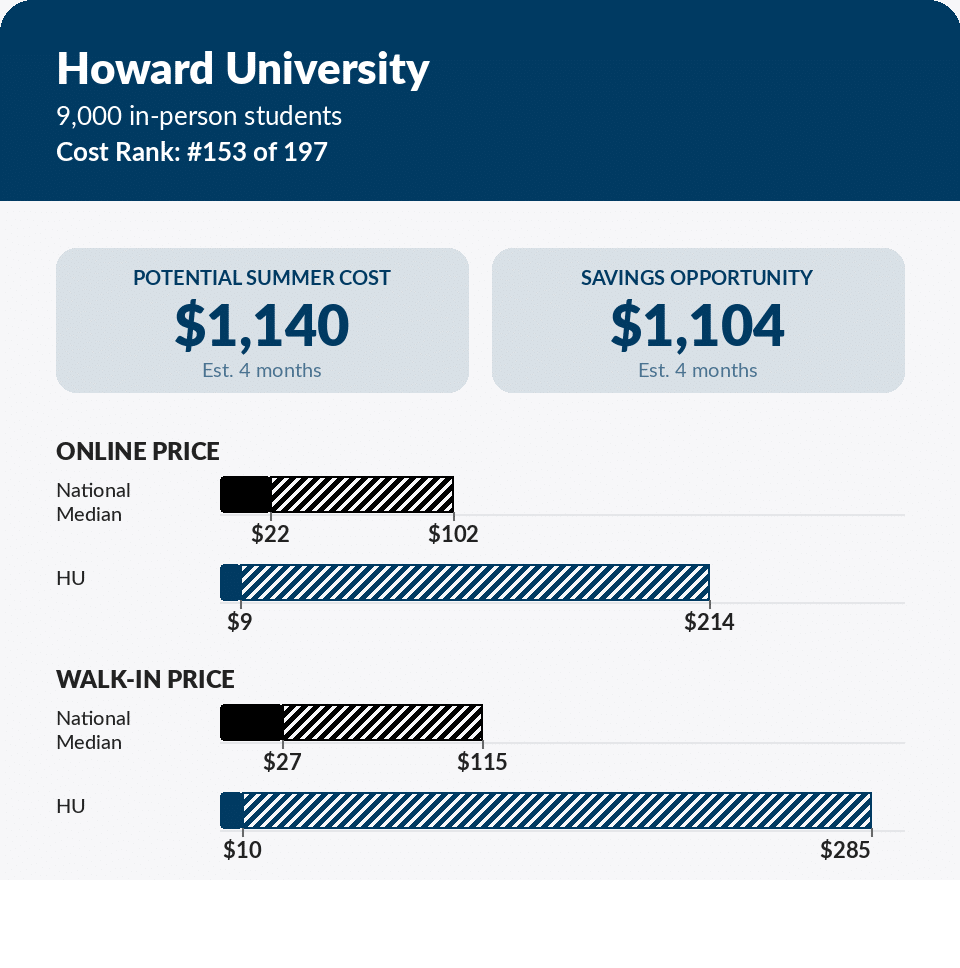
Howard has the highest facility count of any DC-area university — 113 options within 5 miles. That sheer volume drives fierce competition, and the results show: a $9/month online floor is among the lowest in any major metro area. Where GW students benefit from Metro access to Virginia, Howard students have a similar advantage via the Green and Yellow lines running into Maryland, where rates drop further. With nearly half of all facilities running promotions, Howard students who compare 5–6 options before committing will almost certainly find a deal.
#8. Storage Near American University — Save Up to $1,056 This Summer
Total 5×5 unit options: 58
Locations running promotion: 41.4%
Online vs. walk-in prices: Online prices range from $21 to $214/month. Walk-in prices range from $37 to $285/month. The most expensive walk-in option costs $1,140 for the summer. The cheapest online option costs $84.
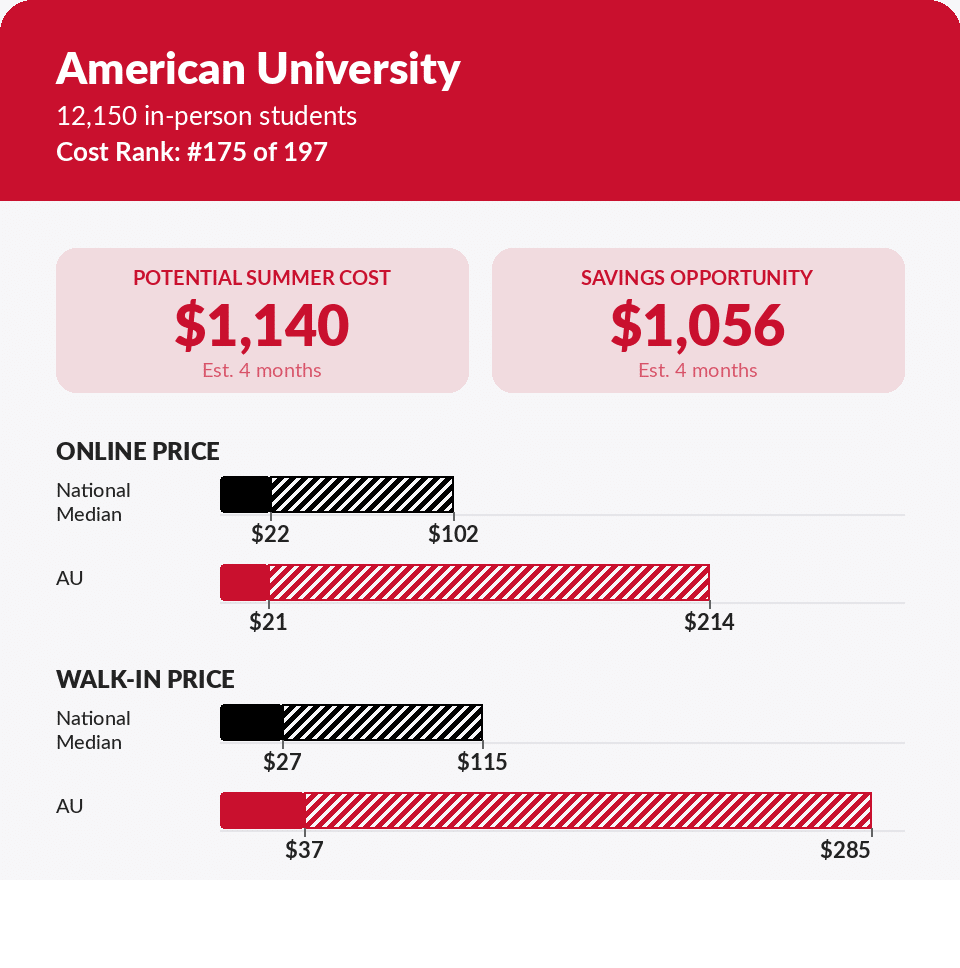
AU’s standout stat is its online floor: $21/month — just $84 for the entire summer. That’s a price the walk-in crowd will never see, since walk-in prices start at $37/month. AU’s Tenleytown-area location gives students access to both DC pricing and the more affordable options along the Wisconsin Avenue corridor heading into Maryland. With 58 options and 41.4% running promotions, the market rewards students who search online and compare before committing — the gap between the best and worst outcome here exceeds $1,000.
#9. Storage Near New York University — Save Up to $1,016 This Summer
Total 5×5 unit options: 224
Locations running promotion: 59.6%
Online vs. walk-in prices: Online prices range from $6 to $229/month. Walk-in prices range from $13 to $260/month. The most expensive walk-in option costs $1,040 for the summer. The cheapest online option costs just $24.
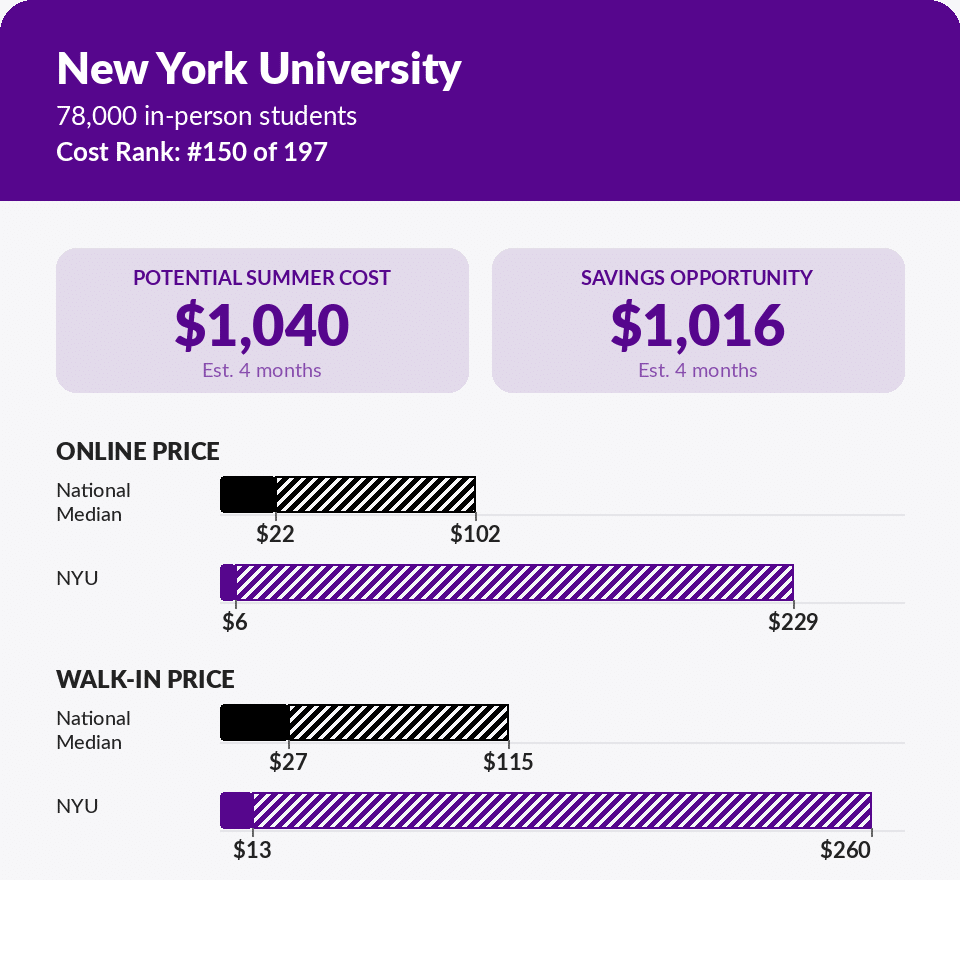
NYU students have the second-highest number of storage options in the country, and nearly six out of ten facilities are running promotions — well above the 42.8% national average. That competition is what makes the $6/month floor possible in one of the most expensive cities in the world. Students can reach facilities in Brooklyn, Queens, or New Jersey — all accessible by subway or PATH train — for a fraction of Manhattan prices. With NYU’s May 14 graduation among the city’s earliest, students who book in April rather than waiting until finals week get significantly better availability.
#10. Storage Near Georgetown University — Save Up to $1,006 This Summer
Total 5×5 unit options: 74
Locations running promotion: 51.4%
Online vs. walk-in prices: Online prices range from $34 to $214/month. Walk-in prices range from $40 to $285/month. The most expensive walk-in option costs $1,140 for the summer. The cheapest online option costs $134.
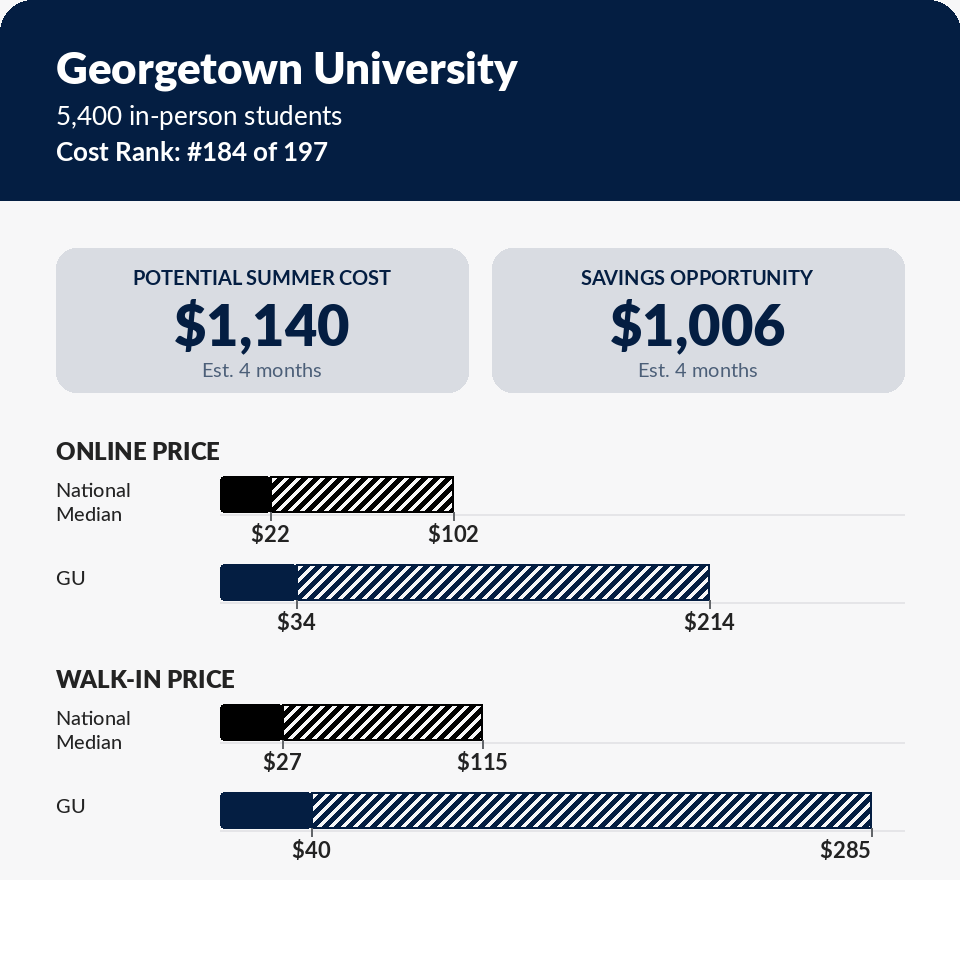
Georgetown is the one market on this list where deal-hunting beats price-comparison as a strategy. At 51.4%, it has the highest promotion rate of any top 10 school — well above the national average of 42.8%. With 74 options, more than a third of which are running first-month-free or percentage-discount deals, the smartest move is to find a promoted facility first, then compare among those. Georgetown’s campus is somewhat isolated from the Metro, but students with cars or rideshare access can cross the Potomac into Arlington and the Virginia suburbs, where prices drop further.
Surprising Findings From the Summer Storage Data
A few data points from the study that are too interesting to leave out.
Eight of the top 10 savings opportunities are in just two metro areas. Washington DC (GWU, Howard, American, and Georgetown) and Boston (BU, Harvard, Northeastern, and UMass Boston) each claim four spots — with USF and NYU rounding out the list. BU, Harvard, and Northeastern share identical $1,152 savings opportunities because their 5-mile radiuses overlap, pulling from many of the same facilities. The same dynamic plays out among the four DC schools, which share access to suburban facilities via Metro. Expensive markets with high commercial rents tend to reward research more than affordable ones.
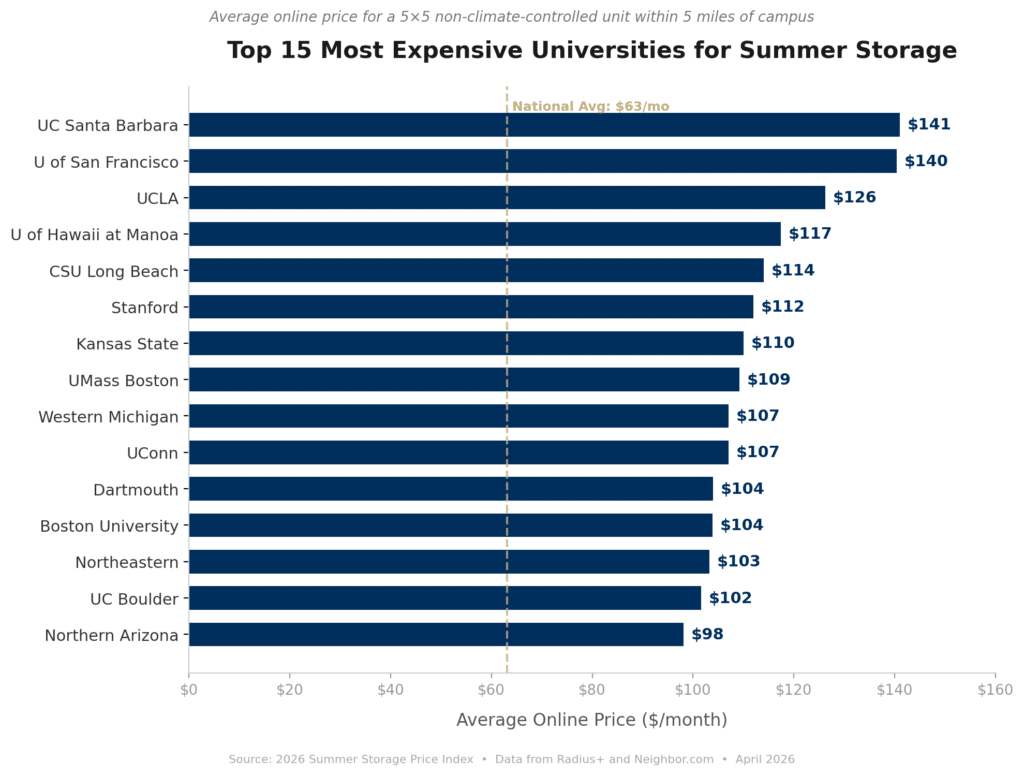
Small-town universities aren’t always cheaper. Schools in smaller college towns like UC Santa Barbara ($141/month average), Stanford ($112/month), Kansas State ($110/month), and Western Michigan ($107/month) rank among the most expensive markets despite their less urban settings. The common thread: limited competition. When there are only 1–4 storage options within 5 miles, pricing power shifts entirely to the facilities.
Competition is the best predictor of affordability. Universities with more storage options within 5 miles consistently show lower average prices, wider price ranges (meaning more budget options exist), and higher promotion rates. It’s simple economics: more competitors means more incentive to offer deals. Students at schools with fewer than 10 nearby options should plan to shop especially carefully, since the market dynamics aren’t working in their favor.
The “book online” savings are national, but unevenly distributed. The average online-vs-walk-in gap is $11/month nationally, but at schools like UMass Boston ($35/month gap), Northeastern ($34/month), and BU ($32/month), the penalty for walking in without a reservation is roughly three times the national average. In these markets, a 60-second online booking is the highest-return action a college student can take.
Frequently Asked Questions About Summer Storage for College Students
The average college student pays $253 for four months of summer storage in a 5×5 unit — the standard size for a dorm room’s worth of belongings. Prices vary by city: students near urban schools like Boston University, Harvard, and the University of San Francisco pay significantly more, while students at large public universities in the South and Midwest often pay under $200 for the full summer.
A 5×5 storage unit (25 sq ft) holds the contents of a typical dorm room: a small bookshelf, a few totes of clothing and bedding, a mini fridge, a chair, and 8–10 medium moving boxes. For students with a larger off-campus apartment, a 5×10 unit holds the contents of a single bedroom.
Book at least 2–3 weeks before move-out. Boston, DC, New York, and the Bay Area see major price spikes and inventory crunches in the last week of finals because tens of thousands of students at neighboring schools all move out within days. Students who book in April get better prices and unit selection than those who wait until finals week.
It depends on what you’re storing and where. In hot, humid markets — Houston, Miami, New Orleans, Tampa, and other Gulf Coast cities — climate control is worth it for electronics, wooden furniture, musical instruments, or leather. In mild-summer cities like San Francisco, Portland, or Seattle, standard storage is generally fine for textbooks, clothing, and basic dorm items. Nationally, climate-controlled 5×5 units cost almost the same as standard units.
Four strategies, ranked by impact: (1) book online instead of walking in — saves $44 on average over four months; (2) look for first-month-free or percentage-off promotions, which 42.8% of facilities near universities are running; (3) expand the search radius to 3–5 miles from campus, where prices average $10/month less than facilities within 1 mile; and (4) skip climate control where the local summer climate doesn’t require it.
Yes. Facilities within 1 mile of campus average $67/month. At 2–3 miles, the average is $60. At 4–5 miles, it drops to $57. Students who are willing to drive 10–20 minutes save about $40 over the summer, and in major urban markets (NYU, GW, Georgetown, BU) the savings can exceed $200.
Full Data Table: Summer Storage Pricing Near 197 Universities
The table below shows summer storage pricing data for all 197 universities ranked by in-person student population. All prices reflect 5×5 units within 5 miles of campus, collected in April 2026.
| Rank | University | In-Person Pop | Avg Online ($/mo) | Avg Walk-In ($/mo) | Savings ($/mo) | Price Range ($/mo) | Options | Promo % |
|---|---|---|---|---|---|---|---|---|
| 1 | Arizona State University | 80,000 | $44 | $53 | $8 | $74 | 61 | 50.8% |
| 2 | New York University | 78,000 | $68 | $97 | $29 | $223 | 224 | 59.6% |
| 3 | Texas A&M University | 75,000 | $50 | $57 | $7 | $85 | 32 | 37.5% |
| 4 | University of Texas at Austin | 73,000 | $58 | $72 | $14 | $127 | 68 | 35.3% |
| 5 | University of Central Florida | 70,000 | $29 | $38 | $9 | $65 | 42 | 52.4% |
| 6 | Ohio State University | 61,000 | $51 | $59 | $7 | $116 | 34 | 44.1% |
| 7 | University of Florida | 56,000 | $76 | $83 | $7 | $94 | 28 | 39.3% |
| 8 | University of Illinois at Urbana-Champaign | 56,000 | $64 | $65 | $2 | $104 | 16 | 6.2% |
| 9 | Florida International University | 55,000 | $59 | $74 | $15 | $128 | 51 | 35.3% |
| 10 | University of Minnesota Twin Cities | 55,000 | $41 | $44 | $4 | $72 | 50 | 38% |
| 11 | Georgia State University | 54,000 | $48 | $65 | $17 | $121 | 62 | 37.1% |
| 12 | Michigan State University | 52,000 | $63 | $72 | $9 | $74 | 24 | 25% |
| 13 | Pennsylvania State University | 50,000 | $73 | $141 | $68 | $44 | 4 | 25% |
| 14 | Purdue University | 50,000 | $42 | $48 | $6 | $65 | 16 | 0% |
| 15 | Rutgers University-New Brunswick | 50,000 | $41 | $54 | $13 | $113 | 45 | 42.2% |
| 16 | University of Michigan-Ann Arbor | 50,000 | $63 | $73 | $10 | $78 | 20 | 55% |
| 17 | University of South Florida | 50,000 | $35 | $50 | $15 | $88 | 43 | 46.5% |
| 18 | University of Wisconsin-Madison | 50,000 | $60 | $68 | $8 | $104 | 27 | 25.9% |
| 19 | University of Southern California | 49,000 | $105 | $124 | $19 | $155 | 58 | 37.9% |
| 20 | Indiana University Bloomington | 48,000 | $60 | $58 | $2 | $60 | 5 | 0% |
| 21 | UCLA | 48,000 | $119 | $141 | $21 | $118 | 43 | 39.5% |
| 22 | University of Washington | 48,000 | $58 | $67 | $9 | $150 | 55 | 61.8% |
| 23 | University of Cincinnati | 47,000 | $42 | $51 | $9 | $96 | 24 | 33.3% |
| 24 | University of Houston | 47,000 | $54 | $65 | $12 | $144 | 72 | 52.8% |
| 25 | University of California Berkeley | 46,000 | $105 | $119 | $14 | $164 | 16 | 25% |
| 26 | Florida State University | 45,000 | $57 | $75 | $19 | $82 | 36 | 30.6% |
| 27 | Kennesaw State University | 45,000 | $33 | $42 | $9 | $85 | 60 | 53.3% |
| 28 | University of Arizona | 45,000 | $41 | $48 | $7 | $72 | 42 | 54.8% |
| 29 | University of North Texas | 45,000 | $49 | $57 | $8 | $73 | 26 | 26.9% |
| 30 | University of Georgia | 41,000 | $45 | $52 | $7 | $87 | 25 | 28% |
| 31 | University of Maryland-College Park | 41,000 | $48 | $62 | $15 | $121 | 75 | 48% |
| 32 | University of Colorado Boulder | 40,000 | $75 | $81 | $7 | $88 | 8 | 25% |
| 33 | University of Alabama | 39,000 | $61 | $69 | $8 | $83 | 22 | 18.2% |
| 34 | Temple University | 38,000 | $53 | $62 | $9 | $147 | 116 | 34.5% |
| 35 | Virginia Tech | 38,000 | $77 | $82 | $5 | $53 | 8 | 25% |
| 36 | North Carolina State University | 37,000 | $54 | $60 | $7 | $90 | 44 | 34.1% |
| 37 | University of Wisconsin-Milwaukee | 36,900 | $50 | $55 | $6 | $105 | 25 | 32% |
| 38 | University of Pittsburgh | 36,450 | $61 | $63 | $2 | $101 | 52 | 26.9% |
| 39 | Brigham Young University | 36,000 | $64 | $67 | $2 | $72 | 11 | 9.1% |
| 40 | San Diego State University | 36,000 | $87 | $95 | $8 | $171 | 27 | 70.4% |
| 41 | Louisiana State University | 35,550 | $42 | $48 | $6 | $75 | 12 | 25% |
| 42 | University of South Carolina | 35,100 | $52 | $57 | $4 | $79 | 15 | 26.7% |
| 43 | University of Colorado Denver | 34,650 | $50 | $58 | $8 | $94 | 69 | 40.6% |
| 44 | University of Iowa | 34,200 | $47 | $49 | $2 | $55 | 12 | 16.7% |
| 45 | University of Missouri | 33,750 | $79 | $79 | $0 | $57 | 14 | 0% |
| 46 | Stony Brook University | 33,300 | $67 | $75 | $7 | $72 | 28 | 42.9% |
| 47 | Iowa State University | 33,000 | $77 | $92 | $15 | $20 | 2 | 0% |
| 48 | University of Connecticut | 33,000 | $108 | $108 | $0 | $46 | 4 | 75% |
| 49 | University of Kentucky | 33,000 | $62 | $71 | $8 | $50 | 37 | 13.5% |
| 50 | University of Massachusetts Amherst | 32,850 | $73 | $77 | $4 | $59 | 7 | 42.9% |
| 51 | Virginia Commonwealth University | 32,400 | $61 | $74 | $12 | $104 | 36 | 41.7% |
| 52 | George Mason University | 31,950 | $47 | $57 | $10 | $70 | 25 | 72% |
| 53 | University of Tennessee-Knoxville | 31,500 | $65 | $72 | $7 | $79 | 14 | 28.6% |
| 54 | University of Kansas | 31,050 | $78 | $80 | $2 | $38 | 7 | 14.3% |
| 55 | University of Oklahoma | 30,600 | $36 | $44 | $8 | $75 | 20 | 30% |
| 56 | University of Oregon | 30,150 | $65 | $73 | $8 | $61 | 21 | 23.8% |
| 57 | Florida Atlantic University | 30,000 | $48 | $57 | $9 | $83 | 30 | 23.3% |
| 58 | Colorado State University | 29,700 | $71 | $83 | $12 | $109 | 23 | 34.8% |
| 59 | California State University Fullerton | 29,250 | $63 | $72 | $9 | $100 | 58 | 55.2% |
| 60 | California State University Northridge | 28,800 | $79 | $92 | $14 | $114 | 57 | 42.1% |
| 61 | San Jose State University | 28,350 | $63 | $74 | $11 | $181 | 96 | 56.2% |
| 62 | University of Nebraska-Lincoln | 27,900 | $67 | $69 | $0 | $64 | 23 | 26.1% |
| 63 | University of North Carolina at Chapel Hill | 27,720 | $46 | $68 | $21 | $61 | 13 | 23.1% |
| 64 | Boston University | 27,450 | $112 | $144 | $32 | $202 | 58 | 31% |
| 65 | University of Utah | 27,000 | $51 | $60 | $10 | $68 | 21 | 23.8% |
| 66 | Texas State University | 26,820 | $37 | $42 | $7 | $49 | 13 | 15.4% |
| 67 | University of California Davis | 26,550 | $77 | $77 | $0 | $65 | 4 | 0% |
| 68 | University of California San Diego | 26,280 | $71 | $77 | $6 | $100 | 31 | 32.3% |
| 69 | Texas Tech University | 26,100 | $58 | $57 | $2 | $83 | 19 | 10.5% |
| 70 | University of Arkansas | 25,920 | $63 | $63 | $0 | $64 | 7 | 0% |
| 71 | Oregon State University | 25,650 | $74 | $75 | $2 | $30 | 8 | 75% |
| 72 | University of Mississippi | 25,200 | $79 | $79 | $1 | $16 | 5 | 0% |
| 73 | California State University Long Beach | 25,020 | $99 | $117 | $18 | $121 | 23 | 73.9% |
| 74 | Grand Canyon University | 25,000 | $36 | $42 | $6 | $80 | 50 | 58% |
| 75 | University of Nevada Las Vegas | 24,750 | $36 | $46 | $10 | $84 | 72 | 55.6% |
| 76 | Clemson University | 24,480 | $91 | $98 | $7 | $94 | 6 | 50% |
| 77 | Johns Hopkins University | 24,300 | $35 | $45 | $11 | $83 | 62 | 59.7% |
| 78 | University of California Irvine | 24,300 | $74 | $85 | $10 | $210 | 55 | 49.1% |
| 79 | University of Delaware | 24,120 | $40 | $49 | $9 | $66 | 21 | 52.4% |
| 80 | Wayne State University | 24,000 | $79 | $82 | $3 | $63 | 25 | 24% |
| 81 | Auburn University | 23,850 | $61 | $63 | $2 | $20 | 14 | 0% |
| 82 | University of Virginia | 23,850 | $83 | $94 | $11 | $85 | 7 | 0% |
| 83 | West Virginia University | 23,580 | $57 | $74 | $7 | $89 | 11 | 9.1% |
| 84 | George Washington University | 23,400 | $87 | $109 | $22 | $232 | 84 | 51.2% |
| 85 | Washington State University | 23,400 | $67 | $75 | $0 | $46 | 9 | 0% |
| 86 | University of California Santa Barbara | 23,220 | $134 | $162 | $28 | $35 | 4 | 25% |
| 87 | Northeastern University | 22,950 | $113 | $147 | $34 | $202 | 52 | 32.7% |
| 88 | Portland State University | 22,680 | $54 | $65 | $11 | $88 | 53 | 79.2% |
| 89 | Cornell University | 22,500 | $64 | $80 | $15 | $66 | 5 | 20% |
| 90 | University of New Mexico | 22,500 | $54 | $63 | $10 | $89 | 36 | 33.3% |
| 91 | California State University Sacramento | 22,320 | $56 | $65 | $9 | $80 | 43 | 53.5% |
| 92 | University of Memphis | 22,050 | $31 | $37 | $6 | $107 | 31 | 48.4% |
| 93 | University of Massachusetts Boston | 21,780 | $123 | $158 | $35 | $198 | 42 | 26.2% |
| 94 | DePaul University | 21,600 | $51 | $67 | $16 | $137 | 105 | 41.9% |
| 95 | Columbia University | 21,420 | $63 | $88 | $25 | $223 | 254 | 56.1% |
| 96 | University of California Santa Cruz | 21,150 | $73 | $93 | $20 | $86 | 13 | 38.5% |
| 97 | Ball State University | 20,880 | $42 | $43 | $1 | $65 | 11 | 9.1% |
| 98 | University of Louisville | 20,700 | $37 | $48 | $12 | $46 | 27 | 51.9% |
| 99 | Old Dominion University | 20,520 | $56 | $80 | $23 | $53 | 26 | 50% |
| 100 | California State University San Bernardino | 20,250 | $44 | $60 | $16 | $63 | 10 | 60% |
| 101 | Northern Arizona University | 19,980 | $86 | $91 | $6 | $54 | 10 | 40% |
| 102 | Northwestern University | 19,800 | $45 | $59 | $14 | $99 | 42 | 54.8% |
| 103 | University of Toledo | 19,800 | $54 | $62 | $7 | $56 | 28 | 42.9% |
| 104 | Kent State University | 19,620 | $33 | $41 | $9 | $26 | 3 | 66.7% |
| 105 | California Polytechnic State University San Luis Obispo | 19,350 | $97 | $97 | $0 | $52 | 4 | 25% |
| 106 | University of Massachusetts Lowell | 19,080 | $45 | $63 | $20 | $33 | 14 | 64.3% |
| 107 | Harvard University | 18,900 | $106 | $135 | $29 | $202 | 69 | 26.1% |
| 108 | University of Texas at San Antonio | 18,900 | $34 | $41 | $6 | $106 | 54 | 61.1% |
| 109 | University of Texas at Arlington | 18,720 | $35 | $41 | $6 | $107 | 67 | 56.7% |
| 110 | University of Hawaii at Manoa | 18,450 | $114 | $122 | $8 | $193 | 32 | 15.6% |
| 111 | Georgia Institute of Technology | 18,180 | $45 | $60 | $15 | $121 | 75 | 44% |
| 112 | Baylor University | 18,000 | $45 | $52 | $7 | $66 | 11 | 54.5% |
| 113 | University of North Carolina at Charlotte | 18,000 | $35 | $46 | $11 | $133 | 27 | 77.8% |
| 114 | Mississippi State University | 17,820 | $51 | $62 | $6 | $24 | 3 | 33.3% |
| 115 | University of Buffalo | 17,550 | $58 | $81 | $22 | $45 | 8 | 100% |
| 116 | Syracuse University | 17,280 | $74 | $87 | $14 | $57 | 16 | 43.8% |
| 117 | University of Akron | 17,100 | $49 | $51 | $2 | $80 | 19 | 15.8% |
| 118 | University of Idaho | 16,920 | $70 | $74 | $0 | $55 | 16 | 0% |
| 119 | Sam Houston State University | 16,650 | $34 | $40 | $6 | $36 | 8 | 37.5% |
| 120 | Kansas State University | 16,380 | $84 | $84 | $0 | $86 | 7 | 14.3% |
| 121 | Oklahoma State University | 16,200 | $50 | $50 | $0 | $49 | 7 | 0% |
| 122 | Montana State University | 16,020 | $57 | $57 | $0 | $5 | 3 | 0% |
| 123 | Liberty University | 16,000 | $52 | $56 | $4 | $67 | 10 | 70% |
| 124 | Eastern Michigan University | 15,750 | $51 | $59 | $8 | $47 | 8 | 87.5% |
| 125 | Middle Tennessee State University | 15,480 | $42 | $47 | $5 | $49 | 19 | 63.2% |
| 126 | Boise State University | 15,300 | $67 | $70 | $3 | $80 | 25 | 48% |
| 127 | Duke University | 15,300 | $40 | $40 | $0 | $68 | 26 | 19.2% |
| 128 | Stanford University | 15,300 | $92 | $110 | $18 | $110 | 20 | 25% |
| 129 | Northern Illinois University | 15,120 | $47 | $53 | $6 | $24 | 2 | 0% |
| 130 | Western Michigan University | 14,850 | $69 | $74 | $5 | $127 | 14 | 28.6% |
| 131 | University of Nevada Reno | 14,580 | $57 | $62 | $5 | $83 | 19 | 57.9% |
| 132 | California State University Fresno | 14,400 | $61 | $61 | $0 | $60 | 18 | 11.1% |
| 133 | Fordham University | 14,400 | $61 | $90 | $29 | $171 | 211 | 53.6% |
| 134 | Southern Illinois University Carbondale | 14,220 | $47 | $46 | $0 | $30 | 4 | 0% |
| 135 | Carnegie Mellon University | 13,950 | $60 | $63 | $2 | $101 | 48 | 25% |
| 136 | University of Vermont | 13,950 | $68 | $68 | $0 | $42 | 8 | 0% |
| 137 | New Mexico State University | 13,680 | $42 | $50 | $7 | $46 | 15 | 20% |
| 138 | East Carolina University | 13,500 | $62 | $64 | $2 | $51 | 17 | 11.8% |
| 139 | Emory University | 13,500 | $46 | $61 | $15 | $121 | 90 | 42.2% |
| 140 | Washington University in St. Louis | 13,500 | $60 | $69 | $9 | $82 | 31 | 41.9% |
| 141 | Boston College | 13,050 | $91 | $130 | $39 | $162 | 33 | 36.4% |
| 142 | University of South Alabama | 13,050 | $41 | $45 | $3 | $78 | 41 | 53.7% |
| 143 | University of Wyoming | 13,050 | $52 | $71 | $20 | $19 | 5 | 40% |
| 144 | Illinois State University | 12,780 | $72 | $74 | $2 | $55 | 15 | 13.3% |
| 145 | Appalachian State University | 12,600 | $70 | $70 | $0 | $90 | 7 | 0% |
| 146 | University of Rhode Island | 12,420 | $59 | $105 | $46 | $51 | 8 | 75% |
| 147 | American University | 12,150 | $83 | $112 | $29 | $193 | 58 | 41.4% |
| 148 | Vanderbilt University | 12,150 | $60 | $69 | $8 | $100 | 35 | 45.7% |
| 149 | Western Kentucky University | 12,150 | $59 | $61 | $2 | $27 | 11 | 18.2% |
| 150 | University of Montana | 11,880 | $54 | $51 | $0 | $18 | 8 | 0% |
| 151 | University of North Dakota | 11,700 | $51 | $51 | $0 | $26 | 11 | 36.4% |
| 152 | University of Alabama at Birmingham | 11,250 | $48 | $53 | $5 | $79 | 44 | 18.2% |
| 153 | University of Notre Dame | 11,250 | $53 | $61 | $8 | $69 | 23 | 30.4% |
| 154 | Towson University | 10,980 | $34 | $43 | $9 | $77 | 39 | 53.8% |
| 155 | Tufts University | 10,800 | $87 | $107 | $19 | $145 | 49 | 32.7% |
| 156 | University of Rochester | 10,800 | $68 | $94 | $26 | $50 | 11 | 63.6% |
| 157 | Wichita State University | 10,800 | $39 | $47 | $9 | $57 | 22 | 50% |
| 158 | University of Nebraska Omaha | 10,620 | $51 | $52 | $1 | $55 | 36 | 11.1% |
| 159 | Central Michigan University | 10,350 | $46 | $92 | $45 | $10 | 6 | 100% |
| 160 | Rowan University | 10,080 | $42 | $52 | $10 | $56 | 22 | 50% |
| 161 | University of Maine | 9,900 | $54 | $54 | $0 | $25 | 6 | 16.7% |
| 162 | University of Texas at El Paso | 9,720 | $36 | $39 | $2 | $12 | 4 | 25% |
| 163 | Florida A&M University | 9,450 | $52 | $72 | $20 | $54 | 23 | 26.1% |
| 164 | James Madison University | 9,450 | $63 | $70 | $6 | $65 | 17 | 35.3% |
| 165 | Wright State University | 9,180 | $64 | $66 | $2 | $103 | 13 | 23.1% |
| 166 | Brown University | 9,000 | $66 | $76 | $10 | $89 | 55 | 43.6% |
| 167 | Drexel University | 9,000 | $59 | $65 | $7 | $147 | 100 | 34% |
| 168 | Howard University | 9,000 | $70 | $88 | $18 | $205 | 113 | 47.8% |
| 169 | University of New Hampshire | 8,820 | $66 | $72 | $6 | $67 | 6 | 33.3% |
| 170 | Texas Christian University | 8,550 | $35 | $43 | $8 | $104 | 59 | 57.6% |
| 171 | Marshall University | 8,280 | $55 | $55 | $0 | $15 | 3 | 0% |
| 172 | University of South Dakota | 8,100 | $41 | N/A | N/A | $0 | 1 | 0% |
| 173 | Cleveland State University | 7,920 | $49 | $54 | $6 | $25 | 7 | 14.3% |
| 174 | Loyola University Chicago | 7,650 | $49 | $65 | $15 | $103 | 69 | 46.4% |
| 175 | Rice University | 7,650 | $45 | $57 | $12 | $144 | 132 | 63.6% |
| 176 | University of Dayton | 7,380 | $52 | $55 | $3 | $75 | 20 | 20% |
| 177 | Marquette University | 7,200 | $42 | $46 | $4 | $105 | 43 | 27.9% |
| 178 | North Dakota State University | 7,020 | $53 | $54 | $1 | $62 | 21 | 42.9% |
| 179 | University of Denver | 6,750 | $42 | $49 | $8 | $62 | 73 | 57.5% |
| 180 | Gonzaga University | 6,480 | $64 | $65 | $2 | $57 | 27 | 48.1% |
| 181 | Santa Clara University | 6,300 | $69 | $81 | $13 | $181 | 70 | 58.6% |
| 182 | Xavier University | 6,300 | $34 | $43 | $9 | $96 | 39 | 43.6% |
| 183 | Villanova University | 6,120 | $46 | $57 | $11 | $105 | 19 | 31.6% |
| 184 | Dartmouth College | 5,850 | $81 | $81 | $0 | $49 | 3 | 0% |
| 185 | Seton Hall University | 5,850 | $51 | $68 | $17 | $146 | 78 | 37.2% |
| 186 | University of the Pacific | 5,850 | $41 | $48 | $10 | $93 | 31 | 45.2% |
| 187 | University of San Francisco | 5,580 | $138 | $161 | $23 | $203 | 43 | 27.9% |
| 188 | Georgetown University | 5,400 | $94 | $117 | $23 | $180 | 74 | 51.4% |
| 189 | Wake Forest University | 5,220 | $37 | $41 | $4 | $68 | 24 | 33.3% |
| 190 | Creighton University | 4,950 | $55 | $56 | $1 | $55 | 18 | 5.6% |
| 191 | Tulane University | 4,680 | $49 | $58 | $9 | $114 | 40 | 57.5% |
| 192 | University of Tulsa | 4,320 | $41 | $54 | $13 | $55 | 33 | 48.5% |
| 193 | Southern New Hampshire University | 3,000 | $63 | $75 | $12 | $70 | 21 | 33.3% |
| 194 | Capella University | 0 | $40 | $45 | $6 | $72 | 52 | 38.5% |
| 195 | University of Phoenix | 0 | $48 | $60 | $11 | $94 | 49 | 42.9% |
| 196 | Walden University | 0 | $37 | $43 | $6 | $74 | 60 | 43.3% |
| 197 | Western Governors University | 0 | $45 | $53 | $9 | $72 | 34 | 35.3% |
About This Study
This analysis of summer storage for college students was conducted using proprietary pricing data from Neighbor.com and facility data from Radius+, the self-storage industry’s leading data and analytics provider. All prices were collected in April 2026 and reflect currently available 5×5 storage units within 5 miles of each university’s campus.
For questions about the methodology, access to the raw data, or to request custom data for a specific university, contact [email protected].