


Who said you can’t swap your storage unit inventory throughout the year? For those renters who treat their storage units as a year-round extension of their homes (and live in areas that experience all four seasons), a storage unit is a great way to rotate out seasonal items like skis, snowboards, and winter gear when not in-use.
As the sun shines bright and the temperatures rise, it’s time to de-winterize your living spaces by storing away your winter gear in a storage unit. That way, your retired snowblower and bulky sleds aren’t monopolizing your limited garage space–which could be space dedicated to your lawn mower, pool toys, or slip-and-slide instead.
In this comprehensive guide, we’ll provide five essential tips to store your seasonal items during the summer months efficiently in storage space. Let’s dive in and make your summer storage a breeze!
Common Seasonal Items Stored for The Summer Storage
Managing seasonal belongings within a residential space can prove challenging, leading to clutter and the burden of maintenance.
Thankfully, the perfect solution arises in the form of self-storage facilities. Especially during the summer, many individuals wisely turn to self-storage to store their seasonal items that won’t be required until winter returns.
These items can be securely stored by opting for a self-storage unit, freeing up valuable space within your home and ensuring a more organized living environment. Embrace the convenience and peace of mind that self-storage offers for your seasonal belongings this summer.
- Winter clothing and heavy coats
- Snow gear
- Christmas decorations
- Winter sports equipment
- Thick blankets and comforters
- Winter clothes, boots, and footwear
- Cold-weather accessories
- Heaters and electric blankets
- Snow tires
- Snow removal tools
- College student’s belongings during the summer vacation
How Hot Do Storage Units Get In The Summer?
Worried that the scorching heat circulating inside of your storage unit will damage your winter items?
The temperature inside a storage unit during the summer can vary depending on various factors, such as the storage facility’s location, construction type, insulation, and ventilation.
However, it’s not uncommon for storage units to get quite hot during the summer months, especially in desert regions known for their record-high temperatures.
If you don’t want triple-digit temperatures wreaking havoc on your snow tires, winter sports equipment, or your space heaters, you can find a storage facility that offers climate-controlled units. Because traditional facilities have a limited inventory of climatized storage, you can turn to storage marketplaces Neighbor, that offers a bounty of climate-controlled storage options, all complete with temperature regulation features.
Temperature-moderated storage units are equipped with air conditioning or heating systems, maintaining a more stable and moderate temperature throughout the year. This helps to prevent extreme temperature fluctuations that could lead to damage.
However, it’s worth noting that these units typically cost more than standard self-storage facilities without temperature control.
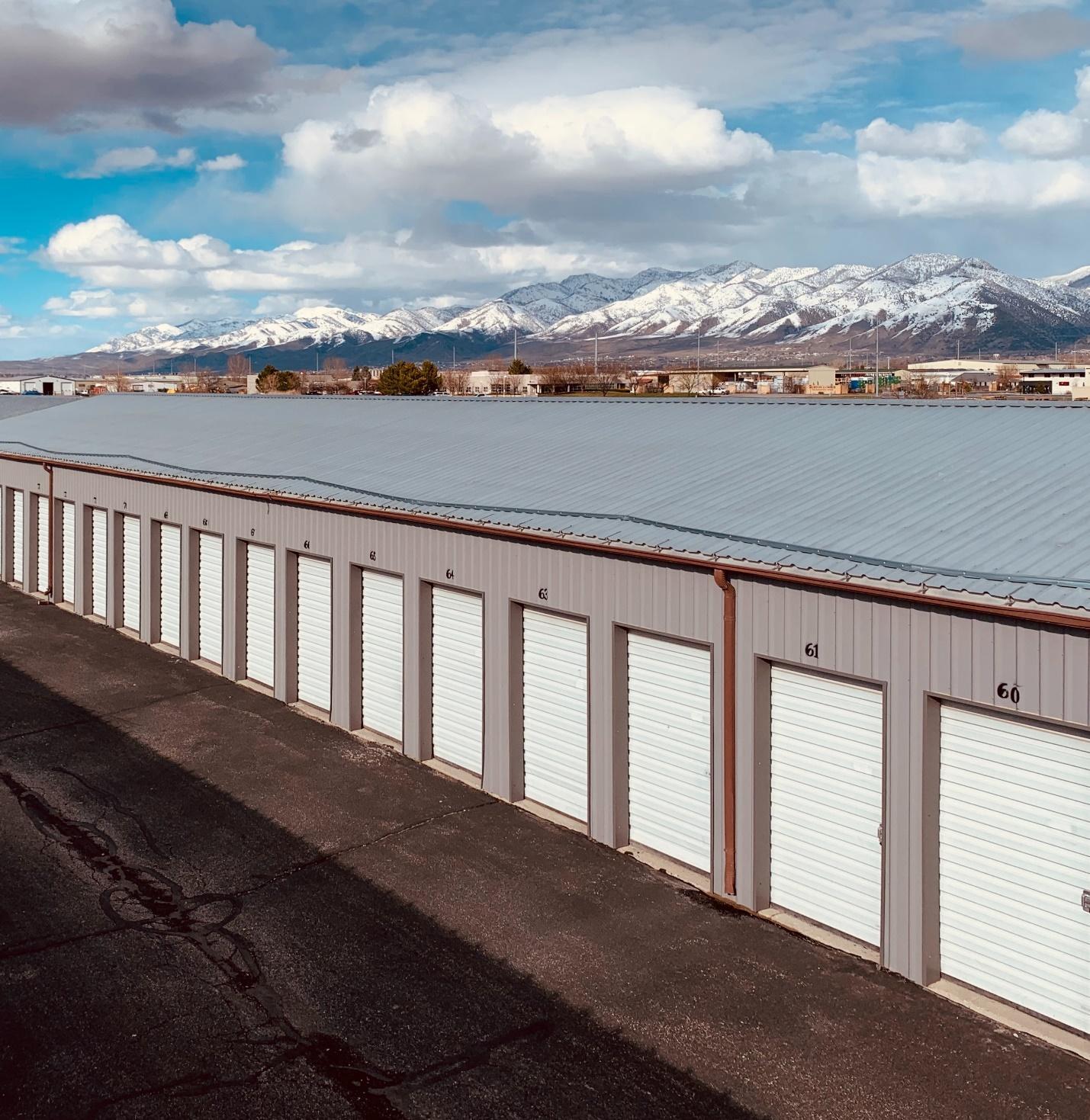
How To Keep Things Cool In A Storage Unit?
Keeping things cool in a storage unit, especially during the hot summer, is essential to prevent damage to temperature-sensitive items. If a climate-controlled unit is out of budget, here are some pointers to help maintain a cooler environment inside a storage unit:
Strategic Packing
Organize your storage unit by placing temperature-sensitive items away from the walls and ceiling, as these areas can be more prone to temperature fluctuations.
Air Circulation
Leave space between boxes and items to allow air to flow freely. Additionally, avoid packing items too tightly together, as it can trap heat.
Use Pallets or Shelving Units
Elevate your belongings using pallets or shelving units. This allows air to circulate underneath and around the items, which can help keep the temperature lower.
Avoid Placing Items Directly on the Floor
If the storage unit isn’t climate-controlled, try not to place items directly on the floor, as it tends to be the hottest part.
Insulate Boxes and Containers
For particularly sensitive items, consider insulating them with bubble wrap to protect against temperature fluctuations.
Summer Storage Tips for College Students
College students are among one of the biggest demographics to turn to summer storage.
When spring semester adjourns and dorm buildings close for the summer, college students need reliable storage to store their dorm essentials, until the incoming Fall semester. For those out-of-state students, affordable storage located near campus is that much more imperative. Otherwise, they’ll be forced to fork over the hundreds of dollars it costs to ship their belongings back home.

If you’re a college student, you’ll need to look for a local self-storage facility that offers short-term rental options or deals for college students, like Neighbor, a peer-to-peer storage marketplace offering cheaper and closer storage solutions. From there, you can opt for climate-control units, which will help protect your temperature-conscious belongings, such as electronics, mini fridges, or important school documents.
If you’re in the process of storing your belongings safely in-between semesters, consider the following tips:
Declutter and Donate
Declutter your belongings before packing for general or seasonal storage. If you have unwanted clothing or any item that you do not use, donate it to a shelter. By decluttering, you’ll be able to squeeze a dorm room’s worth of belongings into a smaller storage unit size, ultimately saving you money.
Pack Strategically
Use sturdy moving boxes, storage containers, and packing materials to protect your belongings during storage. Label each box with its contents to make it easier to find specific items. By packing strategically, you can eliminate some of the hassle of move-in day, come Fall semester.
Wrapping Up
When the sun sets on your fun in the sun, rotate in your pool toys, jet skis, canoes, paddleboards, swimwear in preparation for the fall season. When transitioning from fall to winter, you can even stow away your Halloween costumes and decorations and pull out the Christmas décor. That way, not a nook or cranny of your storage space will go to waste from season to season.