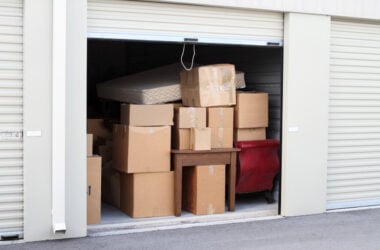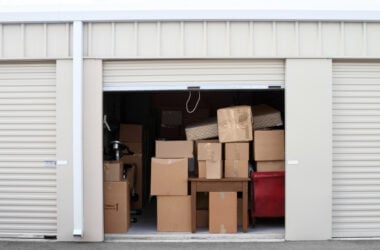


A 5×10 storage unit holds about what you’d find in a studio apartment: a mattress, a dresser, and around 20 boxes worth of belongings.
How Big Is a 5×10 Storage Unit?
A 5×10 storage unit is 5 feet wide and 10 feet long, with 8-foot ceilings in most traditional units. That’s 50 square feet of floor space.
Think of a standard walk-in closet. It’s enough room for a queen-sized mattress, a few pieces of furniture, and a small stack of boxes, but not a car or a two-bedroom apartment.
Different units have different heights, so if you’re counting on stacking, confirm the ceiling height before you book.
If you’re not positive which unit you’ll need, here’s a rough estimate of what each standard size can hold:
| Unit Size | Square Feet | Best For |
| 5×5 | 25 sq ft | Hall closet’s worth of stuff |
| 5×10 | 50 sq ft | Studio or small one-bedroom apartment |
| 5×15 | 75 sq ft | One-bedroom with extra furniture |
| 10×10 | 100 sq ft | Two-bedroom apartment |
| 10×15 | 150 sq ft | Three-bedroom home |
You can also check out our storage unit size guide for a fuller picture.
How Much Can You Fit in a 5×10 Storage Unit?
A 5×10 storage unit can hold about what’s in a studio or small one-bedroom apartment. If you’re just storing bins or boxes, you’ve got room for about 20 larger ones.
Here are some examples of what can fit when you pack it well:
Furniture
- Queen mattress and box spring (positioned upright)
- Twin or full mattress set
- Small couch or loveseat
- Dresser or chest of drawers
- Coffee table, TV stand, and nightstand
- Two or three dining chairs
- Small bookcase
Appliances and Electronics
- Flat-screen TV (boxed)
- Microwave, toaster, and small kitchen appliances
- Window AC unit or fan
- Vacuum cleaner
Outdoor and Hobby Gear
- Bicycle
- Most motorcycles, with a little room for accessories
- Lawn mower
- Golf clubs, skis, or snowboards
- Camping or fishing gear
Office and Home Overflow
- Filing cabinet
- Small office desk and chair
- Boxes of paperwork
- Seasonal decorations
- Luggage and personal records
College students tend to get good mileage out of a 5×10. Dorm furniture, clothes, books, and other stuff you can’t bring home usually fit comfortably over summer breaks.
How Many Boxes Fit in a 5×10?
A 5×10 can hold around 20 larger boxes, depending on how you pack.
Stacking is what makes the difference. With 8-foot ceilings, you can go four or five boxes high. Remember to put the heavier ones at the bottom.
What Doesn’t Fit in a 5×10 Storage Unit?
If any of these are on your list, you’ll need to size up:
- King mattresses: A king runs just over 6 feet wide, so it won’t stand upright in a 5-foot-wide unit.
- Full appliances: One large appliance, like a fridge or a washer, is doable. All three together won’t fit side by side.
- Cars: Even small cars won’t fit in a 5×10. For vehicle storage, you’ll need at least a 10×20.
- Large sectionals: An L- or U-shaped couch is a struggle, even disassembled.
- More than one bedroom’s worth of stuff: A 5×15 or 10×10 will work better.
Most facilities won’t let you store flammable liquids, perishables, live plants or animals, or lithium batteries. Your rental agreement will have the full list, so give it a read before you start packing.
How to Pack a 5×10 Storage Unit: Expert Tips
The key is using all 50 square feet, including the 8 feet of height that most traditional units offer. These tips will help you get there.
Tip #1: Make a list and take photos
Write down what’s going in, room by room, before you start the move. A simple list on your phone is enough; you’ll just want to be able to check what’s in the unit.
As you’re filling the unit, take a few photos to remind you that the office chair is on the left side of the back wall, for example, so there’s less digging to do later.
Tip #2: Take apart anything you can
Bed frames, headboards, tables, and desks all take up way less room when they’re flat, rather than upright. Long pieces, like bed slats, can stand upright against a wall to save floor space.
Keep screws, special tools, and other construction bits in a labeled ziplock bag taped to the furniture they belong to.
Tip #3: Heavy stuff goes on the bottom
This sounds obvious, but moving is complicated, and sometimes we forget. Build a solid base by moving in the heaviest boxes and furniture first, then stack lighter things on top, so there’s less risk of anything getting crushed.
Tip #4: Keep what you’ll need first near the door
If you’re storing pool gear, a bike, or anything you’ll swing by to grab once a month, put it within arm’s reach of the entrance. Bury less useful items nearer the back.
Tip #5: Label everything
Write the room and a few key items on the side of each box, not the top, so you can see your labels when your boxes are stacked. This saves you from having to open five wrong boxes to find that bedside lamp.
Tip #6: Use vertical space
Map out your stacking, and remember that free-standing shelving units can help you store smaller or more fragile items with easier access.
Tip #7: Clear bins beat cardboard boxes
Bins do cost a bit more, but being able to see what’s inside without having to open anything saves you time and hassle. Labels are still a good bet.
Tip #8: Leave a path down the middle
Even leaving room for a couple of steps into the unit can help you spot what you need. Otherwise, you risk having to unload half the unit every time you’re searching for something.
Tip #9: Sketch a quick map
This sounds extra, but jotting down a map of where you’ve stashed things can take 2 minutes and save hours of searching. Together, the map and your move-in photos give you a complete picture of where everything landed. When you’re back in 6 months looking for the holiday lights, you’ll find them on the first try.
For more tips, see our full guide on how to organize a storage unit.
How Much Does a 5×10 Storage Unit Cost?
A 5×10 is one of the most affordable options. Here’s how it compares to other common storage sizes:
| Unit Size | Non-Climate-Controlled | Climate-Controlled |
| 5×5 | $53 | $55 |
| 5×10 | $75 | $84 |
| 10×10 | $120 | $137 |
| 10×15 | $158 | $182 |
| 10×20 | $194 | $237 |
| 10×30 | $258 | $336 |
These are national averages, so the prices in your city may look different. In New York, Los Angeles, or San Francisco, prices can run significantly higher.
A few things to keep in mind when gauging how much storage will cost:
- Climate control: This regulates humidity and keeps the temperature between about 55°F and 85°F. It’ll cost more, but consider it when you’re storing wood furniture, electronics, photos, or anything else that could warp or fade with heat and humidity.
- Drive-up units: These cost less than indoor units. You trade a little weather exposure for easier loading and a lower monthly bill.
- First-month deals: Some facilities offer $1 rent or half off the first month. But be sure to check rate increases, since they can be steep at traditional facilities.
- Insurance: If you don’t have your own coverage, facilities typically add $8–$38 a month for a protection plan.
- Neighborhood spaces: A neighbor renting out their unused shed usually charges less than a facility for the same amount of space. At Neighbor, you can compare local options and traditional storage units in a single search. Each space comes with up to $25K in rental property protection, no matter what you book.
Who Should Use a 5×10 Storage Unit?
A 5×10 makes the most sense if you’re moving between small apartments, clearing space for a renovation, or storing a semester’s worth of stuff over the summer. It’s sized and priced for one person’s belongings.
Good fits for a 5×10:
- Apartment residents with overflow: Your closet is full, and your bedroom is doubling as an office. A 5×10 gives stuff like off-season clothes, sports gear, and that spare chair somewhere to go.
- People moving between studios or one-beds: Moving is already a lot. A 5×10 holds your furniture and boxes between leases so you’re not paying for more space than you need right now.
- College students: Dorm furniture, bedding, and books fit easily, and storing over summer costs less than shipping it all home or paying fees to leave it on campus.
- Small business owners: Small filing cabinets, office supplies, and a little inventory stay accessible without the overhead of bigger commercial space.
- Homeowners mid-renovation: If a single room is being remodeled, a 5×10 can usually stash the furniture, rug, and decor.
- Seasonal items: Holiday decorations, summer patio furniture, ski gear, and camping equipment can all fit, with room left for a couple of boxes.
If you only need to clear out a closet, a 5×5 storage unit may be enough.
There’s Usually a Cheaper Option Nearby
When you need your spare folding chairs tonight, that storage facility in the suburbs can feel like it’s in another state. But big facilities aren’t your only choice. Unlike big facilities, Neighbor lists both national brands and neighborhood spaces like garages and basements side by side.
Neighborhood spaces often cost less because hosts don’t carry the overhead of big facilities, and they’re usually easier to reach.
One search lets you browse photos and reviews of these local spots and compare them with units from national brands, so you can book what’s best.
Every booking comes with up to $25K in renter property protection. And with 689,000+ reviews and a 4.9-star rating, you’ll have plenty of real feedback to go on.
Compare what’s near you in a few minutes, or call us to talk it through.
Frequently Asked Questions
How much can you fit in a 5×10 storage unit?
A 5×10 unit holds roughly what you’d find in a studio or small one-bedroom apartment. It could handle a queen mattress, a loveseat and a dresser, or about 20 larger boxes. A 5×10 would also be a good size for most motorcycles, bikes, and seasonal gear, with a little room left over.
Can you fit a car in a 5×10 storage unit?
No, a car won’t fit in a 5×10 unit. For a car, you’ll need at least a 10×20 or a dedicated vehicle storage spot. To park comfortably, most cars need around 18–20 feet of length.
What’s the difference between a 5×10 and a 10×10 storage unit?
A 10×10 unit gives you 100 square feet, double the space of a 5×10, and it costs 50–80% more. It’s the difference between storing the contents of a studio or a two-bedroom apartment.