


If you’ve been dreaming about RV road trips and campfires, you’ve probably wondered: Should I buy my own RV or just rent one? It’s a tough call, especially now, with higher interest rates and so many types of RVs on the market.
The truth is, buying an RV can be exciting, but it’s also a big financial and lifestyle commitment. Renting, on the other hand, gives you the experience without the long-term costs. Let’s break down what each option looks like so you can make the right decision for your situation.
What It Really Costs to Buy an RV Today
When you buy an RV, the sticker price is only the beginning. You’ll also need to budget for taxes, registration, insurance, and gear. And if you don’t have space at home, plan for storage as well.
Most buyers finance their RVs, and today’s interest rates make a big difference. As of October 2025:
- Many lenders offer rates starting around 6.5–7% APR for qualified buyers.
- Credit union rates often start near 7.7%, and some loans reach 9–10% for used RVs.
For a $60,000 loan over ten years, that means a monthly payment around $700–$750, and you’ll pay significant interest over time.
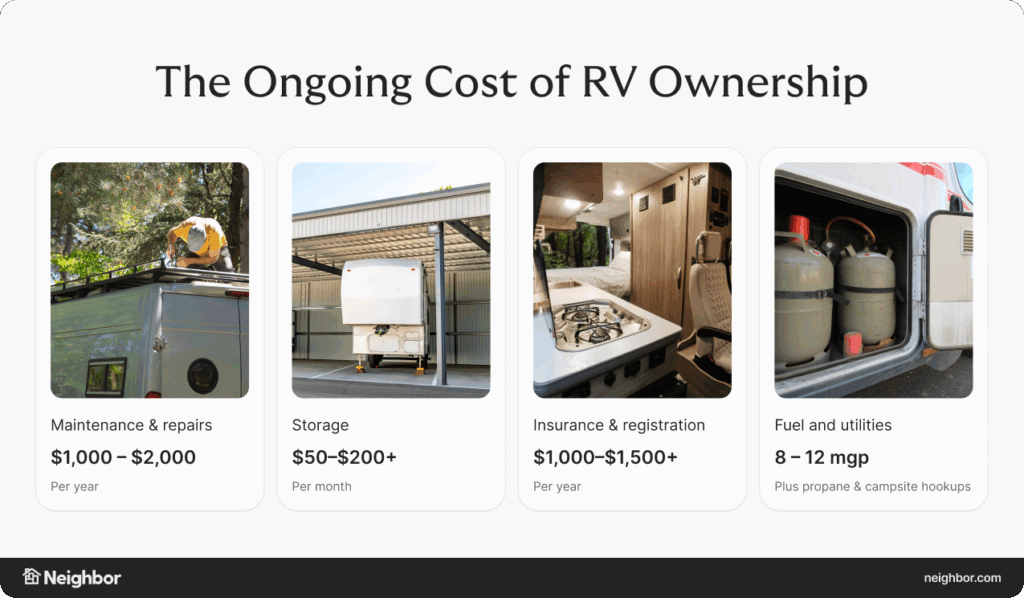
Beyond financing, there’s the ongoing cost of ownership:
- Maintenance and repairs: Oil changes, roof seals, tire replacements, and unexpected fixes add up. Budget at least $1,000–$2,000 annually for routine maintenance, and more for aging units.
- Storage: Many neighborhoods don’t allow RV parking at home, so you may need off-site storage at $50–$200+ per month. If you’re looking for affordable options, Neighbor.com can help you find nearby spots that fit the budget.
- Insurance and registration: Can run another $1,000–$1,500+ per year, depending on size and type.
- Fuel and utilities: RVs can get as little as 8–12 mpg, and propane or campsite hookups cost extra.
For frequent travelers or full-timers, those expenses might be worth it. But for casual adventurers, they can be tough to justify.
Why Renting an RV Deserves a Serious Look
Peer-to-peer marketplaces have made RV travel easier and more affordable than ever. For instance, there are apps that connect travelers directly with RV owners so you can compare prices, find the right size and style, and book safely with built-in insurance and support.
Here’s why renting can be the smarter play:
- Lower upfront costs: No down payment, no financing, no long-term debt. Just a simple rental fee, typically around $100-$300 per night, depending on the type of RV and season.
- Variety and flexibility: Try different RV types, from camper vans to luxury motorhomes, without committing to one model. This is especially valuable if you’re eventually looking to buy.
- Maintenance-free travel: The vehicle is cleaned, inspected, and ready to go between rentals.
- Built-in protection: Optional insurance coverage, roadside assistance, and secure payments give renters peace of mind.
In other words, you can enjoy the same adventure with a lot less commitment.
The “Break-Even” Question
A good rule of thumb: buying only makes sense if you’ll use your RV at least 8–10 weeks per year. Let’s do some quick math:
- Renting a Class C RV costs roughly $1,200–$1,500 per week (depending on season and location). Four weeks of rental travel per year = approximately $5,000–$6,000.
- Owning the same RV might cost $700/month in payments, plus storage ($100/month), insurance ($1,200/year), and maintenance ($1,500/year)—totaling around $11,000+ per year, even if it sits unused most of the time
- Another option to help you break even? Listing your RV for rent on a rental marketplace like RVshare. Renting out your RV is a great way to earn income from your vehicle when you aren’t using it.
When you frame it that way, renting is often the more affordable option for casual travelers. But if you’re planning 10+ weeks of travel annually, or living full-time in an RV, the equation shifts in favor of ownership.
Real-Life Example: Renting Before Buying
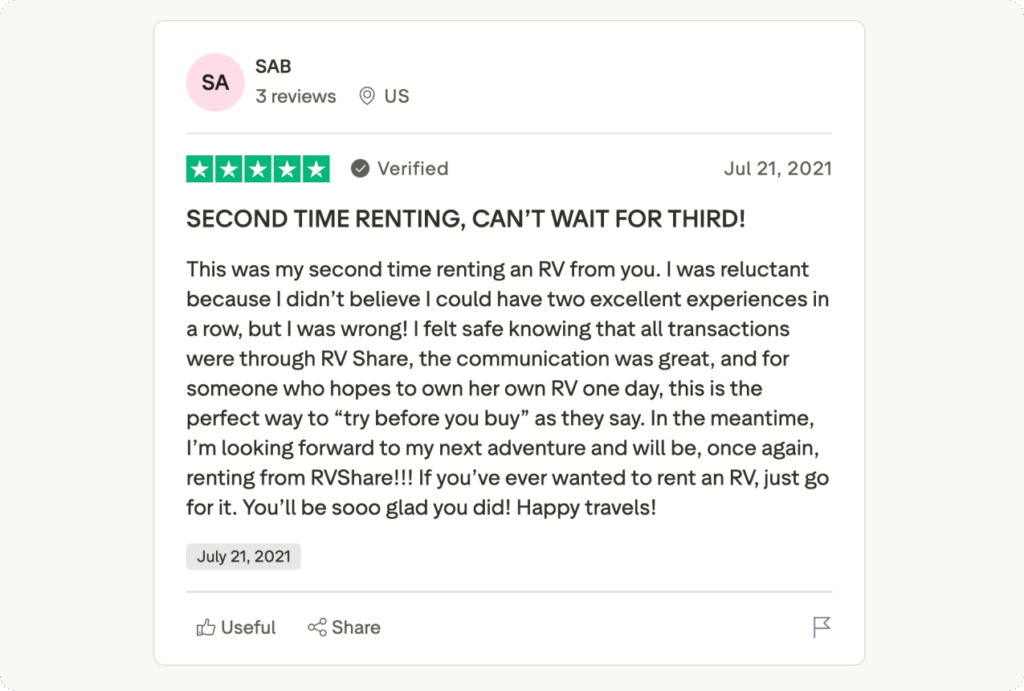
Here’s a review from Trustpilot
SECOND TIME RENTING, CAN’T WAIT FOR THIRD!
This was my second time renting an RV from you. I was reluctant because I didn’t believe I could have two excellent experiences in a row, but I was wrong! I felt safe knowing that all transactions were through RV Share, the communication was great, and for someone who hopes to own her own RV one day, this is the perfect way to “try before you buy” as they say. In the meantime, I’m looking forward to my next adventure and will be, once again, renting from RVShare!!! If you’ve ever wanted to rent an RV, just go for it. You’ll be sooo glad you did! Happy travels!
When Buying Might Make Sense
Owning isn’t always the wrong move. Buying could be worth it if:
- You’re a frequent traveler: If you’re planning 10+ weeks of travel per year, ownership costs start to pencil out better than repeated rentals.
- You have the infrastructure: Low-interest financing, space to store your RV at home (or access to affordable storage), and a budget for maintenance makes ownership more manageable.
- You value customization: Owning lets you set up your rig exactly how you want it—from solar panels to custom storage solutions—without worrying about modifications.
For most people, especially new travelers or those watching their budgets, renting first can help you test the waters before diving in.
Final Thoughts: Make the Decision That Fits Your Life
The best way to know if RV ownership is right for you? Try before you buy.
In today’s market, with higher loan rates and rising maintenance costs, renting gives you a low-risk way to test the waters. You can try different RV types, figure out what features matter most to you, and see how often you’ll realistically use one—all without the financial commitment.
Platforms like RVshare make this easier by connecting you directly with local RV owners, so you can find the perfect size and model when and where you need it. Every rental trip teaches you something new about what you want (and don’t want) in an RV.
Here’s what to ask yourself:
- How many weeks per year will I realistically travel?
- Do I have room to store an RV, or will I need to pay for off-site storage?
- Am I comfortable with ongoing maintenance and repair costs?
- Do I want the flexibility to try different RV types, or am I ready to commit to one?
If you’re still exploring, start with a rental or two. Get the feel of driving a motorhome. See what it’s like to set up camp. Experience the highs (and the minor annoyances) of RV life firsthand.
Then, if ownership still makes sense for your budget and travel plans, you’ll buy with confidence. And if it doesn’t? You’ll have had incredible adventures without the weight of a long-term financial commitment.