

A 10×10 storage unit is the most popular size, and it’s often the right pick for people moving out of a 1- or 2-bedroom apartment. We pulled data from storage facilities nationwide to break down what you can store, how much to budget for, and when to consider other options.
How Big Is a 10×10 Storage Unit?
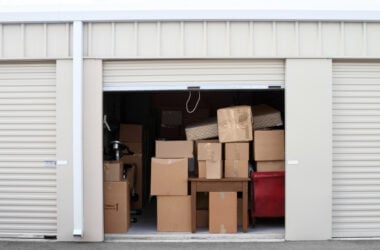
A 10×10 storage unit is about half of a one-car garage, but remember to factor in the ceiling: the standard height is 8 feet. Still, some older facilities have lower ceilings, so confirm the height before you sign a contract.
To get the most out of your space, stack your boxes four or five high, disassemble bulky furniture, and if you can, put a shelving unit along one side for smaller objects.
What Can Fit In a 10×10 Storage Unit
Picture about two full rooms packed up, with an aisle down the center of the unit for access.
If you load like a pro, with large furniture at the back, the mattress stored vertically, and boxes stacked to the ceiling, you might push it to three rooms’ worth.
Here’s what each of those 2–3 rooms might hold:
- Living room: A full sofa, coffee table, entertainment center, large TV, and floor lamp
- Bedroom: A queen-sized mattress and bed frame (disassembled), a dresser, two nightstands, a desk, and a chair
- Kitchen: A small fridge, a microwave, and a small dining table with 4 chairs
- Extras: About 20–30 medium moving boxes, a bicycle, shelving units, seasonal bins, or a filing cabinet
Our guide to organizing a storage unit walks you through loading in more detail.
What a 10×10 struggles with
These culprits take up floor space faster than you’d expect:
- A washer and dryer together: The footprint leaves noticeably little room for your other belongings
- A sectional sofa: L-shaped pieces are hard to rearrange and tend to lock up a corner
- Three major appliances: A fridge, washer, and dryer together will fill up your unit fast
If these are on the packing list, sizing up to a 10×15 or 10×20 is probably the right call. If you’re not sure, our storage unit size guide will help you choose. And double-check what not to put in a storage unit before you pack.
How Much Is a 10×10 Storage Unit in 2026?
A standard 10×10 at a storage facility averages $120 a month nationally, while a climate-controlled 10×10 averages $137 a month.
On top of base rent, budget for a one-time admin fee of around $10 to $25. Depending on the facility and your state’s insurance laws, you might also need to spend about $8–$38 a month on insurance.
Many facilities have a low first-month rate, then jack up the price. Check reviews for the specific facility you’re considering, because renters who came before you will report on rate hikes in detail.
What moves the price
National averages can only tell you so much. What you really end up paying for your 10×10 depends on:
- Location: Storage in densely populated areas, like cities and college towns, costs more than in suburban or rural areas. The same amount of space averages $75 a month in Oklahoma City but $219 a month in L.A.
- Climate control: You’ll pay more for balanced levels of heat, cold, and humidity.
Do You Need Climate Control?
It depends on what you’re storing and for how long. Climate-controlled units keep the temperature between roughly 55°F and 85°F year-round and the humidity stable.
It protects things like wood furniture, electronics, and artwork from damage and mildew. Leather furniture, wine, and photos and documents are vulnerable, too.
If you’re storing any of these things for more than a few months, climate control is worth the extra cost.
For heartier items, like metal tools, patio furniture, or seasonal gear, a standard unit works just fine.
The Right Size for Your Move: Is a 10×10 Enough?
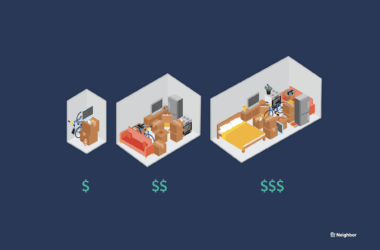
A 10×10 is likely to work if you’re moving out of a one- or two-bedroom apartment and leaving most large appliances behind, or clearing out two rooms during a renovation.
Consider a 10×15 instead if you have a two-bedroom with a king bed, or if you’re storing appliances plus a lot of boxes. The extra room also makes finding and unloading your stuff a lot easier.
A 10×20 makes sense if you’re storing a vehicle or the contents of a multi-bedroom house. It’s roughly the size of a single-car garage.
Go smaller, with a 5×10 or 5×15, if you’re clearing one bedroom or just need space for seasonal gear.
What to Check Before You Rent
More renters are going for bigger units and longer stays than they used to. If that’s you, a little research saves you from unwanted surprises.
- What’s the ceiling height? Eight feet is standard, but some facilities run lower.
- Is there drive-up access? It saves time and back strain when you’re not hauling your stuff through hallways.
- What are the access hours? Some facilities offer access between 6 a.m. and 10 p.m. If you’ll need to get in beyond those hours, find a unit that offers 24-hour access.
- What does the insurance cover? Ask what’s included in the facility’s plan, and check with your homeowner’s or renter’s insurance provider to see if you need extra coverage.
- What happens to pricing after the promo period? Get the standard rate in writing before you sign.
Our 13 things to know before renting a storage unit guide covers more, including what to look for in a facility’s security setup.
Find a 10×10 Storage Unit on Neighbor
When you’re in the middle of a move, the last thing you want to do is spend hours comparing storage facilities on five different websites.
Neighbor is the only marketplace that puts units from national brands next to garages, sheds, and driveways rented out by hosts near you. One search shows you all your options.
You can get up to $25,000 in property protection on any booking, and many hosts offer a first-month discount.
On average, renters save up to 50% on Neighbor, compared to traditional storage searches. A 4.9-star rating across 689,000+ reviews tells us that we’re helping renters find storage spots that are cheaper and closer to home.
Compare photos, prices, and reviews, or call us to talk it over.
Frequently Asked Questions
What can fit in a 10×10 storage unit?
A 10×10 storage unit fits the contents of a one- or two-bedroom apartment. That could include a sofa, a queen bed, and a dresser, plus 20–30 medium boxes.
How much is a 10×10 storage unit per month?
A standard 10×10 storage unit averages $120 a month nationally, but climate control pushes the price to $137 a month. You’ll pay more in cities like New York and Los Angeles, and less in rural areas.
Will a car fit in a 10×10 storage unit?
No, a car won’t fit in a 10×10 storage unit. Even compact cars are too long. You’d need at least a 10×20 unit for a standard vehicle, or a dedicated car storage space.