

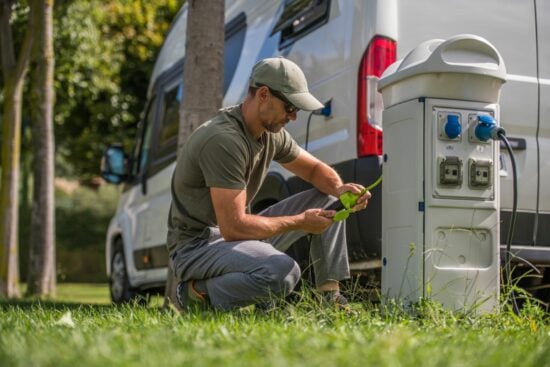
You pull into the campground, and the kids pour out of the truck, ready to finally stretch their legs. You back the travel trailer in place. Connect the sewage and water lines, then plug in the camper.
That’s the beauty of RV camping. No tent to wrangle. No coolers to worry about getting ice for. No having to tie things down at night to keep the raccoons off. Just hook it up, plug it in, and enjoy your family campout.
While RV hookups seem straightforward, there are a few nuances that you should be aware of.
Key Takeaways
- 30 amp plugs have three prongs, and 50 amp plugs have four prongs.
- You can adapt your 30 amp plug to a 50 amp outlet with no problems.
- You can’t run your 50 amp RV as normal on a 30 amp plug.
- You can use your home’s electricity to power your camper.
What’s the Difference Between 30-Amp and 50-Amp RV Electrical Hookups?
The main difference between a 30 amp and 50 amp RV electrical system is the amount of power each can handle. 30 amp is single phase and can power 110v appliances just fine. 50 amp is two-phase and can power your 240v appliance at the same time.
Practically, you just have to know which plug to use when you connect your RV. So here’s how you find out. Look at your electrical hookups. Does it have three prongs or four prongs?
If it has three prongs, then you have 30-amp electric hookups. If you have four prongs, then you have 50 amps.
A 30-amp system can handle 3,600 watts of power, while a 50-amp system can run 12,000 watts. This difference in amperage capacity significantly impacts what appliances you can run in your RV.
Your RV’s features and appliances are designed to work with the electrical hookups it comes with. However, if you replace or add any appliances, you need to make sure you’re replacing them with equipment that’s compatible.
If you decide to remodel your RV, ask an electrician or do your own research on if you need to upgrade your RV’s electrical hookup.
How to Hook Up Your RV Electrical Connection
Hooking up your RV isn’t rocket science. But you should follow simple safety procedures when connecting to shore power.
Here’s what you should do:
- Switch off the pedestal breaker.
- Park, level, and stabilize your RV.
- Once your RV is steady, connect your power cord to the campground’s power outlet.
- Switch on the breaker.
- Test it by turning on a light in your RV.
Following these steps will help ensure your safety and prevent any electrical mishaps with your RV hookups.
Can I Adapt My RV Hookups to Different Power Sources?
Campground hookups accommodate both 50 and 30-amp RV electrical hookups. It’s rare that you will find a campground that doesn’t have both. But there may be times when you need to connect your RV’s power system to a different hookup.
Adapting a 30 amp plug to a 50 amp outlet is easy. Go to your home improvement store. Find a 30/50 adapter. Connect the RV adapter to your plug and then plug the 50 amp side into the outlet. Your RV’s power system works like normal.
Now if you’re adapting a 50 amp system to a 30 amp system, that’s when RV power management gets a little different.
You can’t pull 50 amps through a 30 amp plug, no matter how hard you try. So if you want to run all your RV as normal, find a 50 amp plug.
That’s not to say you can’t adapt a 50 amp to 30 amp power supply. You can. But you’ll only be able to use the 110v appliances – sorry, no air conditioners. You won’t damage anything, but it gets frustrating when things don’t work like they’re supposed to.
Whether your RV is a 30 amp or a 50 amp, the right adapter ensures a safe and efficient power connection to shore power.
Do All Campgrounds Have Electrical Amenities?
Yes, most RV parks have electrical and water hookups to connect your RV. Some even have cable TV and internet services.
With full hookups, you get the complete package, including a sewer hookup, as well as:
- Sewer hookups
- Water hookups
- Electricity
- Sometimes, even cable TV.
Partial hookups usually only include an electric hookup and water.
What Are the Benefits of Using a Surge Protector for Your RV Electrical Hookup?
Just like a whole-home surge protector keeps your home appliances safe from a power surge, a surge protector for your RV protects your RV from the same types of damage. And there’s no doubt that surge protectors save money by helping you avoid costly repairs.
But they protect you from more than power surges from storms. A quality surge protector also protects against faulty wiring and other electrical hazards. This ensures a safe and efficient power connection.
How Do I Hook Up My RV to My Home’s Electricity?
There may be times when you need to connect your RV to your home’s electricity. And that’s totally doable.
If you just need to keep your RV battery charged, then you can run a 15 Amp cord from a standard outlet and use a 15 Amp to 30 Amp adapter and – if needed – a 30 Amp to 50 Amp adapter. This setup will allow you to charge the RV battery and run low-power appliances.
It will not run multiple appliances or large appliances like the air conditioner or dryer.
If you like to offer your RV to guests when they come to town, then I highly suggest installing the proper RV electrical outlet. That way, your guests can run whatever appliances they need, and you won’t have to worry about blowing your breakers.
How to Maintain Your RV’s Electrical Health
The electrical health of your RV needs regular upkeep for efficient functioning. Regular maintenance prevents common electrical problems, ensuring safe and efficient power usage.
But maintaining your RV’s electrical health isn’t just about fixing problems; it’s also about preventing them. By regularly inspecting your RV’s electrical system, you can:
- Identify potential issues before they become major problems
- Ensure your RV is safe for its occupants
- Extend the lifespan of your electrical components
- Avoid costly repairs and replacements
Before you take your RV out for a trip, make a visual inspection of the electrical. If your camper was stored outside during the winter, it’s possible that mice have made homes. They also like to chew on electrical wiring.
Now you can avoid that possibility altogether by storing your RV indoors or at a climate-controlled facility. Granted, that can get expensive. But with Neighbor.com, you can find safe indoor storage at a fair price.
Note that there’s one component you should check before every outing: your power cord. Look for any damage or fraying, and use cord reliefs or protective covers if necessary. Then, make sure your RV’s load center is properly closed and secured.
Summary: RV Parks Are Ready to Accommodate
When RVing, you’ll want to make sure your stay is as comfortable as possible. If your campsite doesn’t have the right hookups, then talk to the office. Chances are they have a different campsite that has the correct hookups.
Likewise, if you have trouble getting hooked up, camp managers are familiar with many setups and can help you out.
Now you’re prepared to enjoy that family campout in style!