

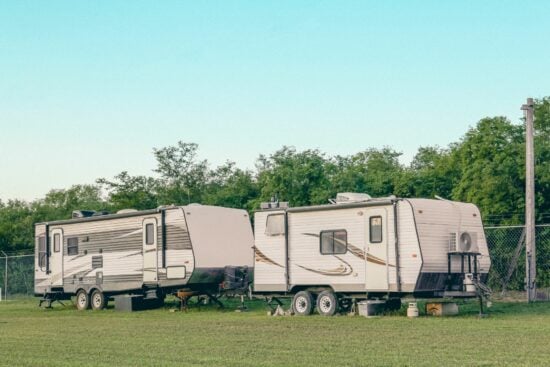
It’s the moment you’ve been waiting for all year. The ice, cold, and snow of winter are gone, and the warmth of spring has finally arrived, which means it’s time to get your travel trailer ready for the first camping trip of the season.
In order to do that, you’ll need to dewinterize it to ensure that everything is working as it should. However, the dewinterizing travel trailer process is tricky and involves several steps that can be difficult for first-timers and new RVers.
Because failing to properly dewinterize your travel trailers’ electrical, plumbing, and HVAC systems could result in camper issues, proper dewinterization is essential.
Inspect and Prepare Your Travel Trailer Exterior
The best way to dewinterize your RV is to start outside with the tires, axles, and batteries on the RV’s exterior before proceeding indoors.
Check the RV Tires and Axles
Your RV’s tires and axles are two of the most critical components of a travel trailer, and the success of your journeys will start and end with them. Therefore, it’s essential to check your tire pressure as well as the tread and overall appearance of the tire.
If any of your tires have low tread or are showing signs of cracking, you should replace them before you take your RV on the open road. Additionally, check the axles to ensure they aren’t bent or rusted, both of which can lead to tire blowouts.
Assess and Recharge Your RV Battery
After checking your tires and axles, examine your travel trailer battery. If you correctly winterized your battery, you should have removed it and stored it in a dry, warm area during winter, as cold weather wreaks havoc on lead-acid batteries.
Once you’ve retrieved the battery, you’ll need to inspect and clean the terminals. You should also ensure that the terminals are tight and not too corroded, as either of these issues can create a poor connection.
If everything looks okay, re-install the battery onto the front of your camper and connect it to the battery charger, being careful not to overcharge it.
You should also check the water levels and add distilled water as needed. If the battery terminals are corroded or dirty, use a concoction of baking soda and vinegar that’s mixed with water. Dip a soft scrub brush into the concoction and start to clean the terminals.
Check the Exterior For Leaks
If your camper didn’t have leaks before you put it into storage, it shouldn’t have any when you dewinterize it. Just to be sure, however, you should walk around the outside of the camper, as well as inspect the roof, focusing specifically on the seals. Double-check around windows, doors, and roof vents, as these are the most prone to issues.
Flush and Repair the RV Plumbing System
Next up, you’re ready to move onto your plumbing system, which is the trickiest part of dewinterizing your RV. To dewinterize your plumbing system, you’ll need to remove the antifreeze that you put into your water lines when winterizing it, as well as check for plumbing leaks.
Here’s how to dewinterize your camper’s plumbing system:
- Open all the hot and cold faucets inside your travel trailer and let the antifreeze flow out of the spigots.
- Connect a water hose to your camper’s water inlet port and let potable water flow into your RV.
- Leave your travel trailer faucets open until you see clear water, which indicates that all the antifreeze is out of your plumbing system.
As you’re running fresh water through your plumbing system, check your pipes and valves for potential leaks. If you find any, turn the water off and make any repairs that are necessary. You can also sanitize your toilet water lines at this time by depressing the toilet flush pedal until clear water appears.
Flush the Freshwater System
Once you’re finished with the plumbing system, you also want to dewinterize and sanitize your fresh water tank. The freshwater tank is a storage compartment for freshwater that you can use on extended RV trips when you don’t have a standard water connection.
The dewinterizing process for the freshwater system is similar to the process of dewinterizing the overall plumbing system. Here’s how it works:
- Start by disconnecting the water supply from your camper’s city water port and connecting it to the freshwater tank.
- Turn on your RV water pump so that water from the freshwater tank flows out of your kitchen and bathroom faucets.
- Any RV antifreeze that was in the freshwater tank will exit the tank via the faucets.
- Continue running water out of the holding tank and through the faucets until clear water appears.
Sanitizing the Fresh Water System
With the RV water system flushed, the next step is to sanitize it to eliminate bacteria and mold.
- To do this, start by finding out how many gallons of water your freshwater tank holds.
- Next, use a mixture of ¼ cup of household bleach for every 15 gallons of fresh water.
- Fill the fresh water tank to capacity with this concoction, and run water through your faucets until you smell bleach.
- Close the faucets and let the water and bleach solution sit for several hours so the bleach can sanitize your water lines and holding tank.
- After 3 to 4 hours, open the faucets and drain the water lines and freshwater holding tank.
Dewinterize the RV Water Heater
Dewinterizing your hot water heater is the final step of getting your plumbing system ready for camping season.
Dewinterizing your water heater isn’t as complicated as dewinterizing the other parts of your plumbing system, because you shouldn’t have filled it with antifreeze when winterizing it.
When winterizing, you should have only drained the water heater tank, meaning all you’ll need to do is refill it to get it working again.
To check off this box, here are the steps you should follow:
- Remove the heating anode from the water heater and check it for corrosion.
- If it looks okay, re-install the anode and start filling the hot water tank with water via the city connection port on your travel trailer.
- If you close the water valve of the water heater during the winterization process, you will need to re-open it so water can flow to the tank.
- Once the tank is full, turn the water heater on.
- If you turn the heater on when the tank is empty, it will ruin the anode, and you’ll need to replace it.
- Once the heater is turned on, you should have hot water within 20 to 30 minutes.
Flush Your Sewage System and Grey Water Tank
Flushing your black and grey water tanks is the easiest aspect of the dewinterizing process. To do this, simply connect your sewer hose to the holding tank dumping ports and empty the tanks one at a time.
You’ll need to complete this step at a campground or designated dumping area because your tanks are full of antifreeze. Antifreeze must be disposed of safely and securely. Simply dumping the antifreeze onto the open ground is dangerous and could contaminate the local water supply.
Inspect and Refill Propane System
With your plumbing, water, and sewage systems squared away, you’re ready to move on to your propane system.
The most important thing to do with your propane system is to check for leaks. To do this, refill your propane tanks at a local refill station and open the gas valve to let gas flow from the tanks to gas appliances in your travel trailer.
Propane has a very distinct sulfuric and rotten egg smell, so you should notice immediately if there’s a leak. If you suspect a leak, listen for a hissing noise when gas leaks out of a valve, appliance, or pipe.
You should also have a spray bottle with a mixture of soap and water handy for further leak detection. If you spray the water onto a joint or valve and the water starts bubbling, it means that air is leaking out of the area in question, and you’ve found the source of your leak.
Verify the Functionality of Appliances and Safety Devices
It’s also important to check your appliances and safety devices before using your camper for the first time post-dewinterization. While safety devices and appliances don’t need winterization or de-winterization, they may have sustained damage over the winter (or when you disconnected and reconnected your camper’s power supply).
Therefore, simply turn on each of your gas and electrical appliances and devices to ensure they’re working, including the following:
- Refrigerator
- Stove
- Water heater
- Air conditioner
- Furnace
- RV generator
- Outlets
- Lights
- Electronics
- Circuit breakers
- Smoke detectors
- Carbon monoxide detectors
Clean and Refresh Your Travel Trailer
Giving your travel trailer a thorough washing is an often-forgotten step in the dewinterizing process.
While cleaning, give your camper time to air out, as there’s a good chance the interior air grew stagnant while it was in winter storage. Here’s a quick rundown of how to get your travel trailer clean, refreshed, and ready to go for summer.
- Start by thoroughly washing and waxing the exterior using Gel Gloss RV Wash and Wax or a similar product.
- Make sure to use soft brushes and non-abrasive cloths when washing your travel trailer and drying your windows to keep your travel trailer in pristine condition.
- When inside the camper, open up all the windows, doors, and vents to let your vehicle air out a bit.
- Keep the windows and vents open while you thoroughly clean the inside of the camper, including sweeping, mopping, and dusting.
- Check the refrigerator, freezer, and pantry and remove any expired foods or drinks.
- Thoroughly wash and clean the freezer and refrigerator so that it’s ready for food storage.
Update Registration and Insurance
Last but not least, you’ll want to update your travel trailer’s registration and insurance if they expired over the winter. This is vital if you don’t want to start your camping season off with a hefty fine.
Final Thoughts
There’s a lot that goes into dewinterizing your travel trailer and preparing it for the camping season. You can make your life much easier by properly winterizing your camper before parking it for storage. That way, the dewinterization process will be as fast, easy, and seamless as possible.
Additionally, storing your camper in a safe, dry place will also make the dewinterization process easier. It will also ensure that your rig remains leak and damage-free while it’s in storage. To make this happen, consider using Neighbor, a peer-to-peer storage marketplace offering safe and affordable storage options near you.
Frequently Asked Questions
How Do I Open My Camper After Winter?
Opening your camper after storing it for winter can be a worrisome experience, especially if you didn’t winterize and store it properly. To open it back up and air out your camper after storage, open the doors, windows, and vents for maximum airflow.
How Do I Dewinterize My RV Hot Water Tank?
To dewinterize your hot water heater, start by draining the tank—if you forgot to do so during the winterization process. This will remove any sediment, rust, and corrosion that built up within the tank over the winter.
Next, check the water heater anode for corrosion before reinstalling or replacing it and filling the tank with water. You should have hot water within half an hour.
How Do You Flush Antifreeze Out of a Camper?
To flush antifreeze out of a camper, connect a water or garden hose to the city inlet port, turn on the water, and open the faucets to run fresh water through your camper. You can then flush your holding tanks to completely remove antifreeze from the camper.
How Do You Sanitize a Camper Water System After Dewinterizing?
The best way to sanitize your fresh tank and water system after dewinterizing is with a mixture of bleach and water. The bleach will remove any mold, bacteria, and growth that built up inside the system over the winter.
How Often Should I Check and Maintain My RV Batteries for Optimal Performance?
Checking and maintaining your RV batteries every 30 days will ensure optimal performance and longer battery life. Additionally, make sure to disconnect and store your batteries in a warm, dry location during the winter.