

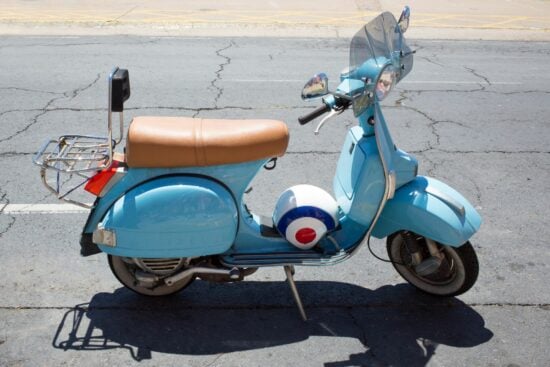
You’ve seen a moped, a scooter, and a motorcycle. Even still, you can’t tell the difference. You may even use these terms interchangeably. Don’t worry—you aren’t alone. In fact, most people incorrectly identify mopeds and scooters, and not for no reason. Mopeds and scooters are similar: in design, function, and more!
If you’re shopping for an eco-friendly alternative to your daily driver, understand the fundamental differences between a moped and a scooter. Hang in there! We’ll help you clear things up.
Here are the most important differences and a few key ways for you to determine whether the vehicle you’re looking at is a moped vs. scooter.
Moped vs. Scooter: At A Glance
Mopeds and scooters are not the same, but they are often confused. Here’s a brief overview of the differences you can expect. Then, we’ll break down these categories a bit further. Soon, you’ll be able to easily recognize the differences between mopeds and scooters with a quick glance.
| Feature | Moped | Scooter |
| Engine Size | Engines under 50cc, ideal for short distances, fuel-efficient. | Engines 50cc to 250cc are faster and suitable for longer commutes. |
| Legal Requirements | Varies by state; may include motorcycle licence and helmet requirements. | Licensing may require a motorcycle license, which varies by state. |
| Cost-Effectiveness | Lower costs for purchase, insurance, and maintenance. | Higher initial costs but offers more versatility. |
| Design and Function | Bicycle-like, built for lower speed, lightweight. | Robust, step-through frame, more power. |
| Speed | Less power, and lower speeds are ideal for urban areas – around 28 mph | More power can reach speeds up to 75 mph. |
| Fuel Efficiency and Gas Mileage | Excellent fuel efficiency (75 to 130 mpg), low maintenance costs. | Efficient, surpasses average car/motorcycle, varies by engine size. |
| Insurance Requirements | Generally, low insurance costs and pay-per-mile options are available. | Similar coverage as mopeds, possibly higher costs because of speeds and initial costs. |
Defining Mopeds and Scooters
At first glance, mopeds and motor scooters are similar. They’re both compact, motorized vehicles that offer an alternative to cars and motorcycles (when both lie out of budget).
The easiest way to distinguish between a typical motor scooter and a moped is to look at the engine size.
What Is A Moped?
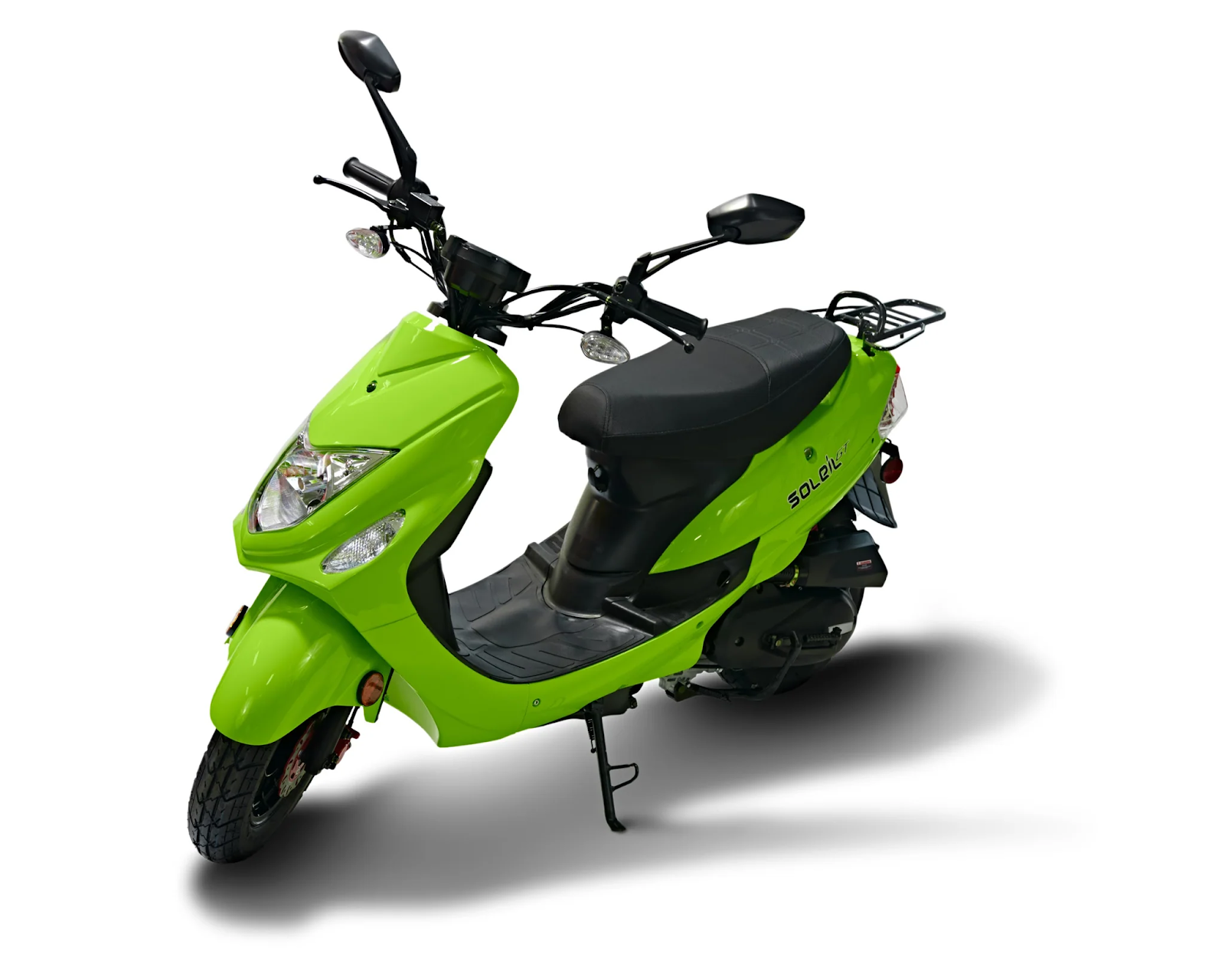
Mopeds equipped with engines under 50cc offer economical transportation due to their exceptional fuel efficiency and small size. Known for their agility and ‘twist and go’ automatic transmission, they allow easy maneuvering through city streets without needing gear shifting.
With a maximum speed of around 28mph, mopeds are well-suited for short urban trips, making them a practical choice for city commuting.
What Is A Scooter?
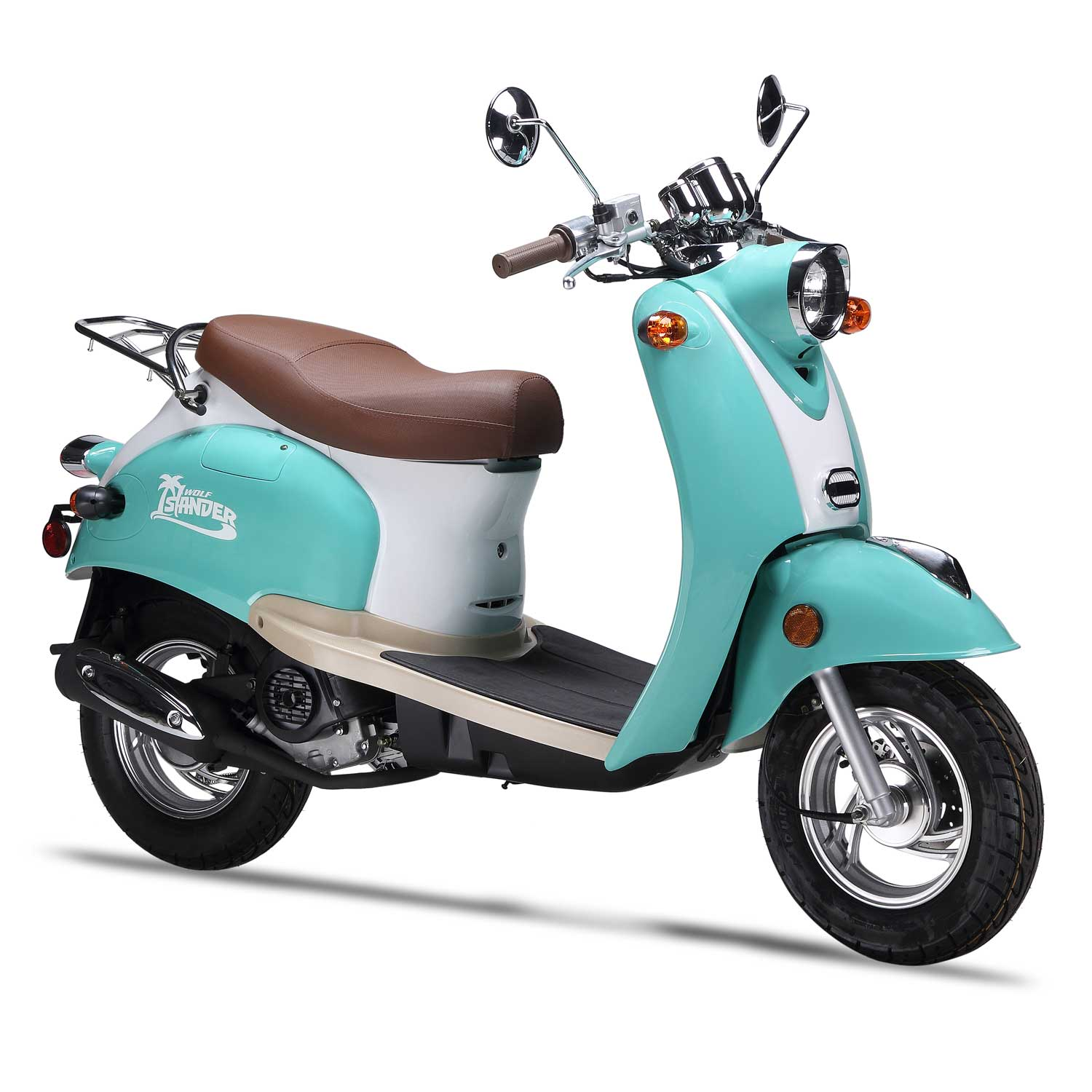
Scooters stand out with their step-through frame and larger engines, ranging from 50cc to 250cc. They cover a vast speed range, perfect for leisurely city rides and brisk highway travel alike.
They feature automatic transmissions and larger engines capable of reaching higher speeds (even up to 75 mph).
Because of their adaptability, scooters are ideal for those with longer commutes.
Licenses and Legal Requirements: Mopeds vs. Scooters
Licensing and legal requirements vary by state. Some states, like California, require a motorcycle license for both mopeds and scooters. In other states, such as Arkansas, Hawaii, and Delaware, moped riders need a specific class of moped license and vehicle registration.
In most states, to get a moped license, you’ll need:
- Have a valid driver’s license, motorcycle license, or moped operator’s permit
- Be at least 16 years old (age restrictions may vary)
- Wear a helmet (required for younger riders)
- Take safety courses or training (in some states)
Pro tip: It’s essential to be familiar with your local moped and scooter laws, especially regarding registration and operation.
Performance and Practicality: Mopeds vs. Scooters
Mopeds and scooters differ in terms of performance and practicality.
Mopeds excel in short distances and lower speeds, while scooters offer more power and versatility, making them suitable for a range of commutes.
Power and Speed Comparison
Typically, mopeds top at around 28 mph, making them ideal for low-speed zones in urban areas. With larger engines reaching up to 250cc, scooters offer more power, meaning they can reach higher speeds, with some models maxing out at 75 mph. If your commute involves highway travel, a scooter’s power and speed make it a more suitable choice.
Fuel Efficiency and Gas Mileage Comparison
While both mopeds and scooters excel in terms of fuel efficiency and gas mileage, mopeds, in particular, are known for their exceptional fuel efficiency–often achieving between 75 to 130 miles per gallon.
Mopeds also have lower ongoing maintenance expenses, similar to motorized bicycles, due to their more straightforward design and smaller engine size.
The operational costs of owning a moped can be as low as $20, compared to $493 for a car. Scooters will have similar monthly costs, but the moped typically gets better gas mileage.
Insurance Requirements: Mopeds vs. Scooters
Moped and scooter insurance are typically covered under the same motorcycle insurance category. There is little difference in coverage, but there might be a difference in cost.
The average insurance cost for mopeds is generally low, ranging from $4 to $6 per month. Companies like Progressive may offer basic liability insurance for scooters starting at $75 a year.
Pay-per-mile coverage options are also available for both mopeds and scooters, providing an economical alternative. Annual costs can be as low as $50 with this type of coverage.
Choosing Between a Moped vs. Scooter: Factors to Consider
Your intended use, average distance traveled, rider skill level, and budget should all influence your decision between a moped and a scooter.
- Mopeds are ideal for short commutes
- Scooter riders can often take the highway and benefit from the larger maximum engine capacity
- Moped initial costs are cheaper than scooters, usually in the $1000 range
- Mopeds also cost less to insure
Summary
Whether you’re buying a moped or scooter, you’ll need a place to store your vehicle. If you don’t already have room in your garage, remember that mopeds and scooters can sustain UV damage and even be susceptible to rust and mold if left outside.
Neighbor, a peer-to-peer vehicle storage marketplace, provides the perfect storage solution for scooter and moped owners. With Neighbor, you can find safe, nearby, and budget-friendly storage options for your new toy!
Frequently Asked Questions
What Makes a Moped a Moped?
Its small size, single-seater capacity, foot pedals like a bicycle, and small gasoline engine define a moped. The term “moped” comes from the combination of “motorized” and “pedal,” reflecting its dual propulsion methods.
Which Is Safer: A Moped or Scooter?
Mopeds and scooters can be dangerous. While scooters reach higher speeds than mopeds, it’s important to ride either cautiously.
What Is the Difference Between a Moped and a Scooter?
The main difference between a moped and a scooter is the engine size. Mopeds tend to have smaller engines under 50cc. The scooter has a larger engine in the 50cc to 250cc range.
Why Do People Call Scooters Mopeds?
People call scooters mopeds because of the similarity between the two-wheel compact design that they both share.