

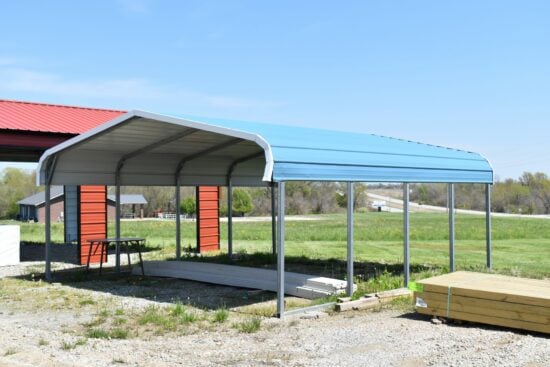
An RV is a large investment, and the concept of leaving your RV exposed to the elements should leave you feeling a little nervous. RV storage space is a major concern for many potential buyers and current owners–both because of space and cost. Even if you have the room, it may not be convenient to build a large shelter on your property.
Thankfully, we have put together some of the best RV shelter ideas and solutions. Budget and space constraints unquestionably come into play, but the most critical part of this process is protecting your assets.
The Top RV Shelter Solutions for 2024
In 2024, RV owners will find various tailored shelter solutions to meet their unique needs, including metal RV shelters, customizable metal carports, portable covers, and multipurpose garages.
The key features to look for in RV shelter ideas are durability, protection, and versatility.
Customizable Metal RV Carports
Pricing: $2500-$7000+
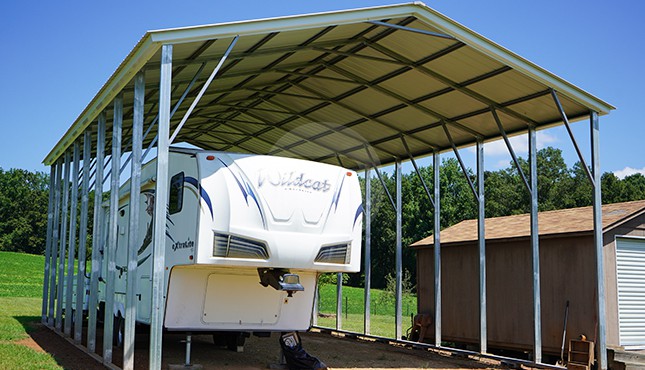
Image courtesy of Metal Garage Central
Customizable metal RV carports are a popular choice for RV owners due to their durability. In addition, there are a variety of sizes and design options to choose from.
These shelters leverage the strength of steel and attractive design to secure your RV from harsh weather elements.
Customization options include custom door placement, window designs, and interior shelving–all of which will improve ease of access and security. With these design possibilities, you can create a functional and aesthetically appealing RV shelter that complements your property.
Portable RV Covers
Pricing: $100-$700+

Image courtesy of Budge RV Covers
Portable RV covers are becoming increasingly popular for those seeking flexibility and budget-friendliness. When your only option is to park your RV in your driveway, the portable RV cover is a valid choice.
These RV cover options are designed to provide a protective shield for your RV without needing permanent installation.
Constructed from various materials, such as metal frames and treated polyester, portable covers offer an economical alternative to traditional RV shelters.
The ease of assembly and transportability of portable RV covers make them a convenient option for RV owners on the move. If you store your RV in Florida for part of the year and in New York for the other part of the year, bring the cover along with you.
Another benefit of the portable RV cover is the prevention of moisture buildup and mold growth. When an RV is left exposed to the elements, without a cover in place the chance of water getting in is a real possibility.
With their UV protection features, portable covers help preserve the exterior of your RV, making them a practical and cost-effective choice for safeguarding your investment.
Multipurpose Enclosed RV Garages
Pricing: $7000-$20,000+
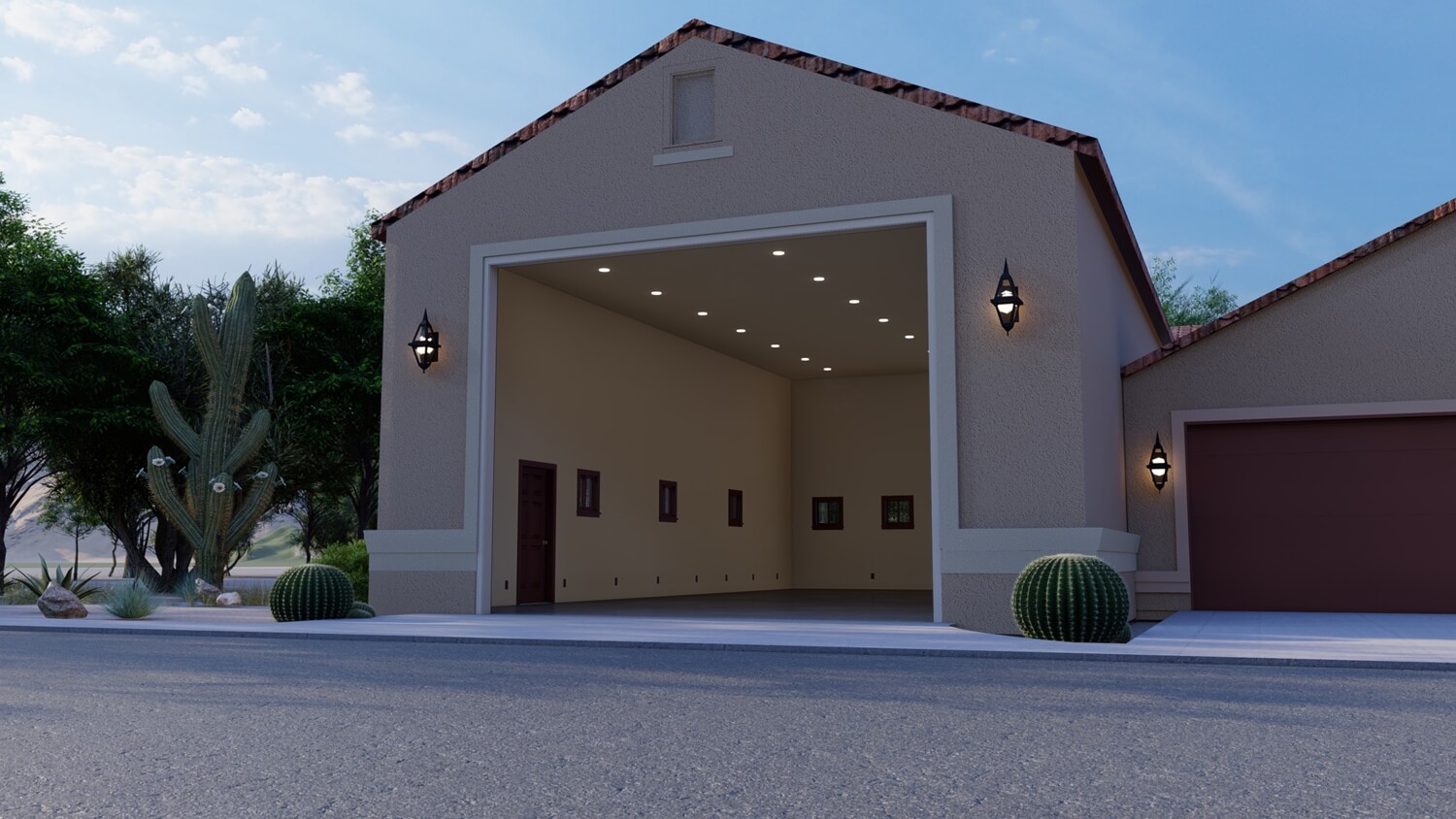
Image courtesy of Arizona Garage Builders
Multipurpose recreational vehicle (RV) garages offer an all-in-one solution for secure storage and additional space for both storage and entertainment. These structures provide a dedicated space for your RV and other vehicles while also serving as a versatile area for leisure activities or even hosting events.
Customization options for multipurpose RV garages include door and window placements, interior shelving, and even the transformation of the garage into a living or entertainment area.
By incorporating a multipurpose RV garage into your property, you protect your RV and maximize the potential of your available space.
Vertical Roof RV Shelters
Pricing: $1500-$6000+
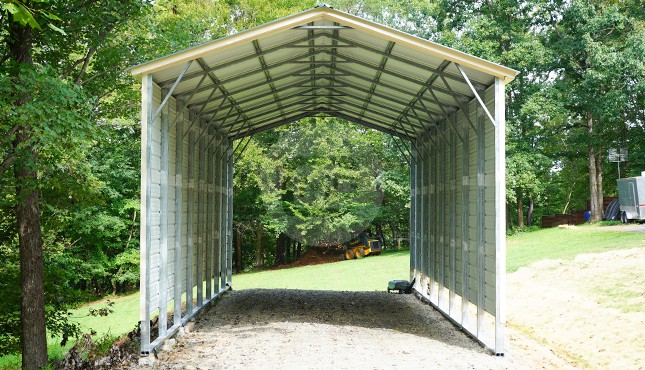
Image courtesy of Metal Garage Central
Vertical roof RV shelters are designed to provide enhanced durability and protection against water and debris accumulation.
Their unique roof design features vertical panels, preventing snow and water buildup on the roof and ensuring the shelter remains clean and free from damage.
In addition to their efficient water and snow-shedding capabilities, vertical roof shelters offer customizable design options, reinforced frames for enhanced durability, and optional gable ends for improved wind resistance.
Vertical roof shelters don’t enclose the entire RV, the sides are left fully exposed. The overall pricing for these is typically considerably less than a fully enclosed building.
A Frame Boxed Eave Carport
Pricing: $1200-$3500+
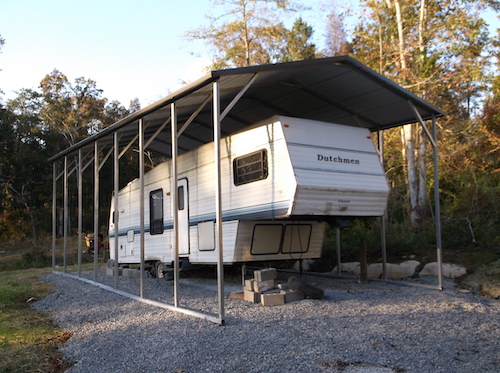
Image courtesy of Conestoga Builders
The A-Frame Boxed Eave Carport is made from a high-quality metal material. The vertical roof panels protect the top of your RV, but there are also horizontal panels that extend partially down the side of the A-Frame Carport.
With an A-Frame boxed eave carport, you will find that the roof structure pushes water, snow, and ice off the sides and away from the RV. Luckily you can still access the lower areas of the RV while it’s stored. Preparing for your next trip is easier with this type of structure.
Customization is quite simple here, with options for color, design, and overall look and style.
Practical Considerations for RV Shelter Installation

Before starting your RV shelter installation project, it’s important to consider practical aspects like building permit requirements and location selection. Ensuring that your shelter is compliant with local regulations and appropriately positioned on your property can save you time, money, and potential legal issues.
Building Permit Requirements
Obtaining building permits for RV shelter installations is crucial to avoid fines, penalties, or even the possibility of the shelter being removed entirely. Building permit requirements vary depending on your location, so it’s essential to familiarize yourself with local regulations and apply for a permit before starting the project.
Pricing
RV Shelters vary considerably in price depending on the complexity of the installation process, the size, and the type of shelter you consider. Here are some costs you can expect; remember that RV storage should be a cost considered in your initial RV purchase.
| Shelter Type | Small Size Cost Range ($) | Medium Size Cost Range ($) | Large Size Cost Range ($) |
| Customizable Metal RV Carports | 2,500 – 3,500 | 3,500 – 5,000 | 5,000 – 7,000+ |
| Portable RV Covers | 100 – 300 | 300 – 500 | 500 – 700+ |
| Multipurpose Enclosed RV Garages | 7,000 – 10,000 | 10,000 – 15,000 | 15,000 – 20,000+ |
| Vertical Roof RV Shelters | 1,500 – 2,500 | 2,500 – 4,000 | 4,000 – 6,000+ |
| A Frame Boxed Eave Carport | 1,200 – 1,800 | 1,800 – 2,500 | 2,500 – 3,500+ |
Selecting the Right Location
Choosing the right location for your RV shelter is essential for ensuring its accessibility and compliance with zoning laws. Factors such as proximity to roads, local climate, and the availability of utilities can all influence the functionality and convenience of your RV shelter.
Dimensions
Customizing the dimensions of your RV shelter is crucial to ensure adequate clearance and space for your RV and other vehicles. Consider accessibility and maneuverability when looking at dimensions for custom metal buildings, a metal garage, or any storage facility.
| RV Type | Average Length (ft) | Average Width (ft) | Average Height (ft) | Recommended Storage Length (ft) | Recommended Storage Width (ft) | Recommended Storage Height (ft) |
| Class A | 30 | 8.5 | 10 | 35 | 10 | 12 |
| Class B | 20 | 8.0 | 9 | 25 | 10 | 11 |
| Class C | 28 | 8.0 | 10 | 33 | 10 | 12 |
| Travel Trailer | 20 | 8.0 | 10 | 25 | 10 | 12 |
| Fifth Wheel | 30 | 8.5 | 13 | 35 | 10 | 15 |
Incorporating Doors, Windows, and Ventilation
If you plan to build an enclosed RV shelter, like a multipurpose enclosed garage, proper ventilation is key. Installing doors, windows, and ventilation in your enclosed RV shelter design are just a few ways to achieve optimal airflow (and optimal accessibility). Proper ventilation ensures fresh air circulates within the shelter, helping maintain and regulate temperatures. Ventilation also prevents condensation and reduces the risk of mold growth, ensuring that your RV remains in optimal condition throughout the year.
Choosing Materials for Longevity and Maintenance
Choosing durable and low-maintenance materials is critical for a long-lasting, hassle-free RV shelter. Metal materials, such as steel, are popular for their durability, strength, and resistance to the elements and pests. These materials require less maintenance than wood or fabric shelters, making them ideal for a long-lasting and cost-effective solution.
Summary
Most RV owners use their RV only for a short period each year, making longer-term parking and storage an issue. Finding and booking storage becomes a hassle that you may or may not have time for. In addition, the RV sits unused and exposed to sun, water, and even wind damage.
If you don’t have the time, space, or money to build your own RV shelter, look at the RV storage options in your own neighborhood. Neighbor, a self storage marketplace, offers safe, budget-friendly, and convenient RV storage options for rent (that are either located nearby or in your very own neighborhood).
Frequently Asked Questions
How Do You Shelter an RV?
The best way to shelter an RV is an enclosed climate-controlled garage, but metal RV carports, vertical roof shelters, and even portable RV covers can keep an RV protected from the elements.
Is It Bad to Tarp an RV?
Using a portable RV cover is a better option than a traditional tarp. The portable RV cover is made to fit the specific dimensions of your RV and offers more extensive weather protection than the tarp.
Is It OK to Leave an RV Uncovered?
Leaving an RV uncovered does not offer adequate weather protection. An RV left to withstand harsh weather conditions could develop issues with mold, rusting, and discoloration.