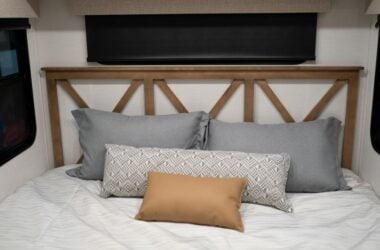

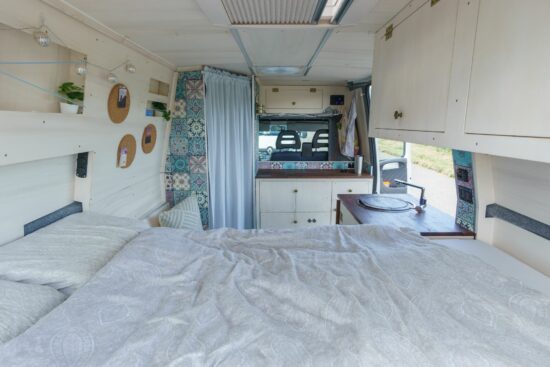
If you’re looking to breathe new life into your RV, painting your interior walls is one of the best ways to do it. Most RVs are designed with fairly dark and cramped interiors, which can make your RV feel less like a home and more like a dungeon.
But painting the inside of your RV isn’t as simple as slathering paint on the walls, like you would in a traditional home; as RV walls, ceilings, cabinets, and other interior components are constructed differently than a standard home (that’s not on wheels). Therefore, it’s important to use the right materials and painting methods to give your RV the boost it needs.
The Best Techniques for Painting RV Walls
The trickiest aspect of painting your RV walls is choosing the right paint, primer, and technique. RV interior walls and ceilings typically have a unique coating or wallpaper on the surface that makes it difficult for paint to adhere to it. So, unless you want runny, splotchy paint, it’s paramount to choose the right tools and materials.
Choosing the Right Brushes and Rollers
High-quality brushes and rollers will help ensure even coverage and a durable paint job, especially if you’re not an experienced painter. It’s recommended that you use latex paint brushes and rollers for painting RV walls, ceilings, and cabinets, as they make it easier to deliver a smooth, even coat.
Prep Your RV Walls For Painting
Before you get too excited and start painting your RV walls and ceiling, here’s a list of prep work items you’ll need to cover.
- Use painter’s putty and a putty knife to fill in any holes, cracks, or crevices before applying your first coat of primer.
- Sand down any areas where you applied painter’s putty.
- Apply wood filler to deep cracks and imperfections.
- Wipe down all surfaces you plan to paint with warm water and an All-Purpose cleaner, such as Mean Green.
- Tape off any corners, edges, and parts of your RV that you don’t want to paint. This includes any floors, ceilings, cabinets, and windows that are too close to your soon-to-be painting area.
How To Paint RV Walls
Regardless of whether you use a paint sprayer or brushes and rollers, your RV walls will require 1-2 coats of bonding primer plus 1-2 coats of paint. Check the instructions on your specific primer and paint to see how long you should wait between coats before adding the next layer.
In most cases, you’ll need to wait for one to two hours between coats of primer and paint. When you switch from primer to paint, you should give the primer 24 hours to cure before adding paint.
Selecting the Ideal Finish for Your RV Surfaces
You’ve arrived at the home improvement store, ready to purchase your latex paint and primer–but what color paint should you use on your RV interior walls?
Remember: The same paint color applied to a traditional home’s walls can appear completely differently on RV interior walls due to variations in natural light exposure (among other factors). Keeping this in mind, you’ll want to choose your paint color wisely; otherwise, the wrong paint color will make your RV interior look dark, cramped, and dingy.
Matte Paint
If you want a paint that offers a smooth and contemporary look, matte paint is the way to go. Matte paint is also easier to apply (and touch up) than satin and high-gloss paint. Its only real drawback is that matte requires more maintenance than other types of paint, and you may need to repaint it more quickly than satin.
Satin Paint
Satin paint, on the other hand, is more durable, moisture resistant, and easier to maintain than matte or high-gloss paint. It’s also more reflective of light, which makes it ideal if your RV is on the dark side. However, satin paint will also show off every imperfection that lies beneath it, so it takes more time and skill to apply properly.
Chalk Paint
Similar to matte, chalk paint is one of the most popular options when it comes to an RV makeover or a remodel. While you can use it on walls and ceilings as well, chalk paint is especially popular for repainting cabinets, doors, a kitchen backsplash, and drawer fronts.
Magnetic Paint for Organizational Walls and Character
If you want to add a flicker of color and personality to your painting project, consider using magnetic paint. This type of paint has small specks of color mixed into the paint that shows up in the final coat.
Chalkboard Paint for Functional Walls
Another fun idea to spice up your RV remodel is to add some chalkboard paint to one or more of your walls. Chalkboard paint literally turns your wall into a chalkboard so that you can make lists or even homeschool your kids.
Professional Paint Recommendations
If you want to paint RV walls, ceilings, and cabinets the same color, we recommend using Glidden Gripper Acrylic Primer or PPG Seal Gripper Primer, followed by Kilz Tribute or Behr Dynasty for the finish. Available in a number of paint colors, either of these options will breathe life into your RV remodeling project.
Incorporating Accent Walls
There’s nothing wrong with painting all of your walls and interior the same color and—for the sake of simplicity—it’s the route that most people choose to go. However, if you want to add a flare of creativity, adding an accent wall is one of the best RV interior painting ideas to consider.
You can go in several different directions when it comes to accent walls. You can choose paint that’s a shade lighter or darker than the rest of your RV, or you can opt for a completely different color. You can also choose a textured paint that adds a different feel, as well as a different color, to your RV.
Add a Mural or Wall Panels
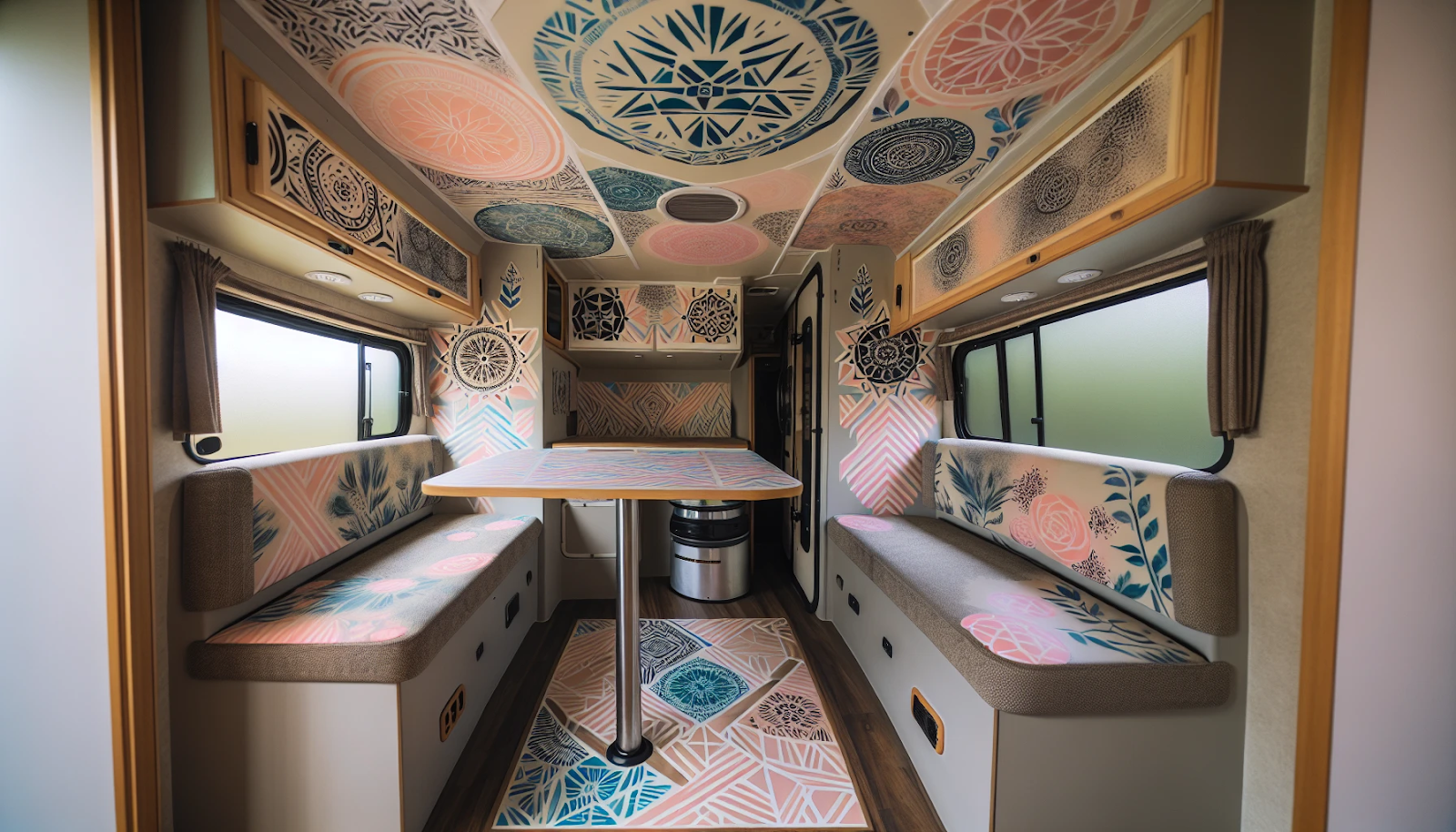
Similar to stencil art and patterns, murals and feature pieces can add personality and style to your RV renovation. Murals and panels are also a great way to cover up large wall and ceiling spaces that have deformities that wood filler, paint, and primer can’t cover up.
Summary
Whether you’re renovating your RV with plans to sell it—or you’re simply remodeling to maximize the enjoyment of your RV—repainting your interior will work wonders. In addition to caring for your RV’s interior, you’ll want to do your due diligence to keep your RV’s exterior in tip-top shape.
When it comes to RV protection, where and how you store your RV makes a huge difference. Consider using Neighbor to find safe, affordable indoor and outdoor storage near you. Neighbor offers storage solutions to keep your RV in tip-top shape so that it’s ready to use or sell at your convenience.
Frequently Asked Questions
What Type of Paint Is Best for RV Interiors?
For painting your RV’s interior, it’s best to use an oil-based latex paint with a matte or satin finish. We also recommend that you use a high-quality seal-grip or bonding primer.
What Color Should I Paint the Inside of My Trailer?
When it comes to the color of your trailer or RV, it’s entirely up to you. For a stylish and timeless look, go with shades of grey, cream, white, or tan.
Can I Paint the Inside of My RV?
You can absolutely paint the inside of your RV, from the walls to the ceiling. However, it’s important to use a bonding primer on walls so that your paint binds to it.