
The side-by-side market is fairly competitive. Thankfully, the best UTV brands have unique specialties that make choosing a new utility vehicle simple. Brands like Polaris and Can-Am excel in high-octane sporting environments, while other brands like Honda or Kawasaki are more rooted in durability and hard work.
In this article, we’ll take a look at the top five UTV brands and run through some criteria you can use when picking out your next utility vehicle.
Evaluating the Top UTV Brands
UTV brands are like car brands; each appeals to a different kind of customer, and they all have their own specialty.
For the most part, UTVs serve a few key purposes. They’re used for work, whether that’s on a family farm or at a commercial construction site. Because they’re designed for speed and durability in harsh conditions, they can also be used for recreation.
The big-hitters in the UTV world have established themselves within these niches: work and play. The top UTV brands are:
Polaris
Like a chameleon, Polaris UTVs adapt to your needs, offering a spectrum of customization options. You can customize your UTV with tire and wheel packages for desert, rock, snow, or trail, as well as add features like panel guards, windshields, heavy-duty mirrors, and much more.
It’s a brand that embraces diversity, from the power-packed Polaris RZR XP, the best-selling sport side-by-side of all time, to the workhorse that is the Polaris Ranger 500 with its robust 32 HP engine.
Polaris’ versatility extends beyond its UTV models and encompasses numerous ATVs as well. Overall, Polaris’ price range appeals to different budget needs, making them a popular choice among UTV enthusiasts.
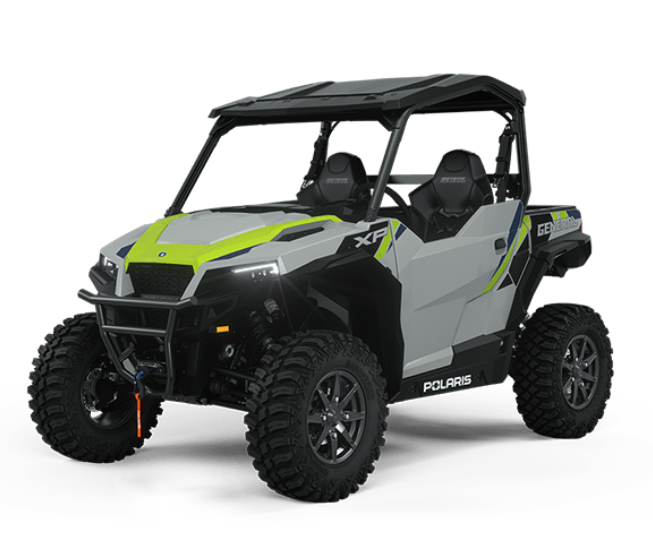
Polaris General XP 1000: Image courtesy of Polaris
Most Popular Polaris UTVs
- Polaris General XP 1000 Sport – Starting at $24,499
- Polaris RZR Trail Sport – Starting at $15,999
- Polaris Ranger XD 1500 Premium – Starting at $29,999
Can-Am
Can-Am UTVs roar with raw power, promising adrenaline-pumping performance. Take the Can-Am Maverick X3, a beast designed to dominate mud, shallow water, or uneven terrain, or the upgraded Can-Am Defender Max Lone Star, with its smooth ride and spacious passenger area.
Can-Am sells UTVs for every kind of application, with the Maverick line being ideal for recreation and Defender models best suited for hunting and trail-riding.
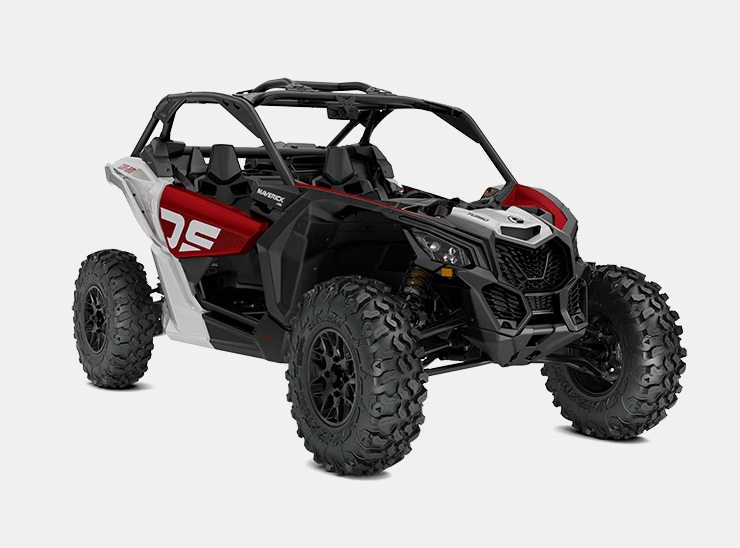
Can-Am Maverick X3 DS Turbo: Image courtesy of Can-Am
Most Popular Can-Am UTVs:
- Can-Am Defender XT – Starting at $12,899
- Can- Am Maverick X3 X DS Turbo RR – Starting at $24,599
- Can-Am Commander XT – Starting at $15,699
Honda
Honda UTVs are like trusted companions, offering reliable performance in many different kinds of terrain. From the six-speed dual-clutch DCT smart transmission to the intelligent i-4WD and brake traction control, Honda UTVs are packed with exciting and innovative features.
Models like the Honda Pioneer 700-4 Deluxe and Honda Talon 1000X pack a punch with their powerful engines while providing abundant seating and cargo space.
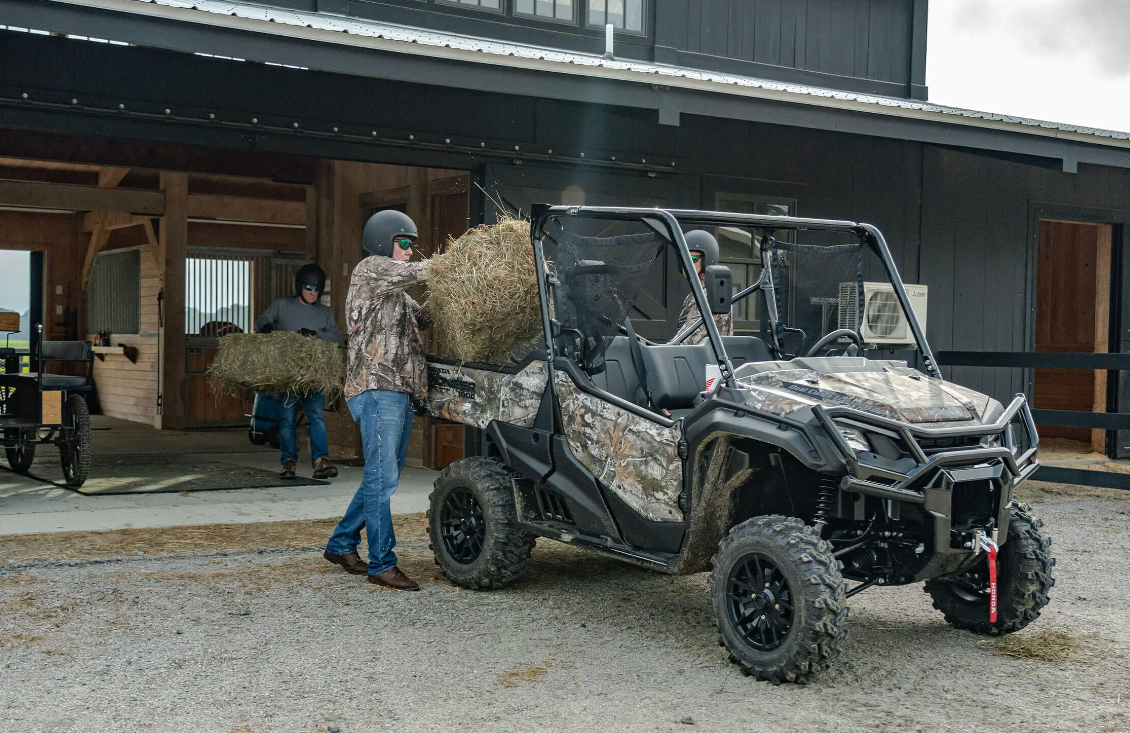
Honda Pioneer 1000: Image courtesy of Powersports Honda
Most Popular Honda UTVs:
- Honda Pioneer 1000 – Starting at $17,599
- Honda Talon 1000R Fox Live Valve – Starting at $23,499
- Honda Pioneer 700 – Starting at $11,899
Kawasaki
The front-runner of Kawasaki’s UTV brand is the Mule, which had its first iteration in 1988. Since then, Kawasaki has branched out to create durable, customizable side-by-sides for all kinds of work and recreation applications. You can build your Kawasaki UTV with add-ons like under-seat storage, flip-up polycarbonate windshields, and hard- or soft-tops.
Models like the Kawasaki Mule PRO-FXT Ranch Edition boast a carrying capacity of 1,000 pounds and the ability to tow up to a full ton, while the Kawasaki Mule SX is smaller but still capable of hauling 400 pounds in the bed or towing 1,000 pounds
Kawasaki produces the heavy-duty pickup trucks of the UTV world, often compared to models like the John Deere Gator.

Kawasaki Mule PRO-FX 1000: Image courtesy of Kawasaki
Most Popular Kawasaki UTVs:
- Kawasaki Mule SX – Starting at $8,199
- Kawasaki Mule PRO-FXT – Starting at $17,299
- Kawasaki Mule PRO-FX 1000 – Starting at $18,799
Yamaha
Finally, we come to Yamaha, a brand that combines spaciousness with power. Various models of the Yamaha Wolverine offer practical storage options and an impressive towing capacity of up to 2,000 pounds, all at a similar price as their competitors.
With an overall width typically ranging between 59 to 64 inches, the Wolverine provides ample room for passengers and cargo, ensuring a comfortable ride.
Other Yamaha models, like the YXZ1000R, are designed purely for sport, offering auto-shift technology and FOX shocks.
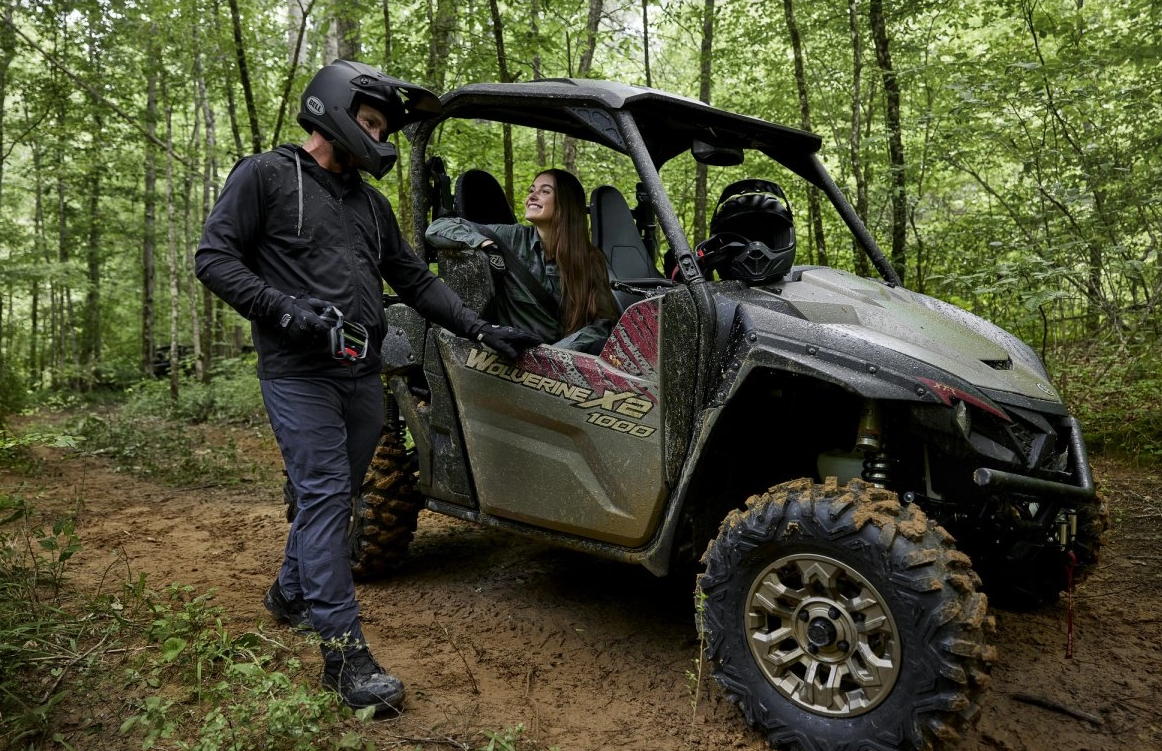
Yamaha Wolverine X2 1000: Image courtesy of Yahama Motorsports
Most Popular Yamaha UTVs
- Yamaha Wolverine X2 850 – Starting at $17,399
- Yamaha Viking EPS – Starting at $15,799
- Yamaha YXZ1000R SS XT-R – Starting at $23,699
How to Choose the Best Side-by-Side UTV to Buy
When it comes to utility vehicles, there’s a lot to consider, especially since most new side-by-side vehicles cost as much (if not more) a new car! To choose the right UTV for you, you should consider a few key characteristics of each vehicle you’re looking at. These factors include:
- Ground clearance
- Suspension
- Towing capacity
- Cargo and Passenger capacity
- Price
Ground Clearance
Ground clearance determines how your utility terrain vehicle handles uneven terrain. Higher clearance allows your vehicle to effortlessly maneuver through challenging terrains, reducing the risk of damage or getting stuck. The new 2024 Kawasaki Mule PRO-FX 1000 has a new ground clearance of 12.2 inches standard, or 13.2 inches modified.
If you’re looking to tackle challenging terrain, like muddy forest trails or sand dunes, having a higher clearance is better, but being lower to the ground is ideal for hauling, towing, and work-related activities. Most models designed for work have around 12 inches of clearance, while sporting models, such as Yamaha’s YXZ1000R, have 13+ inches of clearance.
Suspension Systems
Suspension systems help UTVs handle diverse terrain and ensure a comfortable ride. Recovering from high jumps or withstanding heavy loads, the suspension really makes or breaks your UTV experience.
Whether it’s the independent double-wishbone suspension in the Honda Pioneer 1000 or the impressive 24.5 inches of travel offered by the rear suspension in the 2022 Polaris RZR Pro R, the right suspension system can take your off-road adventure from good to great.
Towing Capacity
UTVs designed for work have greater towing capacity than UTVs designed for speed or recreation. The Honda Pioneer 1000 Trail has an impressive 2,500-pound capacity, while the Yamaha Wolverine RMAX2 1000 XT-R is a close runner-up with a 2,000-pound capacity.
Carrying Capacity
Next, consider the UTV’s ability to carry cargo and passengers. Can you get away with only two seats, or do you need four? With two-seat models, you’ll have more room for hauling cargo, and have the option for a dump bed.
Whether it’s the 600-pound carrying capacity of the Yamaha Wolverine RMAX2 1000 XT-R UTV or the 1,000 pounds of the Kawasaki Mule PRO-FXT Ranch Edition, the right carrying capacity can make all the difference when it comes to transporting goods and tools.
Price Range
Price is last on the list because UTV brands all have fairly similar pricing. You can find affordable UTV options from every brand, but it’s mostly about paying for the features and technology you need.
For example, the Honda Pioneer 1000 ($17,599) and the Yamaha Wolverine X2 1000 ($17,999) are both base models, as well as two-seater side-by-sides. They both have a 999cc engine and electric power steering, so they are very similar. But, the Pioneer has Honda’s i-4WD technology for better control in tough offroad scenarios, while the Wolverine has the patented Yamaha Chip-Controlled Throttle, which offer Crawl, Trail, and Sport modes in one package. If you want the YCC-T technology, you’ll spend an extra $400, but overall you’re able to get very similar pricing between brands.
One Last UTV Consideration…
While brand, price, and purpose all play a part in which UTV you choose, there’s one element that you absolutely need to consider: where you plan to store your UTV.
Thankfully, most UTVs are around nine feet long, which means they fit perfectly in a 10’x5’ storage unit. Keeping your UTV in a storage unit is a great option if you don’t use it year-round or if you’re short on space in your garage or barn.
You can easily find safe, climate-controlled UTV storage options in your area using a service like Neighbor. Neighbor is a peer-to-peer storage platform that pairs hosts with people looking for extra space. You can quickly find budget-friendly UTV storage on Neighbor for less than conventional storage solutions.