
If you need to run a dehumidifier for a couple of hours or charge a car battery, a standard storage unit won’t help much.
Some units come with outlets, though they’re less common than you’d expect. We compared rates, policies, and options from storage facilities nationwide to break down what an outlet will add to your bill, what you can safely plug in, and what to ask before you commit.
Do Storage Units Have Electricity?
Most storage units don’t have outlets. A standard unit just gives you four walls, some security, and a light out in the hallway.
When storage facilities do offer units with electricity, they treat it as a premium feature. If you’re looking for a less expensive option, storage spaces rented out locally, like unused garages, often come with outlets but not the overhead.
Who Needs a Wired Unit?
Power turns your unit into a space you can maintain things in, not just store things in. Renters often rely on an outlet to:
- Charge batteries: Keep your laptop or cell phone topped up while you’re reorganizing between seasons.
- Run a dehumidifier: For a couple of hours at a time, this can help keep sensitive items from warping, rusting, or growing mold, but you’d be better off with climate control.
- Test gear: Plug in the holiday lights or check that a tool still runs before you haul it home.
- Keep the air moving: A simple fan helps you stay cool, especially since your unit can get 30°F hotter than the outside air during summer.
If you’re storing a car or motorcycle, for instance, a powered unit helps it stay ready for the road. A working outlet lets you:
- Fill up the tires: A small compressor keeps pressure where it should be, so you don’t find flat spots on your next drive.
- Keep your battery alive: Hook it up to a trickle charger so you’re not trying to jump-start when it’s time to move out.
- See what you’re doing: Plug in a lamp for a quick inspection or a minor repair.
- Keep the engine warm: In colder climates, a block heater or heated blanket makes it easier to start back up when you’re ready to drive.
What Storage Units With Electricity Cost
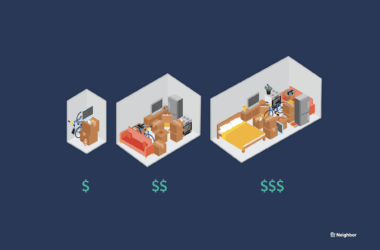
Powered units cost more, so here’s a rough look at the difference, depending on your unit’s size and setup:
| Unit Size | Standard Storage | With Electricity Only | Electricity + Climate Control | Electricity + Premium Amenities |
| 5×5 | $35–$60 | $50–$80 | $70–$100 | $90–$120 |
| 5×10 | $50–$90 | $70–$120 | $90–$140 | $110–$160 |
| 10×10 | $80–$150 | $110–$180 | $125–$200 | $150–$240 |
| 10×15 | $120–$200 | $150–$250 | $175–$275 | $200–$320 |
| 10×20 | $150–$250 | $180–$300 | $220–$350 | $260–$400 |
| 10×30 | $200–$350 | $250–$420 | $300–$500 | $350–$580 |
If your size isn’t listed here, budget for 20%–50% more a month. You’ll also be paying more if you need a drive-up or first-floor unit, or amenities like wider doors, extra security cameras, or 24/7 access.
Bigger units stack up costs faster, so make sure you’re not overpaying for space you don’t need. Our ultimate size guide is here to help.
Business Storage Units: What’s Realistic
When your stock has outgrown the garage but isn’t enough to justify a warehouse lease, a powered storage unit can be a solid middle ground.
A storage unit isn’t zoned or licensed for your day-to-day business. It’s really there to hold inventory, so an outlet is just for side tasks or convenience while you’re handling stock.
Most powered units give you a standard 120-volt outlet on a circuit rated for about 1,800 watts. That won’t work for heavy machinery, but it should handle some office gear and a fan running at once.
How that plays out depends on your trade:
- E-commerce sellers: You can run a thermal label printer, keep your scale and scanner charged, and photograph products in decent lighting. If you sell anything heat-sensitive, like candles or cosmetics, you’ll need climate control to protect your stock.
- Contractors and tradespeople: A powered unit helps keep your cordless tool batteries charged. Bigger corded gear might need a 220-volt setup, which fewer storage facilities offer.
- Paper and inventory: A small dehumidifier draws little power and does a lot of good, keeping stock, packaging, and paperwork from turning musty through a humid stretch. Just know that the facility won’t let you run it 24/7.
Some storage facilities have tiers, so you pay extra for more outlets or higher amperage if you’re charging higher-draw equipment.
You’ll have to ask, though: facilities often don’t advertise powered units at all. Part of that is to limit fire risk, and part is to discourage people from trying to live inside units, which is illegal and unsafe, but increasingly common.
How to Find Storage Units With Electricity
Finding a traditional storage unit with power often takes a little extra legwork, so here’s a rundown of the steps:
- Rank your options: Newer facilities, sites built for commercial storage, and drive-up units are your best bets.
- Call and be specific: Tell them exactly what you’re looking to do, whether it’s keeping a car battery charged or prepping stock for shipping.
- Ask questions: Run through the list of eight points below to make sure you’re signing on for a space that’s safe and has enough voltage.
- Tour and test: Check that outlets are grounded, with three prongs. Also look for discoloration, which indicates overheating, and any other signs of damage. Plug something in to make sure it works, and check whether the cord can reach what it needs to.
What to Ask Before You Rent
The right questions can help you tell whether a unit will handle the job or put your inventory at risk.
When you’re comparing units with electricity, ask about:
- The number of outlets: How many are inside the unit, and how many are accessible in the hallway or exterior?
- The electrical capacity: Do they only offer the basic 120-volt setup?
- Billing: Is power a flat monthly fee or metered by usage?
- Circuit access: If you’re sharing a circuit, your neighbors’ draw may limit yours.
- The extension cord policy: Some facilities let you run a heavy-duty cord from a hallway or exterior outlet for a short job.
- What you can’t plug in: Space heaters, air conditioners, welding and painting gear, and anything that runs 24/7 are generally banned.
- Fire safety systems: Ask about smoke detectors, a sprinkler system, and whether staff do regular walk-throughs.
- If GFCI is installed: It stands for “ground fault circuit interrupter,” and it’s a system that monitors a circuit for imbalances to prevent serious electric shocks.
Before you trust a facility with your work gear or classic car, check its safety record. Entering the specific address on a review site like Trustpilot can give you extra intel.
Self-storage comes with some hazards, and there’s a prevention strategy for each.
Find a Powered Space That Fits You
There’s an easier way to find a storage unit with electricity than calling facilities one by one.
Neighbor is a storage marketplace where regular people rent out space they aren’t using, alongside top storage facilities’ listings. One search lets you compare photos, descriptions, and reviews of all your options.
If you’re renting a spot like an unused garage, it often comes with an outlet or two. You can message the host directly before you book to ask what the sockets can handle.
Renters on Neighbor save up to 50% compared with traditional storage, and every booking can come with up to $25,000 in renter property protection. More than 690,000 reviews have given us a 4.9-star average rating.
Find your spot online, or give us a call to talk it through.
Frequently Asked Questions
How much does a storage unit with electricity cost?
A storage unit with electricity usually costs around 20%–50% more per month than a standard unit. The price depends on your unit’s size, whether you need climate control, and your location, among other factors.
Can you use heavy power tools in a storage unit?
No, you generally can’t use heavy or high-draw power tools in a storage unit. Most facilities won’t allow a unit to be used as a workshop, and even a powered unit typically only gives you a standard 120-volt outlet, not the 220-volt setup that heavier tools need. Fire concerns and a lack of ventilation are also good reasons.
Why don’t most storage units have outlets?
Most storage units don’t have power outlets to keep costs down, lower the risk of fire, and keep people from trying to live in units.