

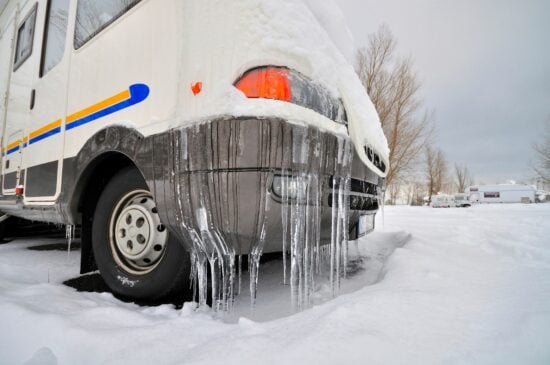
One of the biggest obstacles that full-time RVers face is keeping their RV warm when winter camping.
Most RVs are designed with the intent of only being used from late spring to early fall when the weather is mild. Therefore, if you want to use your RV during the winter months, it’s important to prepare properly if you want to insulate your family (and your RV) from the freezing temperatures.
While there are several ways you can prepare yourself and your RV for a cold winter, RV skirting is a cost-effective option (and will help you save on propane). Beause there are many different types and styles of skirting to choose from, choosing the right one for your rig is easier said than done.
Understanding RV Skirting: Why It Matters
If you have ever woken up on a cold morning in your RV and stepped out of bed and onto your icy floor, you understand why RV skirting is important.
The purpose of RV skirting is to keep rodents, wind, moisture, and cold weather from infiltrating your RV underbelly. In so doing, RV skirting also makes it possible to keep belongings inside your RV during winter.
In addition to providing a layer of insulation–to keep you and your loved ones warm–RV skirting also makes it easier for your water heater and heating system to do their jobs. RV skirting can also keep your water lines and holding tanks from freezing, which is an ever-present risk when temperatures start to drop.
How Much Does It Cost to Skirt an RV?
The cost of RV skirting depends entirely on the type of skirt that you purchase. DIY foam board and plywood skirting costs anywhere from $50 to $250 if you cut and install it yourself.
Inflatable and vinyl RV skirts, on the other hand, can cost anywhere from $1,000 to $3,000 depending on the quality and whether or not you have it custom-made. While these options cost more, they are easier to install and may not require professional assistance, which also saves money.
Top 5 RV Skirting Options for Winter Insulation
Now that you know how important RV skirting is, let’s look at five of the most common and effective RV skirting solutions.
Option #1: Vinyl RV Skirting
Custom vinyl skirting is one of the most popular options when it comes to RV skirts. Vinyl skirting is a fast, affordable, and lightweight way to protect the bottom of your RV from freezing temperatures and cold breezes.
When it comes to RV skirting, you can opt for custom RV skirting–which is a skirt made specifically for your size and type of rig—OR you can choose a generic vinyl skirt. While generic skirts will require more work on your end to make them compatible with your camper, they’re much cheaper and more readily available than custom vinyl skirts.
Vinyl skirts attach to the bottom side of your RV and stretch to the ground. A couple of the most common vinyl RV skirts we’ve seen in use include the EZ Snap RV Skirt and the Fabricover RV Skirt.
Option #2: Inflatable RV Skirting
Inflatable skirting is one of the newer and more innovative custom skirt options currently available. Sometimes referred to as Air Skirts, inflatable RV skirting is where you place long tubes, similar to pontoon tubes, around the bottom of your RV.
With the tubes in place, you use an air compressor to inflate the tubes until they stretch from the ground to the lowest point of your RV. This will effectively create a round barrier that blocks cold air, wind, and rodents from targeting the bottom of your rig.
While RV skirting is highly effective when it comes to winter camping, it’s also fairly expensive and costs around $2,000 for the inflatable tubes. You’ll also need a powerful air compressor to inflate the tubes, which could run another $300 or $400.
Option #3: Plywood RV Skirting
If you prefer a solid wood skirt to run around the perimeter of your RV, plywood skirting is the best option. Plywood is fairly affordable and easy to work with, and it comes in 4′ x 8′ sheets, making it long and wide enough to accommodate most RVs.
Plywood skirting can be either custom or DIY and involves cutting pieces of plywood so that they fit perfectly between the bottom of your RV and the ground. The advantages of using plywood are that it’s solid and provides excellent wind resistance and superior pest protection.
However, there are several downsides of plywood skirting, including the following:
- Plywood skirting is very heavy and difficult to transport
- Plywood is subject to rot and corrosion over time
- Plywood skirting doesn’t provide a lot of insulation from cold weather
Option #4 Rigid Foam Board RV Skirting
If you like the concept of plywood RV skirting but want something more lightweight and easy to transport, foam board skirting is a great option. Rigid foam boards are the same materials used to insulate the walls and floors of residential houses, shops, and barns.
As with plywood, foam boards are another situation where you can either make your own skirt or hire someone else to do it for you. The process works the same way as if you would use plywood, except that foam is lighter, which makes it easier to cut and install.
Additionally, foam boards offer more insulation from wind and cold weather–in addition to being easier to transport. However, foam boards may not be as durable as plywood sheets or hold up as well to rodents and harsh weather.
Option #5: DIY RV Skirting
In addition to store-bought, custom skirting that is specifically designed for RVing, you also have the option of creating a DIY RV skirt. There are plenty of DIY RV skirting ideas to choose from, and some options are more effective and practical than others.
- Stack straw bales along the bottom side of your RV.
- Wait until the snow starts falling, then you can piles of snow to fashion an RV skirt.
- Use various sizes of insulated tarps to create a DIY RV skirt.
Our Recommendation
While there are several different options for RV skirting, I recommend going with a rigid foam board option. Foam RV skirting offers the most pros and the fewest cons compared to all the other types. It’s affordable, fairly easy to install, highly customizable, and readily available.
Foam RV skirting also offers the most insulation for your water lines and flooring. In fact, it’s made from the same material that is sometimes used to make ducts in residential and commercial HVAC systems. As such, it does a great job of keeping cold air out and the warm air in.
Lastly, even though it’s lightweight, foam board skirting is fairly durable and can last up to 20 years if you properly maintain it. Even if it starts to degrade, foam board is easily replaceable and readily available at most hardware stores.
How to Choose the Right RV Skirting Material
The key to choosing the right skirt for your RV is to base your decision on your budget, skills, and needs. If you have handyman skills and want to save money, a DIY option is your best bet. However, if you want a skirt that’s made specifically for RVs and built to resist cold weather, high winds, and pesky rodents, custom vinyl and inflatable RV skirts are the way to go.
Best Practices for Installing an RV Skirt
Once you purchase the RV skirting that’s right for you, your next step is to install it. Note that the installation process will differ depending on the skirting material you select.
Pro tip: If the task proves too difficult for you, don’t be afraid to contact a mobile RV technician for assistance. Mobile RV techs will come to your campground and install your RV skirting for you, and they can also assist with winterizing and dewinterizing your rig.
How to Install Foam Board or Plywood RV Skirting
Here’s a quick rundown of everything you need to know about installing foam board or plywood RV skirting:
- Measure the distance from the bottom of your camper to the ground.
- Measure your RV from front to back and from side to side.
- Take your RV skirting material and cut it to the proper length.
- Make sure that it’s long and tall enough to fit perfectly from the bottom of your camper trim to the ground, without spaces or gaps.
- You should only need to cut four sections of skirting – one for the front, one for the back, and one for either side of your RV.
- If you have a fifth-wheel RV where the front is higher than the rest of the camper, cut your skirting material to accommodate the size difference.
- To ensure the skirting stays in place, use screws or metal fasteners to attach them to one another. You can also cut the pieces slightly oversized so that they wedge firmly between the camper and the ground.
How to Install Vinyl RV Skirting
It’s much easier to install vinyl RV skirting than it is to install DIY foam board or plywood skirting. For vinyl skirting, simply follow the directions on the package that your RV skirt came in. It will most likely use a snap, twist-lock, or zipper fastening system, and as long as you choose a skirt that’s the right size for your RV, the process is fairly straightforward.
Final Thoughts
While RV skirts do a great job of protecting your RV’s underbody during winter, they don’t protect the RV as a whole. They also may not be enough to protect your RV while you’re not using it. The only way to do that is by keeping your rig at a safe and secure storage location.
If you don’t have a good place to store your RV at your home, consider using Neighbor to find safe and affordable RV storage near you. Neighbor is a peer-to-peer storage marketplace offering hundreds of storage options around the country. They even have climate-controlled storage options, which means you won’t need an RV skirt to keep your rig safe during winter.
Frequently Asked Questions
What Is the Best Insulation for RV Skirting?
The best RV winter skirting ideas use rigid polystyrene Insulifoam boards. These foam boards are two inches thick, easy to work with, and capable of protecting your RV underbelly from bitter wind and cold.
At What Temperature Do You Need RV Skirting?
The main purpose of RV skirting is to keep your water lines from freezing. Therefore, you need RV skirting when the outdoor temperatures reach 32 degrees Fahrenheit. However, you can install RV skirting earlier if your floors are getting too cold, as RV skirting will help keep your floors warm.
Is RV Skirting Worth It?
RV skirting provides great insulation from wind and cold while also trapping warm air, which can help with energy efficiency. Therefore, it is certainly worth investing in RV skirting.
Does RV Skirting Help With Heat?
RV skirting helps block external cold temperatures by creating a barrier between your RV’s underbelly and the outside elements. It also helps your RV maintain its internal temperature by keeping warm air from getting out.