

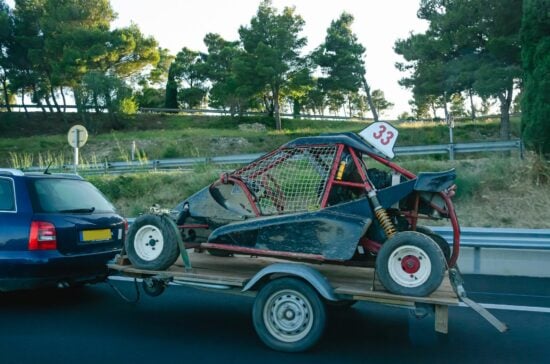
Side by sides are great for zipping along forest trails or open farmland, but when it comes to city streets or highways, you won’t be able to drive them around.
For many UTV owners, transporting their side-by-side is the most troubling part of UTV ownership! You either need a trailer and a towing vehicle, a toy hauler, or a significantly large truck.
In this article, we’ll discuss how to haul a side-by-side in a truck bed or trailer, how to do it safely, and the alternatives for hauling your UTVs.
Can a Side–by-Side Fit in a Truck Bed?
It’s fairly common for people to load dirt bikes or ATVs in their trucks, but UTVs are a different story. They are much larger than four-wheelers and not as easy to transport.
For example, the Honda Pioneer 500 is one of the smallest UTVs on the market, clocking in at just over 100 inches long. An 8-ft truck bed (the longest length of consumer pickup trucks) is 96 inches long. So it’d be a tight squeeze, but with a bed extender, the UTV would just fit without damaging the truck’s rear window.

Image courtesy of Custom Offsets (Product Pictured: Rough Country 26″ Bed Extender)
Weight capacity is another consideration. The Pioneer 500 has a curb weight of 1,027 pounds, which is fairly heavy, but well within the carrying capacity of a Ford F-150 with an 8-ft bed. However, not all trucks will have the same gross vehicle weight rating, so it’s important to know the specs of your UTV (both weight, width, and height).
The easiest way to find out the dimensions of your UTV is by visiting the manufacturer’s website. Once you have the length, width, and weight, you’ll know for sure if the UTV will fit in your truck bed. The other logical option, of course, is to use a tow vehicle and a trailer.
Essential Equipment for Hauling Side by Sides
Once you’ve measured your UTV and decided if you’ll be using your truck or trailer, you can start loading your side-by-side. Here’s the essential equipment that will make the job easier and safer:
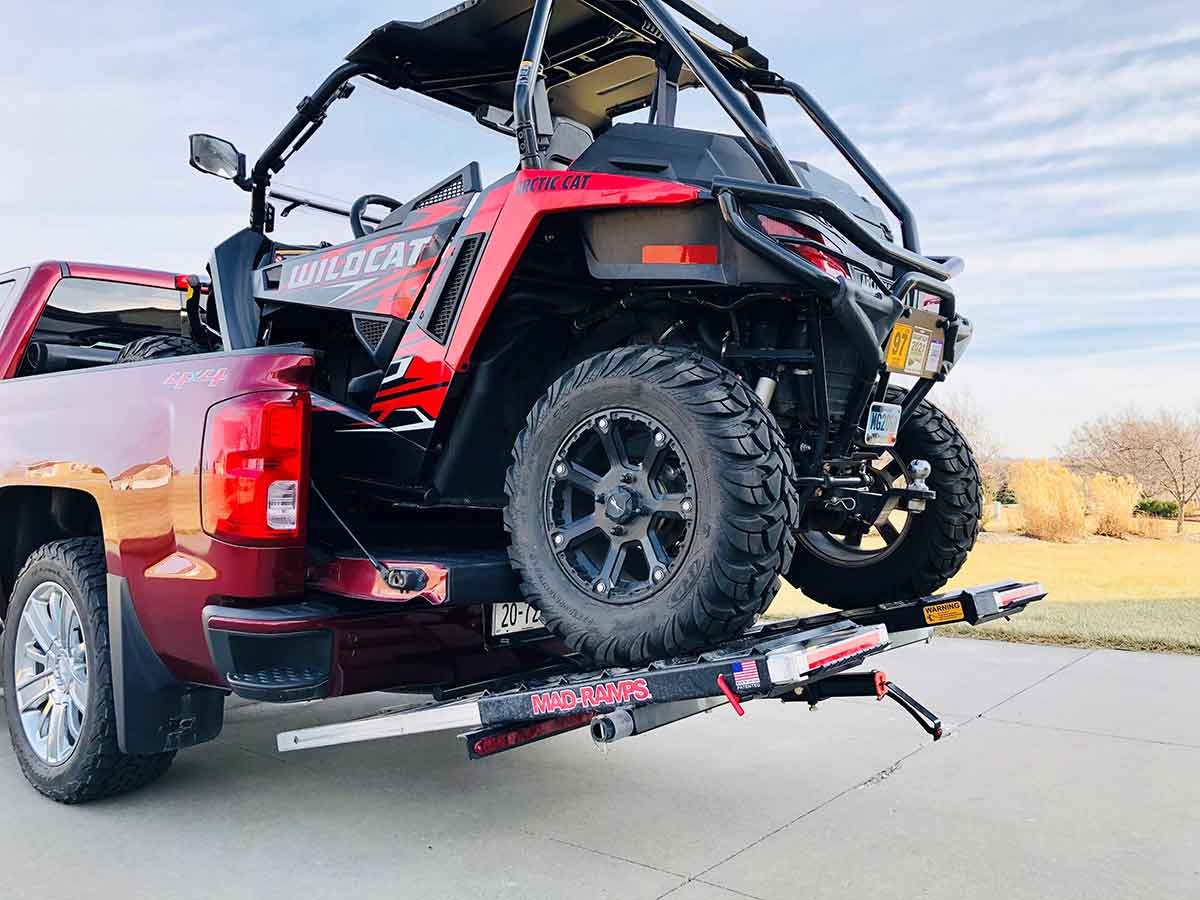
Image courtesy of Mad-Ramps (Product pictured: The MAD-RAMPS Pivoting Ramp System)
- Ramps – Aluminum ramps are lightweight and good for small UTVs, while steel ramps are much better for heavy loads.
- Tie-Downs – Ratchet straps are the most common type of tie-down for transporting large loads because they can apply a great deal of tension. Heavy-duty nylon straps are the best for securing UTVs.
- Wheel Chocks – Wheel chocks are often made of plastic, wood, or metal, and are positioned behind the wheels of your UTV so it doesn’t shift during transport.
It’s also important to make sure you have all the right equipment for your truck, such as a spare tire, tailgate extender, and safety flags.
Loading and Securing Your Side by Side
We’ve covered the equipment you need for hauling your UTV. Now, let’s look at how to load and secure your side-by-side. Remember, it’s not just about getting your UTV onto the truck bed or trailer; it’s about doing it safely and ensuring it remains secure during transport.
Preparing the Truck Bed
Before you start loading your UTV, it’s important to prepare your truck or trailer. This involves:
- Removing everything from the bed – this includes tools, garbage, groceries, you name it. The bed should be completely empty.
- Checking for any damage that could potentially harm your UTV or affect its stability during transport (holes in the trailer floor, sharp corners that could scratch the UTV, etc.)
- Checking the factory tie down areas and the suspension system for any signs of damage.
Next, position your ramps and secure them to the tailgate or trailer using tie-down or ratchet straps. Remember, the ramps should be parallel to the center of your UTV’s tires to ensure safe loading.
Loading the Side by Side
Loading your UTV onto your truck bed requires careful attention. Start by placing your UTV at the bottom of the ramps and slowly driving it up onto the truck bed. Remember to use your brakes to control the speed and avoid any sudden movements.
Once all four wheels are on the truck bed, slowly release the brakes until the vehicle sits as far onto the bed as possible. Be careful, though, because just bumping the truck’s back window could shatter it. Bring your UTV to a complete stop and apply the parking brake.
Follow the same procedure for loading onto a UTV trailer, but make sure that the load is distributed in the center of the trailer because front or back-loading will make the trailer harder to maneuver.
Securing the Side-by-Side
To prevent movement during transport, you should secure your UTV using frame-mounted tie-downs, wheel chocks, and other equipment.
Start by attaching tie-downs to your UTV’s frame and the truck’s anchor points. Looping ratchet straps in both the front and back of your UTV will help establish equal amounts of tension, keeping your side-by-side securely fastened down.
It’s also a good idea to use captive or closing hooks when tying down your UTV, rather than relying on bungee cords. Hooks that have a latch or lock are less likely to slip loose from the anchor points if you hit bumps on the highway or in any off-road scenarios.
Next, place your wheel chocks behind the front tires, wedging them into place with a mallet. If you have room, you should also place supports behind the rear wheels.
Finally, to comply with federal and state transportation laws, you need to attach a brightly-colored flag or towel on the back of your UTV if any part of it is extended beyond the bed of your truck. This helps prevent accidents and improves visibility for others on the road.
For a visual walkthrough of these steps, check out this video for tips on strapping down a side-by-side like a pro.
Additional Tips for Safe and Efficient Side-by-Side Transport
Having covered the basics, we can now explore some extra tips for safer and more efficient side-by-side transport.
- Check Tire Pressure – Pressure affects the stability and handling of your truck while transporting heavy cargo, so check with your owner’s manual for the appropriate PSI before loading.
- Consider a Tailgate Extender – Tailgate extenders provide additional support and space for larger equipment, and they can make it easier to load and secure your UTV.
- Monitor Suspension – Make sure that the additional weight from the UTV doesn’t overload your suspension. As long as the wheel wells don’t touch the tire and the wheel can still turn freely, you shouldn’t have a problem.
Alternative Ways to Haul Your UTV

Image courtesy of MotorTrend
If you can’t find a truck large enough to haul your UTV to or from storage, you have some additional options for transport.
You can rent a flatbed truck or call a towing company to transport your UTV to its end location. With this option, you’ll have to pay for mileage as well as a service fee, but your UTV would certainly fit better than in the bed of a pickup truck.
If you aren’t already using a UTV trailer, you should consider getting one. They are designed to haul side-by-side and other small equipment, making them much easier to load. These trailers can be towed behind a pickup truck or heavy-duty SUV, and are much safer than carrying the UTV in your truck bed.
And finally, you could invest in a toy hauler. These massive, enclosed trailers are akin to fifth-wheel RVs and are ideal for long trips through various conditions. The haulers are often insulated and have better security features to protect your UTVs, ATVs, or other equipment.
Protect Your UTV Before and After Transport
If you’ve just purchased a UTV or plan on purchasing one, make sure you arrange the proper transportation for your new vehicle.
Trying to fit a side-by-side into a small truck or using the wrong safety gear can spell ruin for your new investment. To minimize damage to your UTV, make sure that you’re using the properly sized truck or trailer.
In the same vein, make sure you have enough room to store your side-by-side, whether that’s in your garage or another climate-controlled building. If you don’t have enough space at home, you can find local storage units to store your UTV. Neighbor.com is a peer-to-peer storage marketplace that offers safe and affordable options for all your vehicle storage needs. Storing your side-by-side in a temperature-controlled unit can help reduce battery drain and corrosion, especially during long periods in storage.