

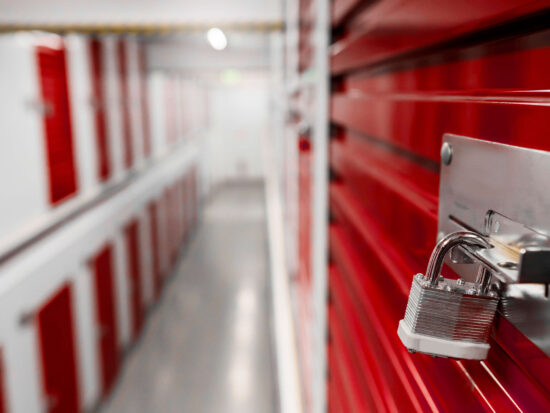
What not to store in a storage unit comes down to three things: anything that’s banned, anything that’ll get wrecked, and anything you can’t afford to lose.
The Quick List: What Not to Store in a Storage Unit
Storage units can’t hold anything dangerous, perishable, alive, or illegal. Most facilities ban the same handful of items. The last group on this list are technically allowed, but they’re likely to get damaged in a standard unit.
What to keep out:
- Flammable or hazardous materials
- Perishable food and pet food
- Anything alive
- Dead plants
- Weapons and ammunition
- Stolen or illegal goods
- Cash, jewelry, and irreplaceable valuables
- Electronics, wood furniture, wine, and photos
Now let’s talk about the why behind each one, starting with what can get you kicked out.
Anything That Can Catch Fire, Leak, or Explode
Nearly every facility bans hazardous materials in the contract you sign, and the reason is simple. A traditional storage unit is a closed metal box that bakes all summer: a terrible home for anything that ignites.
The usual offenders might be sitting in your garage:
- Gas cans and propane tanks
- Motor oil
- Paint and thinner
- Lawn fertilizer
- Pool chemicals
- Car batteries
- Leftover fireworks
After one leak or an especially hot afternoon, you’ve got a problem that spreads to every nearby unit.
So, what to do with this stuff when you’re moving? The EPA classifies most of these items as household hazardous waste, which you can’t just dump in the trash. Luckily, most counties run free collection days for this stuff. Use what you can, then take the rest to a local drop-off.
Food, Plants, and Anything That Draws Pests
Facilities ban food and plants because of what shows up after you leave. That box of granola bars you left in your backpack is an open invitation for mice. Even canned goods attract them, and any spoilage leaves a smell that drifts into the units next door.
Plants have the opposite problem. There’s no light, water, or fresh air in a storage unit, so they wilt, die, and rot, which attracts the same pests.
The fix is simple and potentially delicious. Eat from your pantry in the weeks before you move, donate anything unopened to a local food bank, and rehome your plants with a responsible friend, family member, or neighbor. Some offices, universities, and hospitals will also take them. You’ve now got less to store.
Stuff That’s Allowed but Will Get Wrecked
A standard unit isn’t heated, air-conditioned or dehumidified, and the temperature inside can run about 30 degrees hotter than the air outside.
It’s normal for stuff to sit for 6 months during a move, but these kinds of temperature swings have consequences. Spend a little more on a climate-controlled unit for anything that’s delicate, like:
Electronics
Heat and humidity are rough on electronics. Your TV, computer, speakers, and cameras have batteries and circuit boards that temperature changes can damage. Pull out any removable batteries before you store, since they can corrode and leak.
Wood and leather furniture
Humidity makes wood swell, warp, and crack, and it leaves leather speckled with mildew.
Clean and fully dry each piece before it goes in. Resist the urge to shrink-wrap leather, because it only traps in moisture. Our guide to moving heavy furniture will help you get the big pieces in safely.
Wine
Wine needs a steady, cool temperature, which a standard unit can’t provide. When the environment gets too hot, the wine ages too fast and tastes flat.
Heat can also expand the liquid enough to push the cork out and let air in. When it gets cold, the wine can freeze, expand, and shove the cork loose the same way.
Photos, paper, and fabric
Documents, books, clothes, and photos all soak up moisture from the air. You’ll open your boxes months later to find pages stuck together or a sweater dotted with mildew.
Pack these in airtight plastic bins or bags rather than cardboard, and if you can, keep them somewhere with controlled humidity.
Valuables Belong With You
No matter how secure your unit is, some things just don’t belong there. They may not get damaged, but losing them is a headache you don’t need.
Keep these with you, or in a safe-deposit box at the bank:
- Passports
- Birth certificates
- Social Security cards
- Housing documents
- Legal titles
- Cash
- Fine jewelry
- Hard drives
If you haven’t started organizing your stuff yet, our ultimate moving checklist is a good place to begin.
A Quick Word on Storing Vehicles
If a car, motorcycle, or RV is heading into storage, most facilities want to see current registration and active insurance. A dead, unregistered car usually gets turned away.
A traditional storage unit with drive-in access may not be the cheapest option, so look for a spot meant for vehicles, like a driveway, covered space, or dedicated lot.
A car that will sit for months needs a little prep. Fill the tank and add fuel stabilizer, so condensation doesn’t set in. Inflate the tires, wash it, and bring a breathable cover, since trapped dirt and moisture are what cause rust. A classic or collector car needs more care, and storing one can change how your insurance works.
Regardless of what you’re storing, check your policy carefully and give your insurance provider a call to make sure you’re covered.
How to Store the Good Stuff So It Survives
Once you’ve separated what not to store, the rest comes down to packing:
- Clean and dry everything first. Mildew starts on anything that goes in damp, so let your belongings air out before they’re packed.
- Use airtight plastic bags or bins. Cardboard soaks up moisture and sags, and pests chew right through it.
- Consider climate control. It runs about 20–50% more, but it’s usually cheaper than replacing a warped dresser or dead laptop.
- Leave an aisle down the middle of your unit. You’ll thank yourself when you just need something from one bin at the back.
Our guide to organizing a unit and these moving hacks will also help.
Renting a Garage or Driveway Instead of a Unit
Now that you know what to store, you’ve got options for where to store it.
Neighbor is the only marketplace that puts traditional self-storage units next to garages, driveways, and other spaces rented out in your neighborhood. One search shows you everything near you, side by side.
A host renting out their shed doesn’t pay the overhead of a traditional facility, so the same amount of space costs you less. Neighbor has a 4.9-star rating across 689,000+ reviews, which tell us the same two things: our options are cheaper and easier to reach.
Every listing can come with up to $25K in renter property protection, and you can clear up any questions about access and climate with your host before you book.
Browse photos and reviews to find your storage space, or call us to talk it through.
Frequently Asked Questions
What items aren’t allowed in a storage unit?
Most storage units don’t allow hazardous materials, perishable food, plants, weapons, or anything illegal. These items can create safety risks for the whole building. Check the terms of your booking for the full list before you pack.
Can you store a TV in a storage unit?
Yes, you can store a TV in a storage unit. But the screen and internal tech are sensitive to heat and humidity. Wrap it, keep it upright, and go for a climate-controlled unit if you’re storing it for months.
Is it illegal to live in a storage unit?
Yes, living in a storage unit is against storage facilities’ rules and often against local law. Units lack ventilation, plumbing, and safe exits, so it’s a genuine risk.